 Matthew Bailey
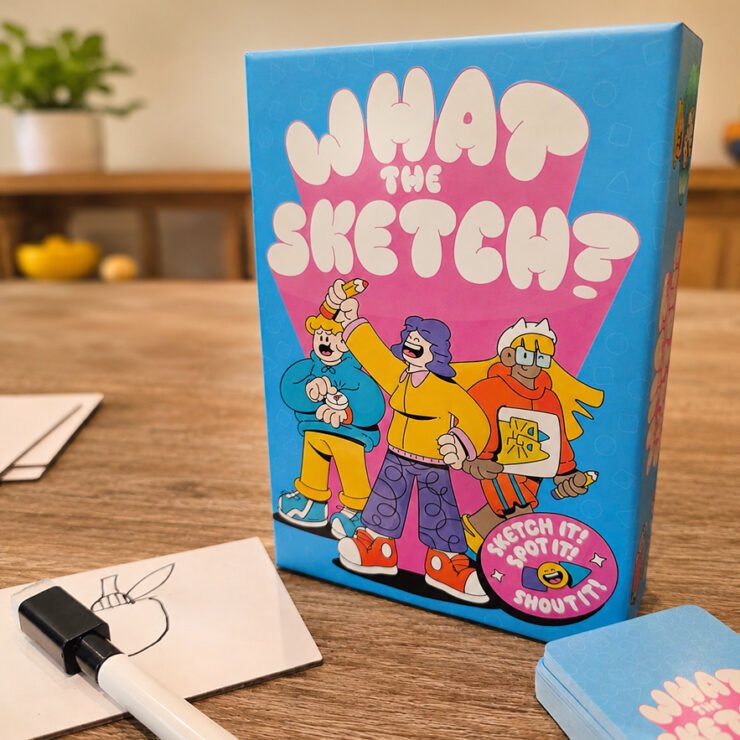
Today we’re going to be looking at What the Sketch?, a, on the surface, fairly traditional drawing and guessing game, much like Pictionary. However, the slight tweaks it makes to the formula create a surprisingly fresh and enjoyable family drawing game, all packed into a wonderfully small little box.
I’ll preface this by saying that we don’t normally review drawing games at Little Board Gamers, largely because my boys usually aren’t massively keen on them. There’s also quite often a sense of unfairness because I’m a Design & Technology teacher and therefore reasonably decent at drawing, which usually ends up ruining things. What the Sketch?, however, plays quite differently thanks to a few key rule changes that level the playing field and make it feel surprisingly different from the many similar games out there, as I’ll explain.
In What the Sketch?, one of you takes on the role of the Art Teacher while everyone else tries to work out what they’re drawing before anybody else does. The catch is that the Art Teacher can’t simply tell you what the object is or let you copy what they’re drawing. Instead, they have to build it up using only instructions about shapes, lines, patterns and where to place them on your whiteboard.
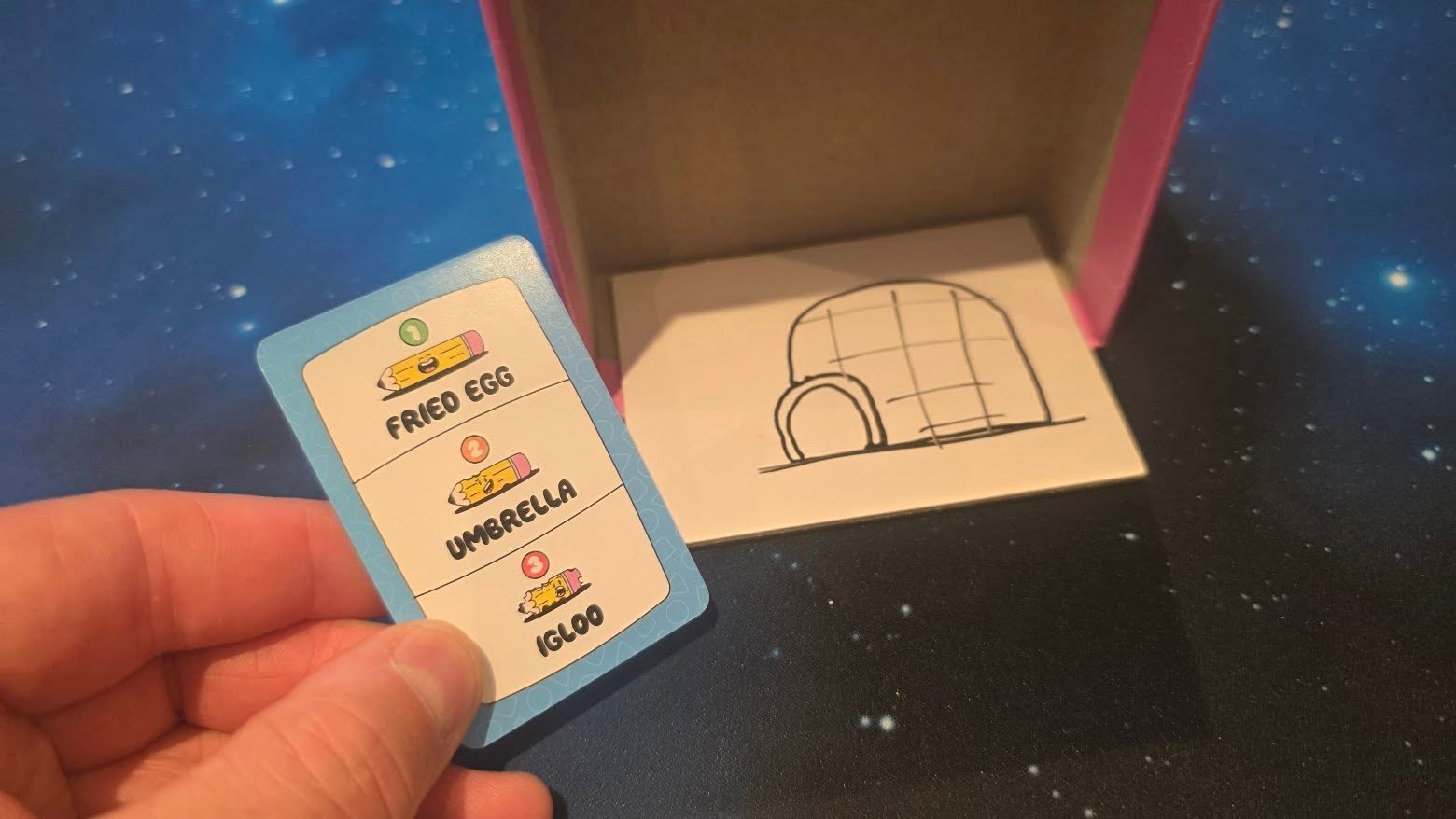
At the start of each round, the Art Teacher draws the top card and secretly chooses one of the three objects shown. Each object is worth either 1, 2 or 3 points depending on how difficult it is. Once they’ve chosen, set a 60-second timer and the drawing begins.
As the timer runs, the Art Teacher secretly draws the object behind the game box while talking you through each step. You simply follow their instructions on your own whiteboard. The important rule, as I already mentioned, is that they can only describe abstract features such as shapes, positions and patterns. They can’t mention real-world objects or give hints about what the answer might be. So, if the answer is a snake, they could tell you to draw two wavy parallel lines, but they can’t mention snakes or anything similar. If they do, they won’t score any points that round, although everyone else still can.
The nice thing is that you can be a little looser with younger children and it still works really well. For instance, we allowed the use of letters to describe shapes (but not to spell anything out).
While you’re drawing, you can shout out guesses whenever you like. The first person to correctly identify the object before the timer runs out scores points equal to the value of the card, and the Art Teacher scores the same amount. If nobody guesses correctly in time, everyone reveals their drawings and gets one final chance to make a single group guess. If you’re right, everyone except the Art Teacher scores 1 point.
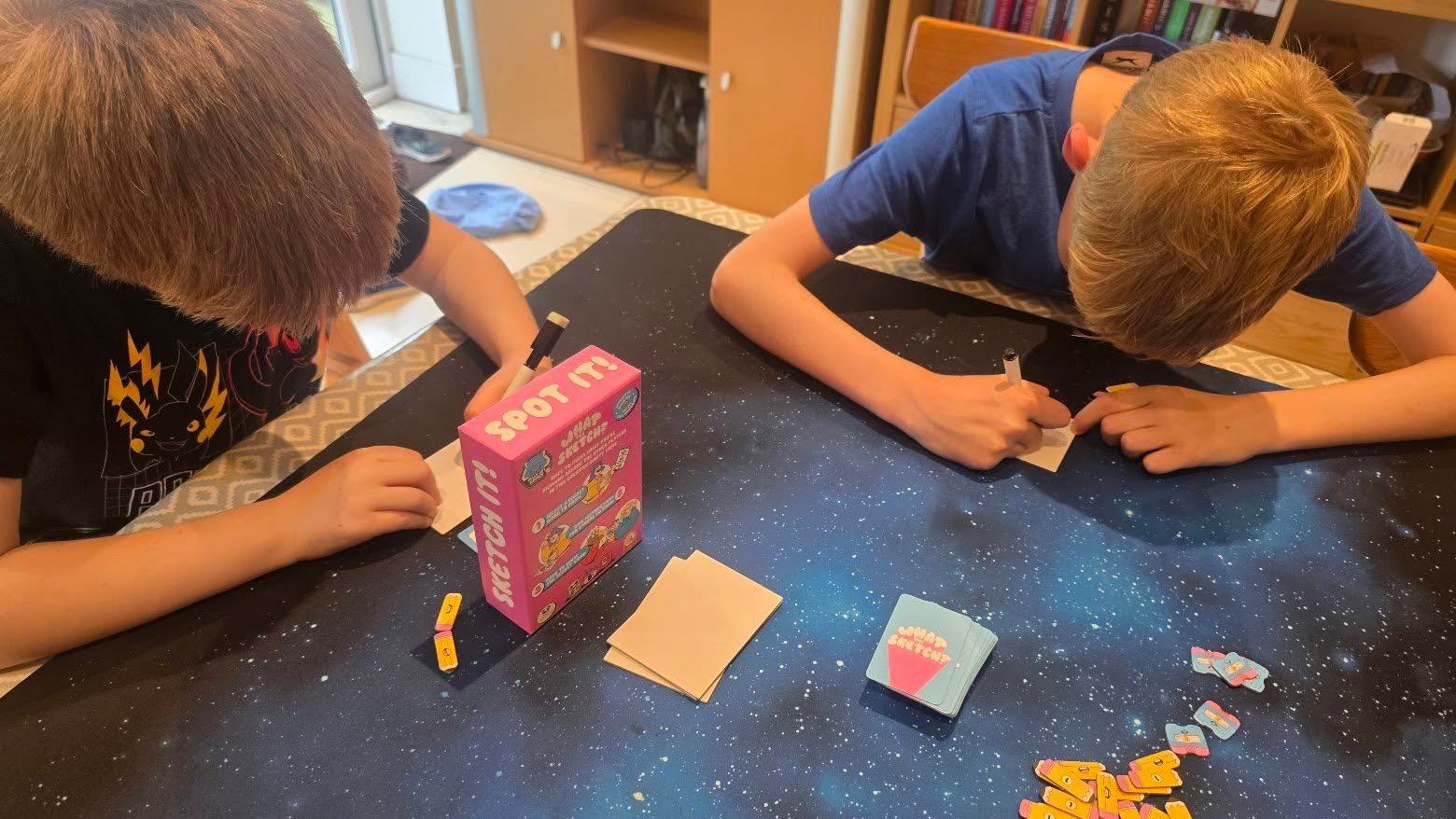
Once the round is over, pass the Art Teacher role clockwise and play again. With three or four players, everyone gets two turns as the Art Teacher. With five or six players, everyone gets one turn. Once all the rounds have been played, the player with the most points wins, with tied players sharing the victory.
The boys really enjoyed this, to the point that they wanted to play several games in a row, which is always a good sign. We played it with both three and four players and, while it’s perfectly enjoyable with three, it was definitely better with four. If anything, I can easily see it being even better with higher player counts.
It’s also worth knowing that the player count is really only limited by the number of pens and boards in the box. With a few extra pens and some Post-it Notes or mini whiteboards, you could very happily play this with a much larger group at something like a family barbecue this summer.
Everything is nicely presented and fits neatly back into the box. I love the artwork and the overall visual styling. I also really like that they’ve even stylised the Alley Cat Games logo specifically for this release, which is a lovely little touch that many publishers wouldn’t bother with.
My only criticism, and it really is a small one, is that the whiteboards are made from fairly soft cardboard while the pen nibs are relatively firm. After only a few plays, you can already start to see small dents appearing in the boards, which isn’t ideal. I appreciate that this is probably one of the ways they’ve managed to keep the RRP to an incredibly impressive £13.99, so it’s something I can happily live with.
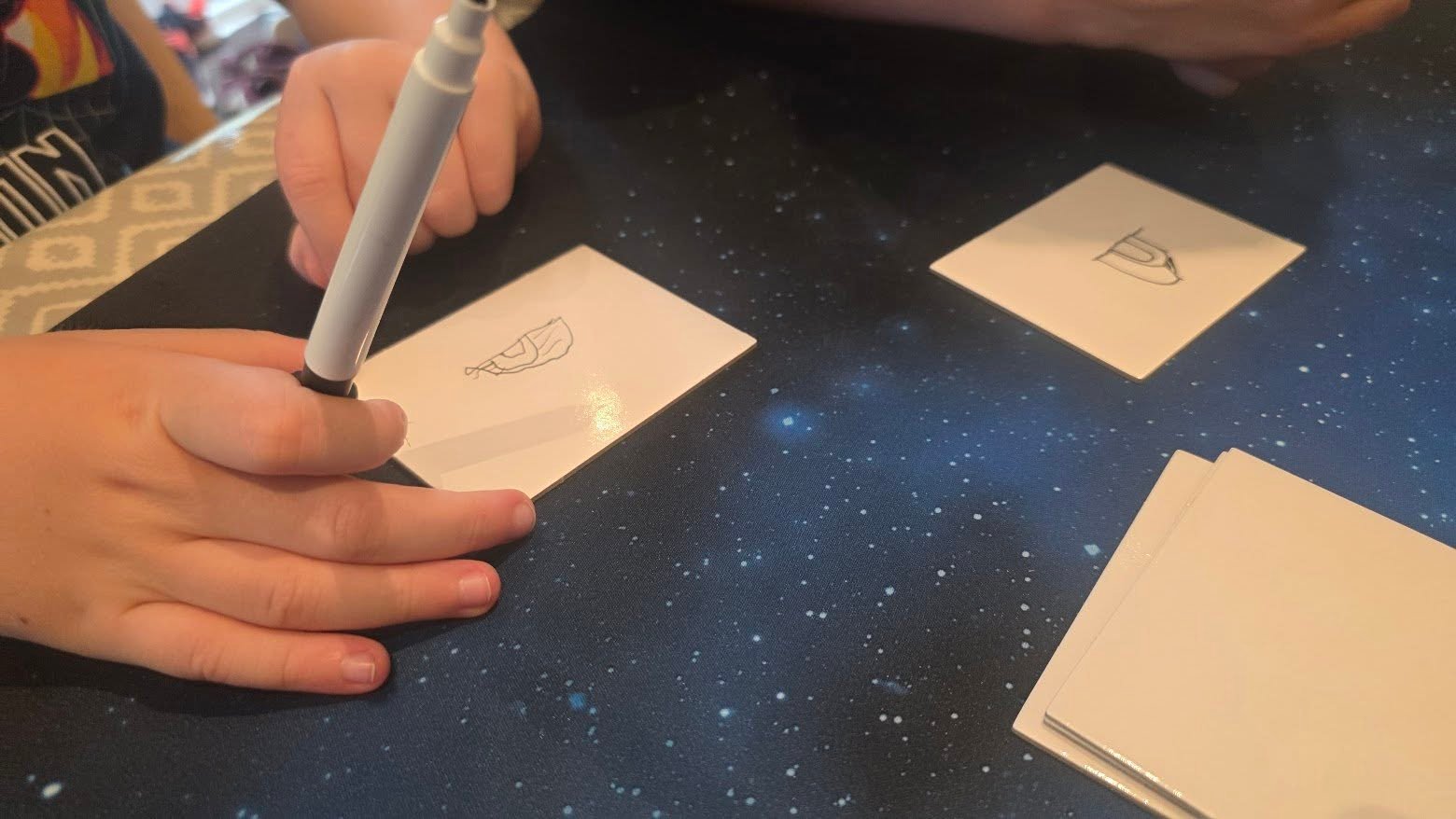
The boys aren’t fans of Pictionary, but they absolutely loved this. There are some genuinely funny moments when you look around the table and everyone’s drawings look remarkably similar, only for the Art Teacher’s original drawing to be revealed and it looks absolutely nothing like them. There are also plenty of brilliant “How on earth did you get that from this?” moments that really stand out.
Because of the way the game is designed, there’s very little advantage in simply being a good artist. Instead, the real skill comes from thinking logically about how to break an object down into simple everyday shapes that someone else can easily recreate and recognise.
The game is set for general release in July, but you can already buy it directly from the Alley Cat Games website.
Disclaimer – A copy of the game was kindly gifted by Alley Cat Games. I have not been paid for this review, and all thoughts and opinions are my own. Caezar Al-Jassar is the Founder of Alley Cat Games, an active member of our community.



 Nicola Asker