 Matthew Bailey
Codenames by Czech Games Edition has been one of the most successful and popular word-based party games of the last decade. With a decent set of re-releases this past year and some upcoming expansions hitting stores around now, I was really excited to check out Trapwords, a game that has a similar vibe and reminds me a little of the word game Taboo, which I suddenly remembered while writing this review and realised I haven’t played in over three decades (so if you see a review of that this summer, you’ll know why).
Trapwords is a team-based word guessing game where you are trying to guide your teammate(s) to guess a secret word, while the other team is secretly trying to catch you out with “trapwords” that they think you will say.
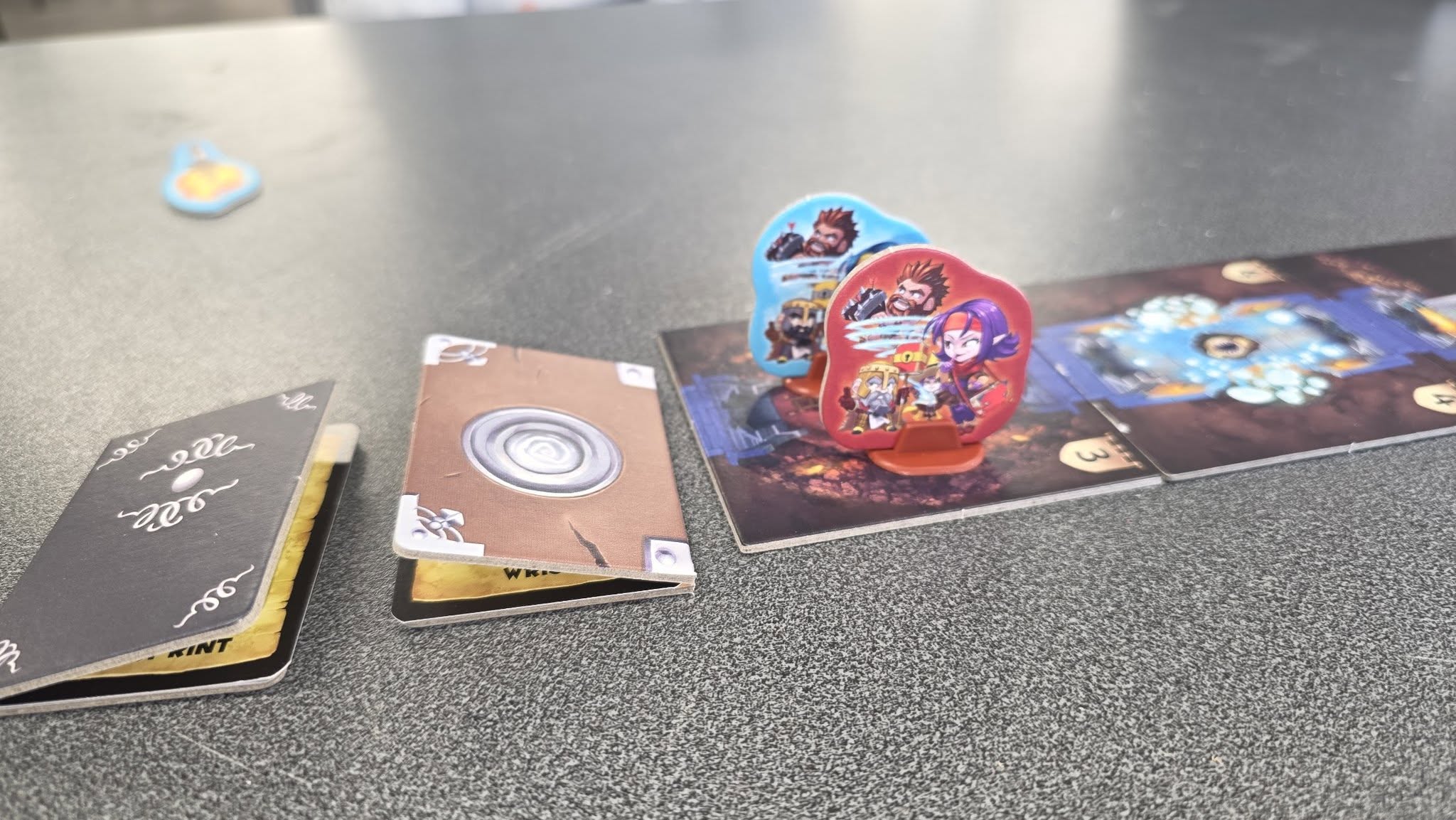
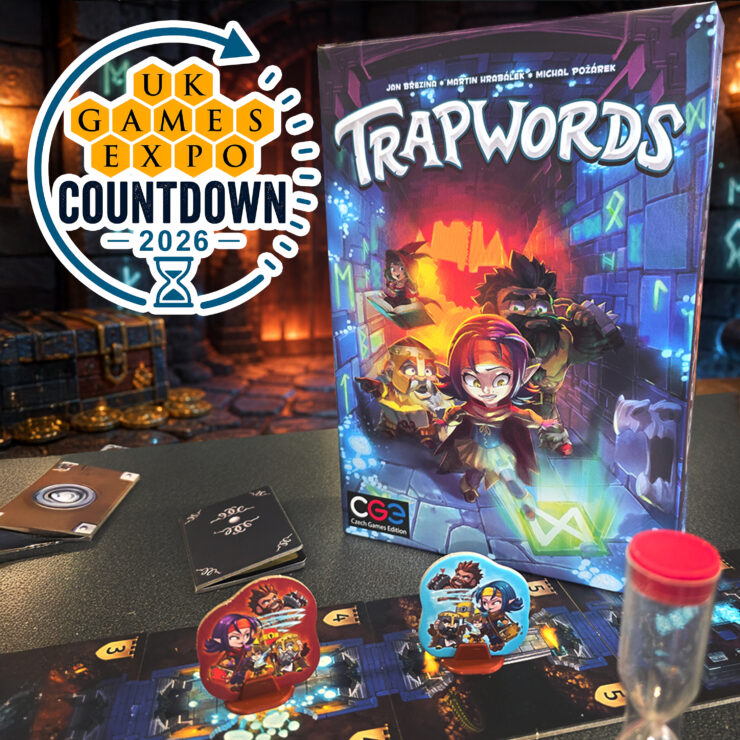
To set up, you split into two teams and sit opposite each other. You lay out a row of room tiles and place both team figures at the starting room, with a monster waiting at the end. It’s a fun setup and totally unnecessary for a word-based party game, but it’s a nice touch and definitely adds something to the experience. Each team takes a trapwords sheet and a pencil, and you agree on which word deck you are using, normal or fantasy, using the cool book-style card covers. Each round uses one word card and one line on your sheet.
Each round has two parts. First, you create trapwords for the other team. You draw a word card, hide it in your book, and look at the secret word they will need to guess. Based on that word, you and your team write a list of trapwords, choosing words you think their clue-giver is likely to say. The number of trapwords you write depends on which room they are in, meaning you have to choose really carefully.
This is a really interesting part of the game because at first you start by choosing obvious words, but then you begin to think more deeply about your choices and decide whether other, more likely words would be better. This thought process is compelling and worked especially well with older kids.
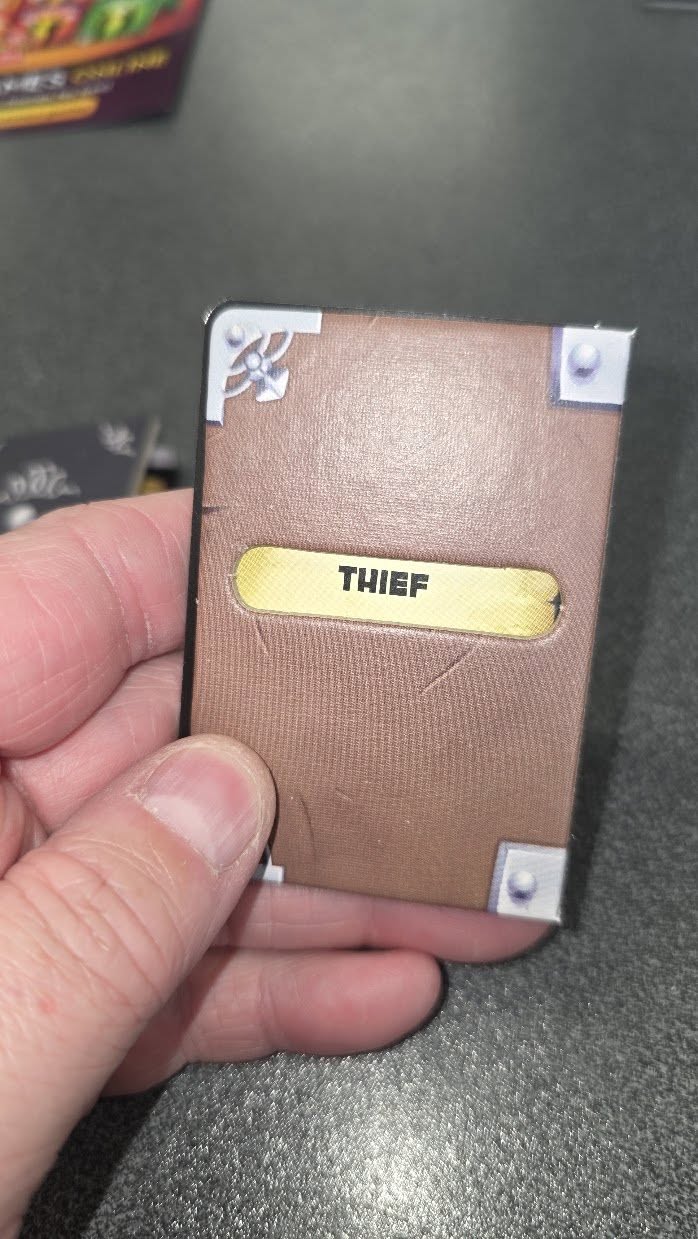
Once both teams are ready, you move to the guessing phase. If your team is behind, you go first. You take the book from the other team, quickly look at your secret word, and then the timer starts.
As the clue-giver, you describe the word to your team without saying the word itself or any version of it. You can give as many clues as you like, but you must avoid saying any of the trapwords the other team has written down. If you say one, your turn immediately ends.
While you are giving clues, your teammates call out guesses. You can make up to five guesses in total. If your team guesses correctly, you move forward one room. If you run out of time, use all your guesses, break a clue rule, or trigger a trapword, you stay where you are.
After your turn, the other team takes theirs in the same way. At the end of the round, if neither team has moved forward, the monster moves one room closer to you. If it reaches a curse, that curse moves closer as well.
At the end of each round, you pass the clue-giver role to someone else on your team so everyone gets a turn. As you move deeper into the dungeon, the number of trapwords increases, making it harder to avoid them.
If you reach the same room as the monster, you have a chance to win the game. On your turn, you must successfully guess your word while dealing with the monster’s special rule. For example, you might only be allowed to say five words in your explanation. If you succeed, you win. If both teams reach the monster, you both get a chance, and either one or both teams can win depending on the outcome.
The game lasts up to eight rounds. If neither team defeats the monster by then, the monster wins.
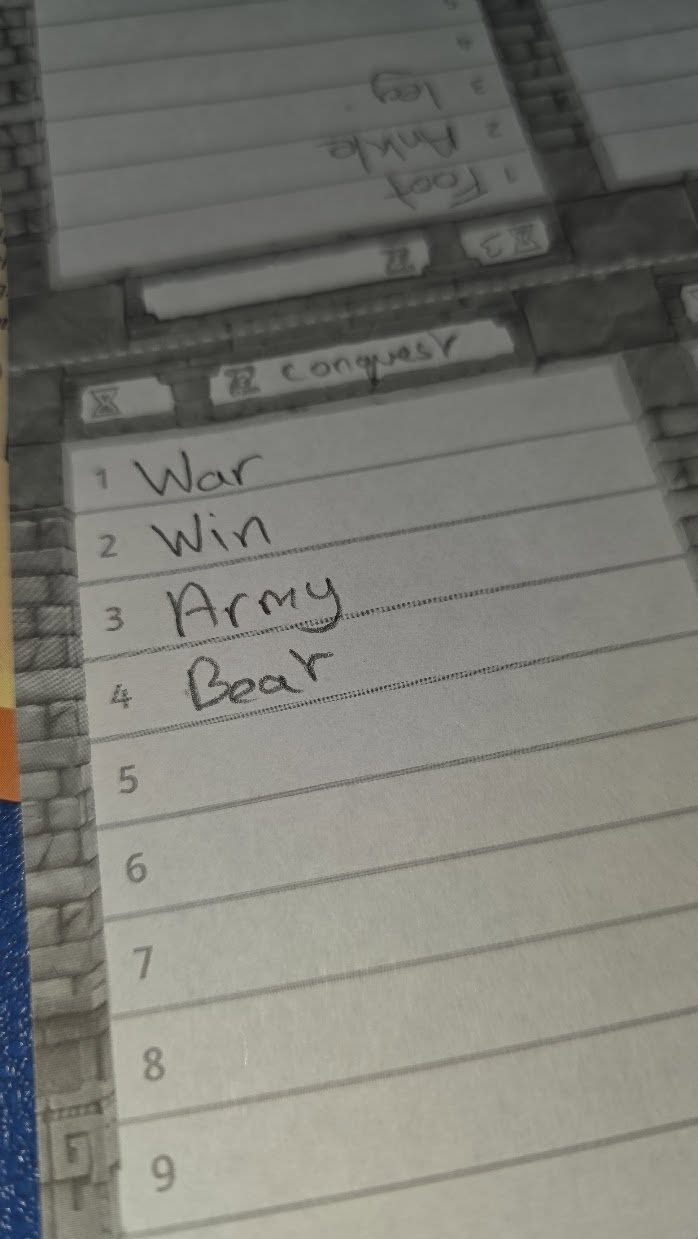
There are a few rules to make it all work. Very general words like “it” or “thing” are not allowed. A trap is triggered if you say that word or a closely related version of it. When giving clues, you must describe the meaning of the word, not how it sounds or is spelt. You can’t use proper nouns, refer to things in the room, or rely on personal knowledge the other team wouldn’t know.
It works better with older kids. Younger children can struggle a bit with both giving and interpreting descriptive clues, but with a group of 12-year-olds I played it with, it worked brilliantly and was a really compelling guessing game.
As I mentioned earlier, it reminded me a lot of Taboo, which I played a lot with my parents when I was younger. It’s essentially a version of that where you get to choose your own taboo words, which adds a really interesting twist if you are familiar with that style of game.
Production values are really nice. Everything looks great, from the boards and pieces to the overall theme. It’s all completely unnecessary for a game like this, but it’s a really nice touch. The book covers used to hide the word cards are especially cool and definitely add to the premium feel of the product.
If you are a fan of word-based games, this is a good one and I would definitely recommend it. It works best with larger teams. One of the reasons it took me a while to review this is that it really needs four players, and we are usually a group of three at home, with Henry (my four-year-old) not quite ready for this kind of game. However, having played it at work with a group of six, it really shines in that setting. It’s a strong addition to your collection if you enjoy these kinds of dinner party games, something that works well with family but also holds up with adults, especially among board gamers.
Disclaimer: A copy of Trapwords was kindly provided by CGE. All of our thoughts and opinions are our own.
We will be catching up with CGE at the UKGE looking at their brand new upcoming game Drillers.