
 Matthew Bailey
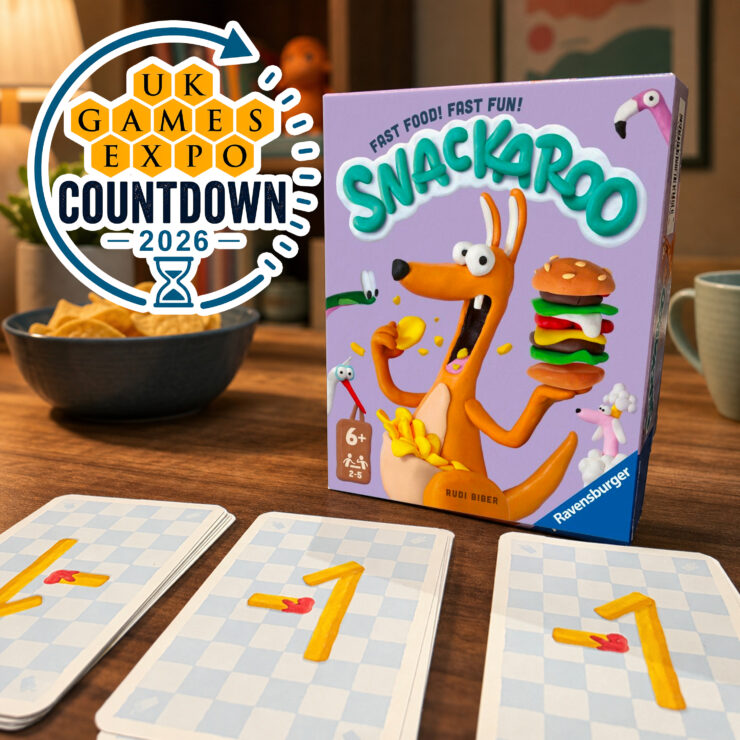
Snackaroo is a really simple yet quite unusual memory-based speed card game where you are trying to find cards in your deck as quickly as possible in order to match the card on the table. What makes this game stand out, and feel a bit unique, is that you get to organise your cards however you like to help you find them more quickly. Let me explain.
Each player begins by choosing a coloured set of animal cards, shuffling them, and placing them face down in a pile in front of them. Everyone has exactly the same set, so everyone is in the same boat. A separate deck of neutral cards is shuffled and placed in the centre of the table. These neutral cards show the animals that everyone is trying to find in their own decks.
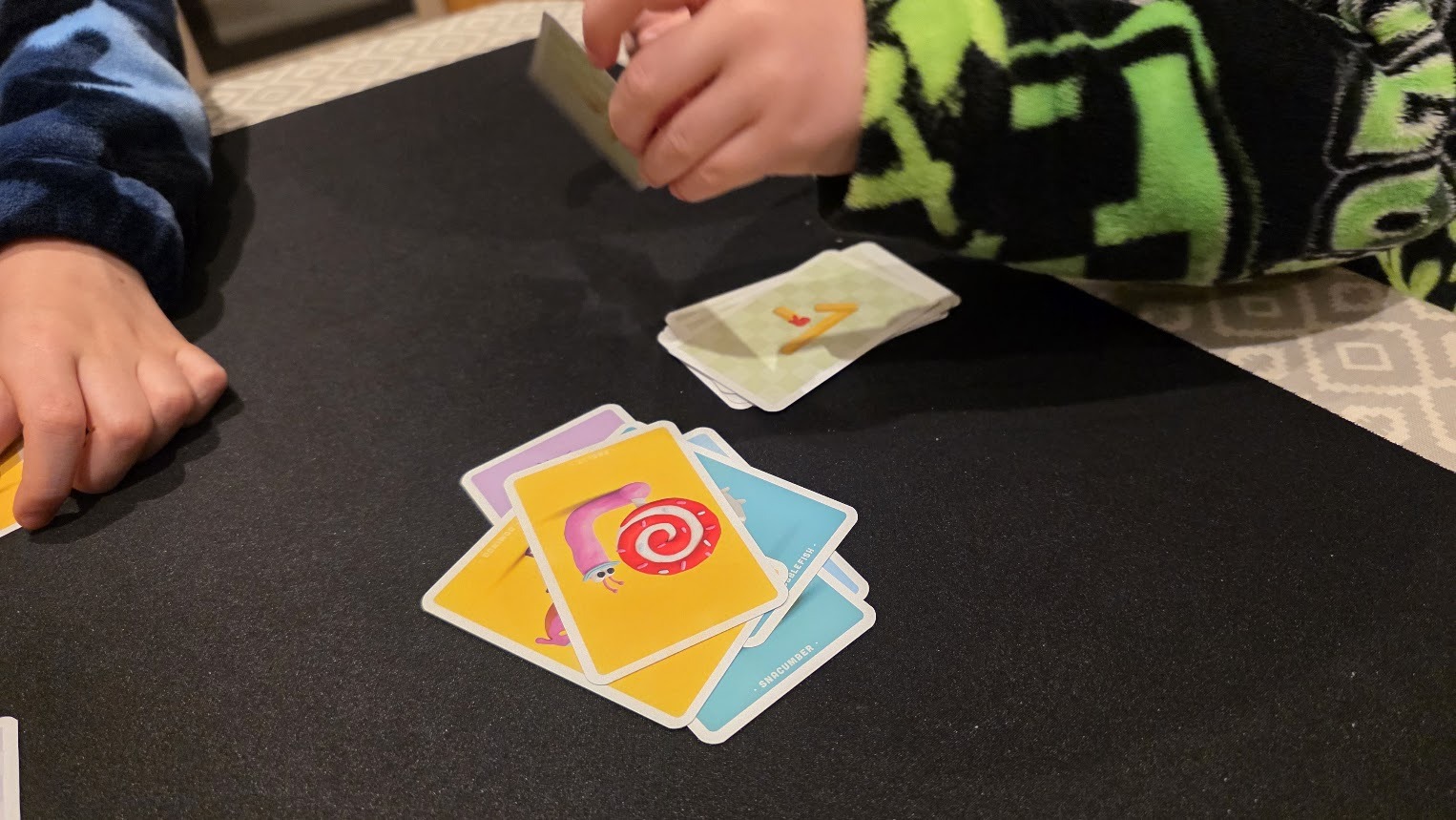
There is a slight twist, as some cards show animals without food and others show animals with food in their mouths. It is only a small difference, but it adds a nice bit of extra challenge, as you cannot rely on spotting one tiny detail (which is often my tactic in these kinds of games). Instead, you need to take in the whole image. Hopefully that makes sense!
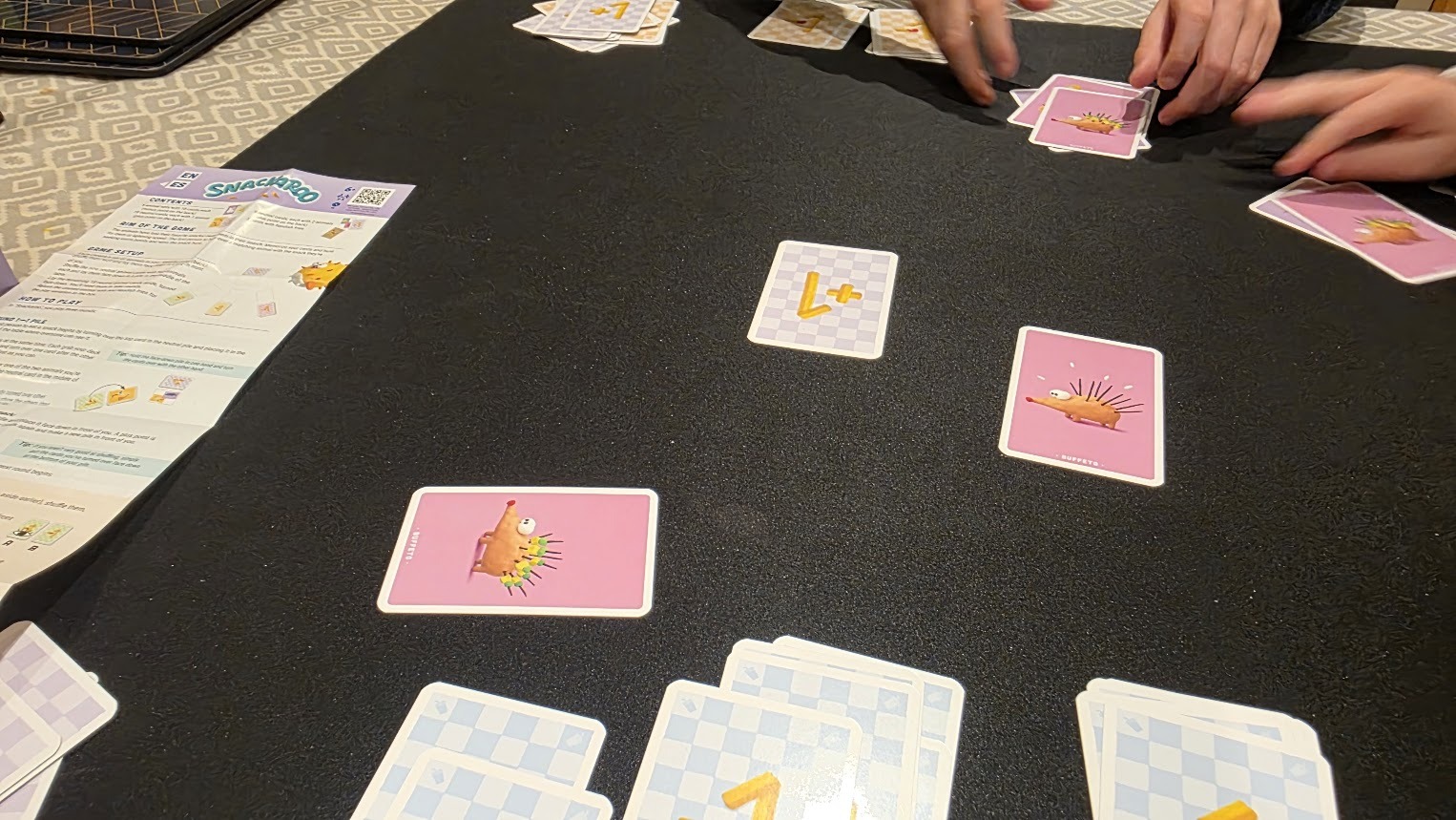
At the start of each turn, the top neutral card is flipped face up into the middle. All players then begin flipping through their own deck at the same time, revealing one card after another as quickly as they can. You are not allowed to hold your cards in a hand and scan through them, which actually works really well with kids, as they tend to flip through cards quickly anyway, and holding a large hand can be tricky.
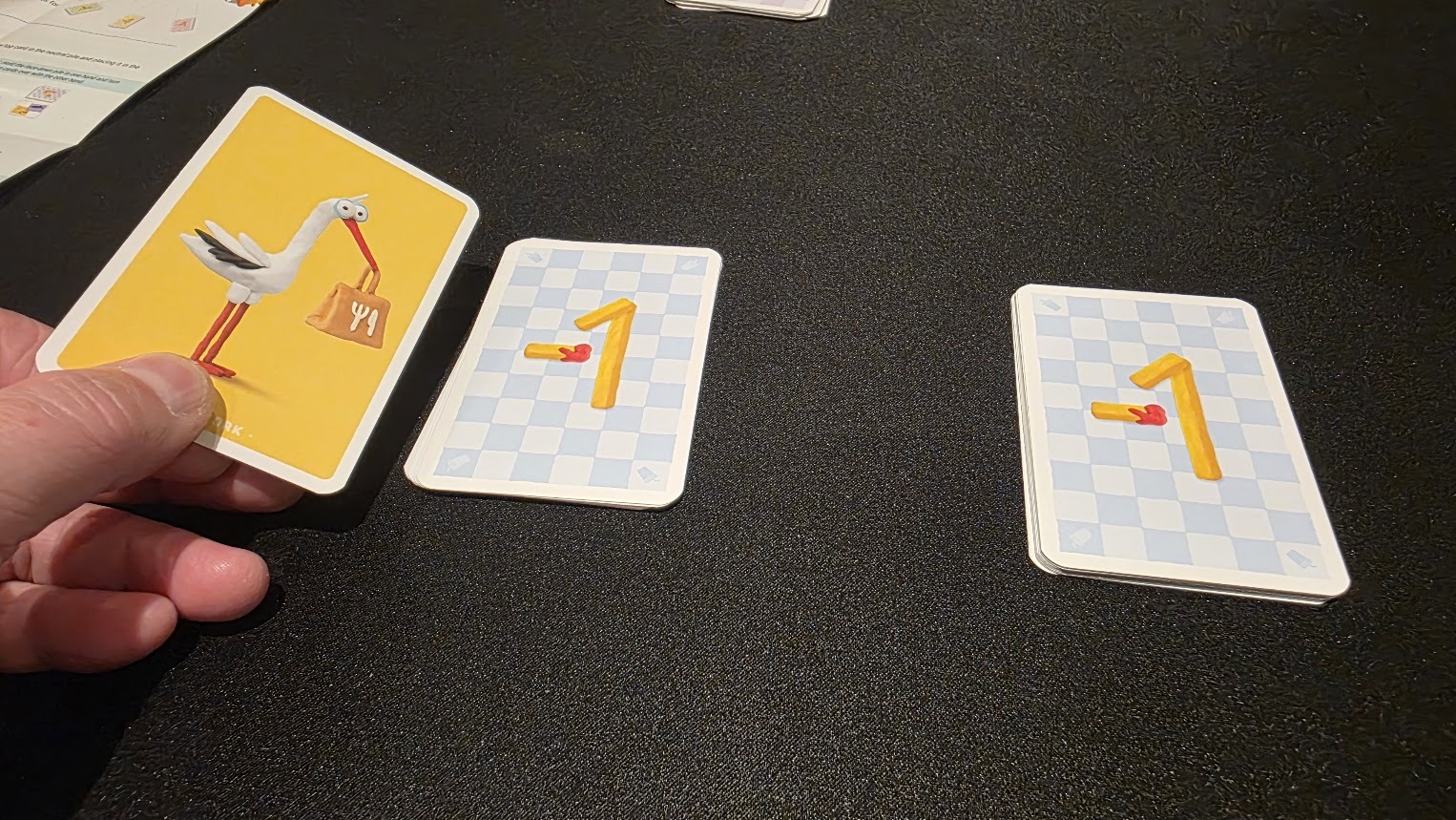
This also ties into the later rounds, where your organisation becomes important. If you are clever, you can arrange your deck in a way that helps you roughly know where certain cards are, based on how quickly you are flipping through.
If you reveal a matching animal, you immediately slap the neutral card in the centre to claim it. If you are correct, you take that card as a point and reshuffle your deck before continuing. If you are too slow, or you choose incorrectly, you may gain nothing or even receive a negative point, depending on whether the animal was actually in the pile you chose in later rounds.
The game is played over three rounds, each increasing in difficulty. In round one, each player uses a single deck. In round two, players split their cards into two face-down piles and must choose which pile to search each time, only being allowed to look at and memorise one pile beforehand. In round three, this increases to three piles, with players memorising two of them before play begins. Each round continues until all of the neutral cards have been claimed.
Now, this is where things get really interesting. You need to decide how you are going to organise your piles. The obvious approach is to use the coloured backgrounds, and in reality, that is what we did in every game. There is a small part of me that wishes the cards did not have different coloured backgrounds, as that would force you to group them in more creative ways, such as by animal type or size.
That said, the coloured backgrounds do make the game much more accessible for younger players, so I completely understand the decision. I would just love to see an “extreme” version without them, where you have to do all the sorting yourself.
Once all three rounds are complete, players count up their points by adding positive cards and subtracting any negative ones from choosing the wrong pile. The player with the highest total wins, and in the case of a tie, victory is shared.
We actually really liked this. It is an unusual concept, it is part memory and part speed, but because you can organise your cards, you can reduce the difficulty in a way that suits you. I do still think I would enjoy a slightly more challenging version, but this is very clearly aimed at children, and it absolutely works for that audience.
The boys really enjoyed it, and everyone we have played it with has had a good time. It is quick, simple, and even though there is a reaction element, the other mechanics help balance things out, so it still feels fair across mixed groups. There are also some great moments where you realise you have chosen the wrong pile and just have to slowly flip through, knowing you are about to lose a point, which is oddly brilliant.
A great fun little card game. Definitely one to check out if you are looking for something small to pick up from the UK Games Expo, especially if you are passing the Ravensburger stand.


 Timothy Payne


