 Matthew Bailey
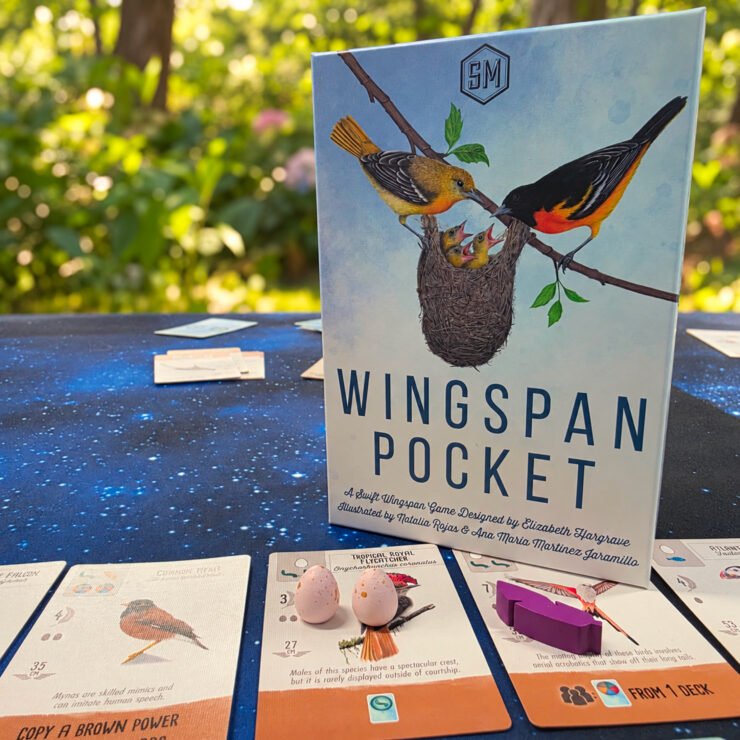
Wingspan Pocket is a really interesting one, as it generally has the same feel and works as a really nice cut-down version of Wingspan. This is beneficial both for travel and as a game you can play in a much shorter time. While I’m still going to hold Wyrmspan as my favourite of the ‘span’ series, and Wingspan Asia as my favourite of the two-player games, Wingspan Pocket 100% has its place in your collection, especially if you are looking for something that is a bit less of a table hog and a bit faster than the other games mentioned.
If you know how to play Wingspan, you’ll pretty much be most of the way there. Wingspan Pocket largely works on imagining that you have only one habitat and are trying to make the best of it. Because of this, getting your engine going quickly matters way more than it does in the main game.
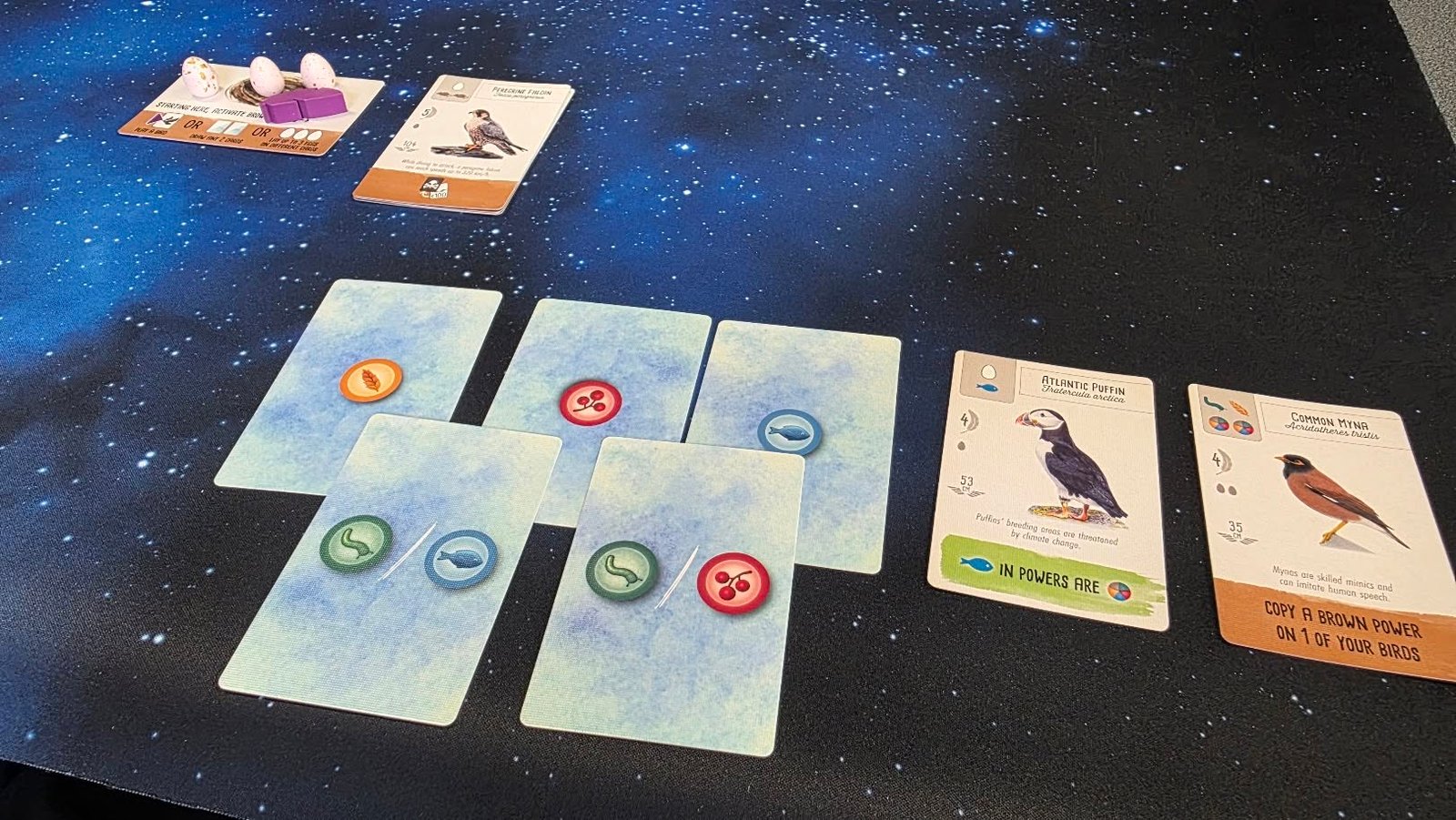
You start Wingspan Pocket with a Nest card, one egg and a face-up reserve of four food cards and two bird cards. The remaining cards form four food decks in the centre of the table, with one bird revealed beside each deck. This is a really cool design decision, as all cards are double-sided, with a bird on one side and food on the other, but they only ever work as one and you can’t flip between them. It means you can get a lot of use out of a relatively small deck of cards.
On your turn, you first choose one of three actions: play a bird, draw two cards or lay eggs.
To play a bird, you take one from your reserve, pay its printed food and/or egg cost and add it to the right of your flock. Food is paid by discarding food cards, while eggs can come from your Nest or any of your birds. If you are missing a particular food, you can spend any two food cards in its place (all very normal Wingspan so far).
Drawing cards lets you take two cards from the central supply. You can take two face-up birds, two food cards from the tops of the decks, or one of each. Food cards become available as you uncover them, but any empty bird spaces are only refilled at the end of your turn. This keeps things moving fast and makes it much easier to gain more birds to play than in normal Wingspan, helping to make this a more streamlined version.
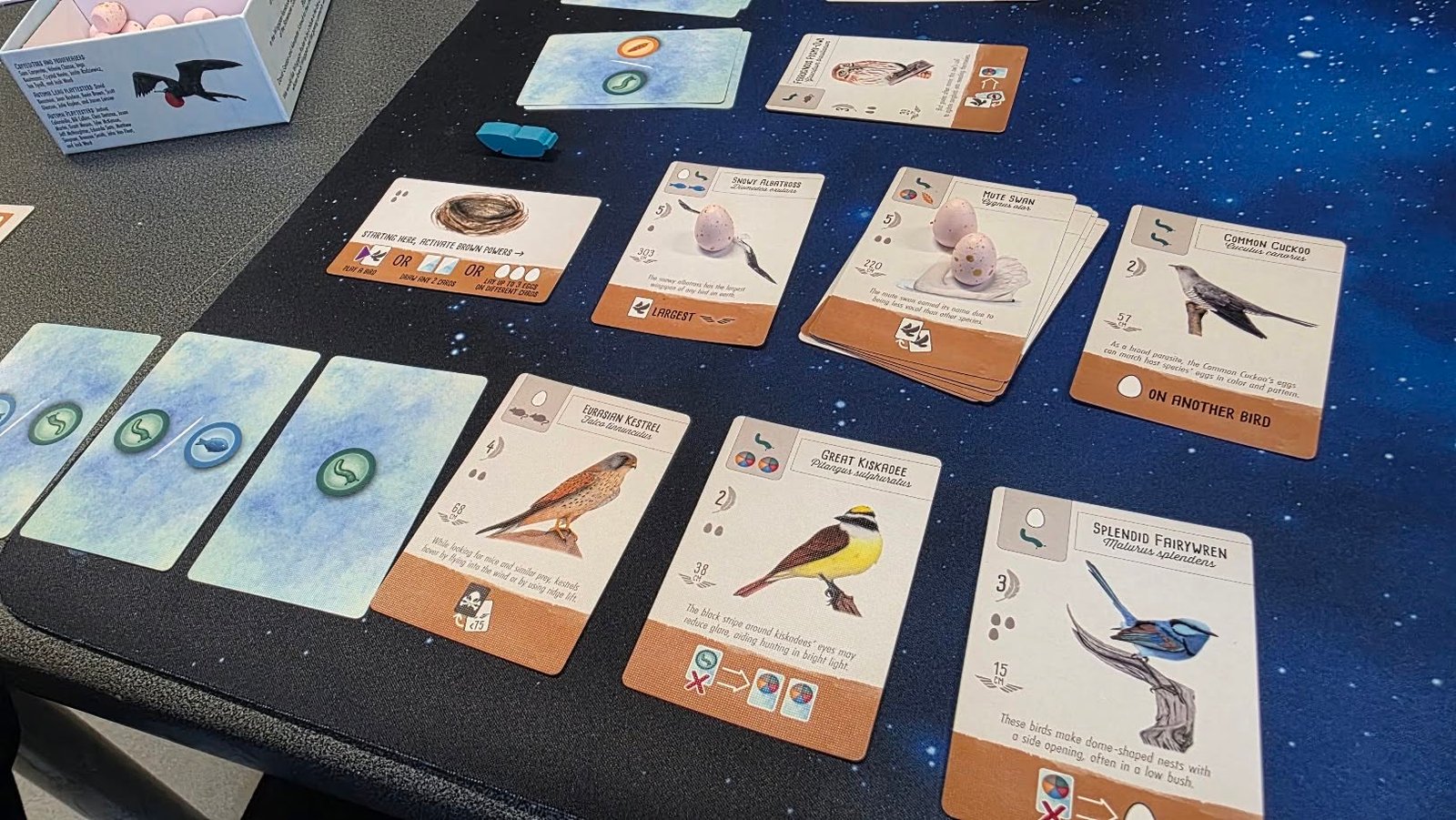
Laying eggs lets you place up to three eggs, each on a different card in your flock. Your Nest can hold three eggs, while each bird has its own printed egg limit. If you do not have three different cards with space, you place as many as you can.
After completing your chosen action, you work through your flock from left to right, activating each bird’s brown power if you wish. This includes any bird you have just played. These powers can let you collect more cards, lay eggs or tuck cards behind birds for points. Some birds can hunt by revealing a card from a food deck and checking the bird’s wingspan against the limit shown on their power. Getting some good point-scoring opportunities going quickly is key here, and because the game ends when one player has six birds, you don’t want to waste time. This is potentially a big change of pace from the regular game, where careful planning can often beat impulse and speed.
Birds with green powers provide ongoing effects during your turn instead, such as reducing food costs or allowing you to use one food type as another.
Once someone has six birds in their flock, you finish the current turn and continue until everyone has taken the same number of turns. You then add together the printed points on your birds, one point for every egg and one point for every tucked card. The highest score wins, with ties broken by the number of cards left in your reserve.
For the advanced game, you also reveal two shared goal cards during setup. These award extra points for eggs on birds that meet particular conditions, and the same egg can count towards both goals. These are a nice little addition and, to be honest, I’d recommend playing with them anyway.
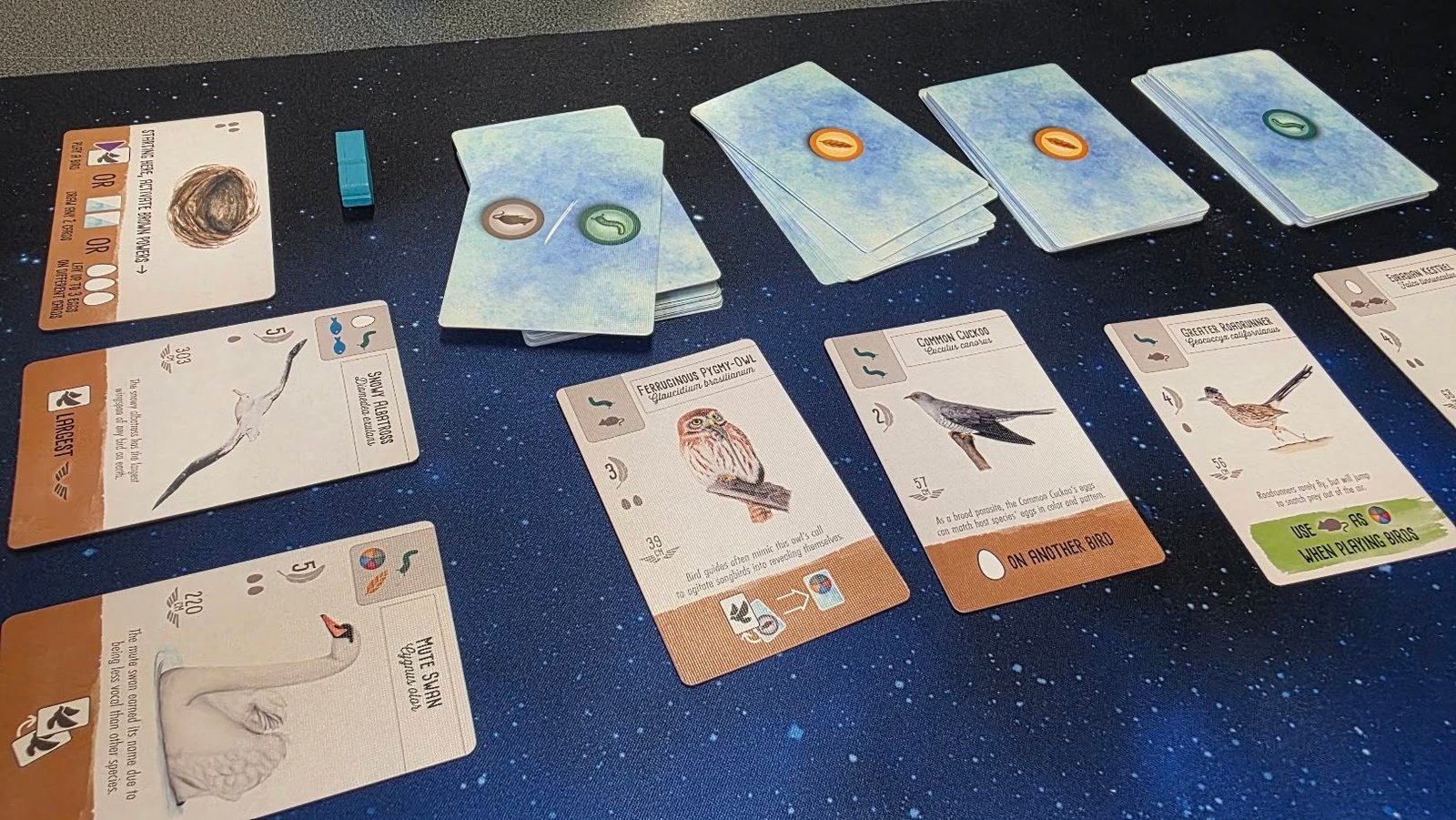
I’m a big fan of all of the ‘span’ games, and I really like Wingspan Pocket, as it gets across the general feel of Wingspan but makes the whole process much quicker. While the main Wingspan can reward careful planning and consideration, Wingspan Pocket plays a lot faster, meaning there generally needs to be more action on your turns. The speed of it is actually more appealing to me than the fact that it takes up slightly less table space.
The whole thing has the usual Stonemaier quality, and everything feels and looks lovely.
I still think I prefer the slightly more thoughtful experience of Wyrmspan or Wingspan Asia overall, but I think the speed of setup and play of Wingspan Pocket is going to mean it is the one I keep coming back to more and more. I have already purchased a second copy for our school’s board game club, as well as my own personal copy, which I do not usually do.
Excellent stuff, definitely the best first step for kids (until we get My First Wingspan) and a massive recommendation!



 Nicola Asker