 Matthew Bailey
My whirlwind relationship with King of Tokyo has been well documented over the years on Little Board Gamers. King of Tokyo was actually one of the first games that I reviewed way back in 2021, and it was also one of the first games that I regularly played with my kids when we started having family board game sessions together. For some reason, it never quite clicked, and I ended up selling all of my King of Tokyo stuff. That was that.
Fast forward a few years and, having played King of Tokyo: Origins, King of Tokyo: Duel, revisited the game through my review of King of Tokyo: Dark Edition, and most recently taken a look at the excellent King of Tokyo: Monster Box (you can find all of these reviews by searching the Facebook group or visiting the website), I have done a complete 180 on the game. Now, King of Tokyo feels like a really accessible action game to play with the kids, and I appreciate it in a way that I simply didn’t the first time around.
In short, we love King of Tokyo.
This is compounded even more by the fact that Henry (4) is a massive Godzilla fan, having seen all of the Monsterverse films as well as a handful of older Toho Japanese releases, half of which he couldn’t understand and certainly couldn’t read the subtitles for.
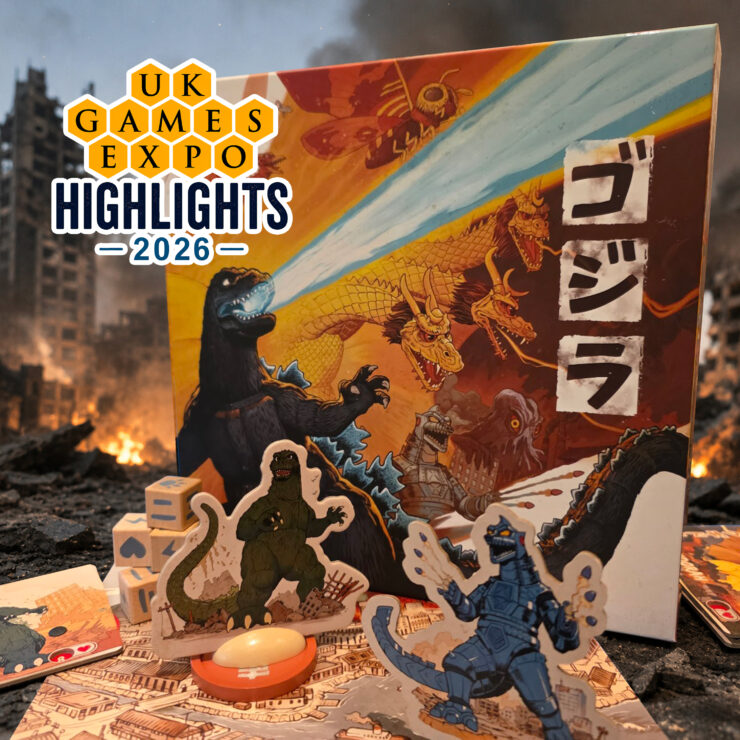
Of course, when iello recently announced they were doing a licensed Godzilla version, Henry was incredibly excited, and here we are with King of Tokyo: Godzilla.
The rules from the original game are largely unchanged. King of Tokyo: Godzilla is essentially a Yahtzee-style game where you play as giant monsters trying to become the ruler of Tokyo and defeat all of the other creatures.
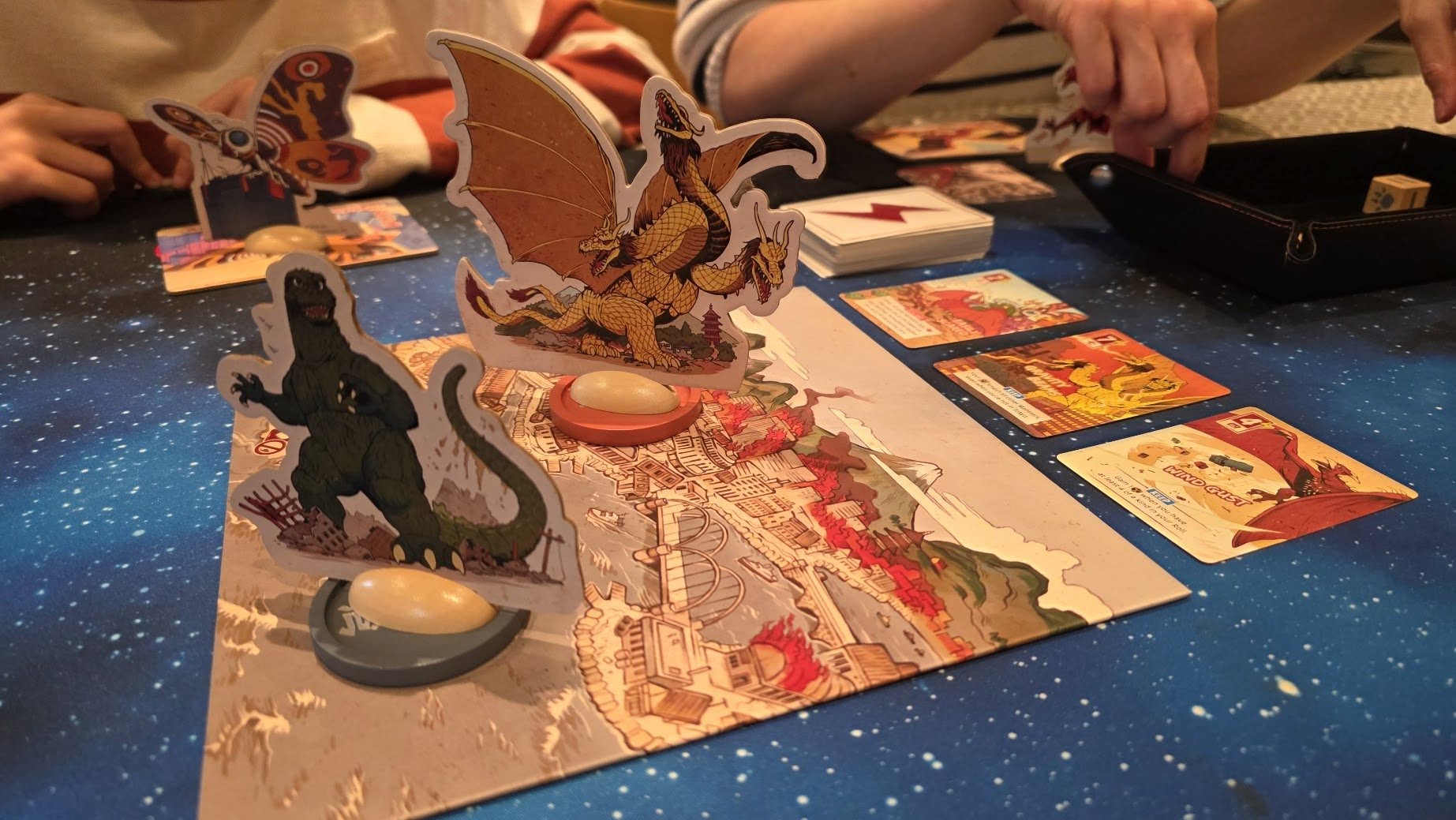
At the start of the game, each player chooses a monster, sets their health to 10 and their victory points to 0. Place the Tokyo board in the middle of the table, reveal three Power Cards, and keep the Energy cubes nearby. Nobody begins the game in Tokyo.
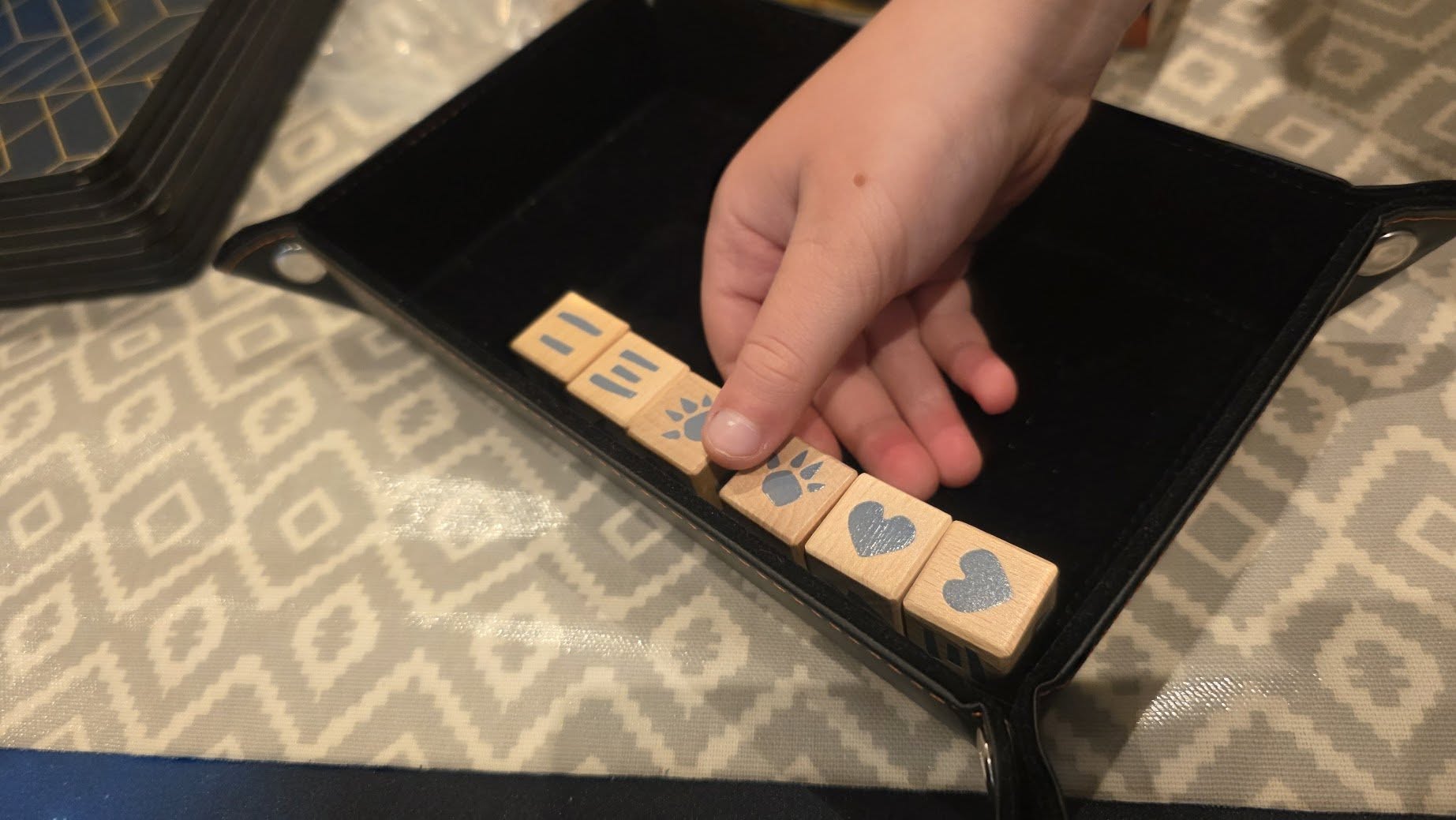
On your turn, you’ll roll all six dice up to three times, keeping and rerolling as many as you like between rolls, very much in the style of Yahtzee. Once you’re happy with your results, you resolve the symbols.
Number results (I, II and III) score victory points if you roll at least three of the same number. Three Is score 1 point, three IIs score 2 points, and three IIIs score 3 points. Any extra matching numbers beyond the initial three are worth an additional point each.
Heart symbols heal your monster by one health each, although monsters currently in Tokyo cannot heal using dice.
Energy symbols earn you Energy cubes, which act as the game’s currency. These can be spent to buy Power Cards that provide permanent abilities or one-off effects that can dramatically change the course of the game.
Claw symbols are used to attack. If nobody is in Tokyo, the first player to roll at least one Claw moves into Tokyo. Once Tokyo is occupied, the direction of attacks changes. Monsters outside Tokyo damage the monster in Tokyo, while the monster in Tokyo damages every monster outside of it. Each Claw deals one damage.
Whenever the monster in Tokyo takes damage, they can choose whether to yield Tokyo to the attacking player. If they leave, the attacking monster takes their place. Staying in Tokyo is risky because everyone wants to knock you out, but it comes with rewards. You gain 1 victory point when you enter Tokyo and 2 additional victory points if you start your turn there.
Play continues clockwise until either one monster reaches 20 victory points or all other monsters have been eliminated. The first player to achieve either condition is crowned the King of Tokyo.
This version does come with the Evolution expansion, which is a nice touch. Whenever you roll three hearts, you can gain an additional Evolution card that grants your character a unique ability. However, I do wish it had included the Wickedness expansion. I genuinely think Wickedness adds a lot to the game. It was included in King of Tokyo: Dark Edition and is also available separately, and I would recommend adding it to any standard version of King of Tokyo.
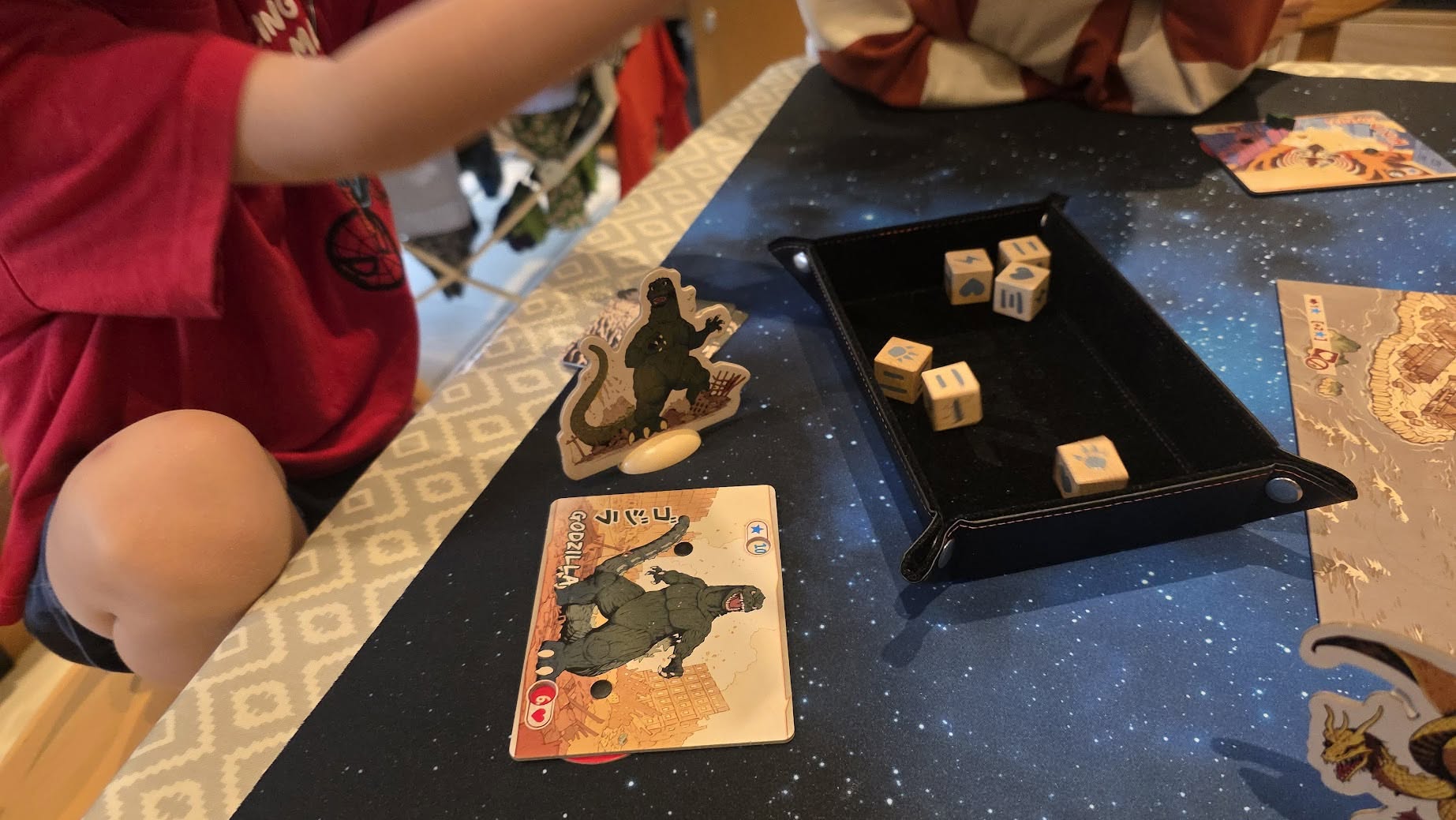
I really like King of Tokyo, so this was always going to be a positive review. Whether it’s worth spending the extra money on this version really depends on how attached you are to the Godzilla licence.
This version is absolutely beautiful. Many of the components are wooden, whereas previous editions used plastic. Everything has a lovely muted Japanese-inspired Godzilla aesthetic, and all of the artwork feels unique and distinctive. Much like the Dark Edition, it really stands out on the table.
I also don’t know how long Iello have secured the licence for. If the Dark Edition is anything to go by, this version could sell out quickly and become quite sought after. The Dark Edition now regularly sells for around £100 on the second-hand market.
I’m going to link my reviews of the other versions in the comments below because I genuinely think everyone should own some version of King of Tokyo.
If the Godzilla licence really matters to you and it’s something that will make you want to play more than the generic monsters from the original game, then yes, 100% get this version because it’s gorgeous.
I still probably prefer the visuals of the Dark Edition, which has a fantastic neon aesthetic, but at the end of the day this still plays as King of Tokyo.
If you’re looking for something shorter and aimed at younger children, I’d recommend King of Tokyo: Origins, which is a slightly cut-down, slightly cheaper, and simpler version of the game. If you want everything and the full experience, then I’d point you towards King of Tokyo: Monster Box, along with the Wickedness expansion, which unfortunately isn’t included here. Equally like the Dark edition, these special versions of King of Tokyo are not normally supported for expansion… at least not in the matching art style.
As I said at the end of my King of Tokyo: Monster Box review, I still can’t really explain my previous lukewarm feelings towards the original. I’m fairly confident we made some mistakes with the rules back then, which meant it didn’t impress me quite as much as it does now.
The more time I spend with the system, the more I appreciate just how elegant it is. There’s enough luck to create dramatic moments and give younger players a fighting chance, but enough meaningful decision-making that older players still feel like their choices matter.
I really like King of Tokyo, and I would 100% recommend getting a copy. It’s quick to teach, full of exciting moments, and strikes a really nice balance between luck and decision-making. Younger children can enjoy chucking handfuls of dice and smashing monsters together, while older players will appreciate the tactical decisions surrounding when to push their luck, when to retreat from Tokyo, and how best to use their Energy cards.
Whether or not you get the Godzilla edition, however, is purely down to how much you value the official licence and these particular visuals. It’s a lovely version of the game, but it is ultimately a reskin, and you’re not getting anything that truly sets it apart mechanically from other versions of King of Tokyo.
I do feel that’s a tiny missed opportunity.
Plus, let’s be honest, we all would have liked to have seen King Kong.

*Get a King of Tokyo, but check to decide which is the best one for you to get.