
 Matthew Bailey
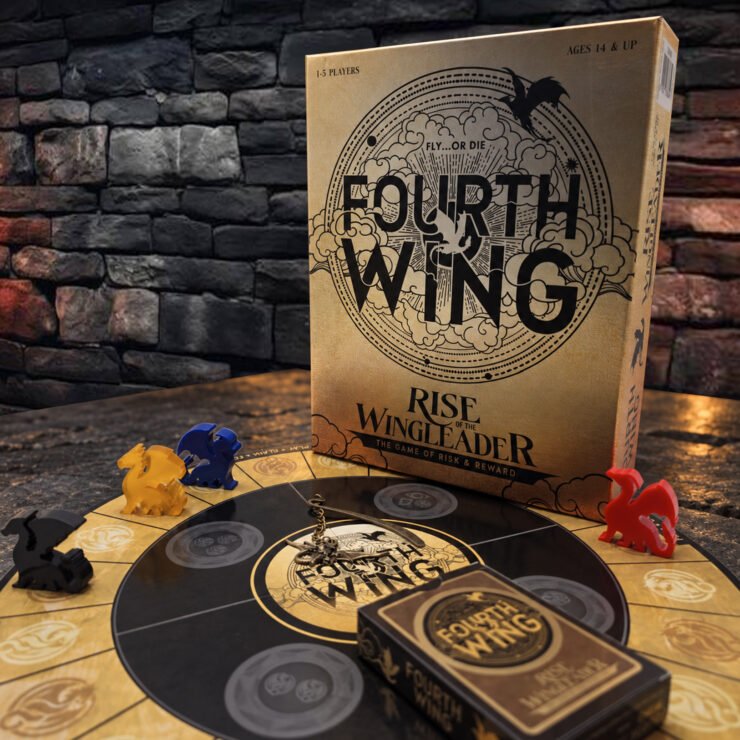
Fourth Wing: Rise of the Wingleader was one of the surprises of our visit to the UK Games Expo. We went into it knowing nothing about the books and came away having really enjoyed a game that we might otherwise have walked straight past.
As I mentioned last time, it is worth noting that the Fourth Wing romantasy books are fairly spicy in terms of content, but there is absolutely nothing inappropriate for younger audiences in what is a relatively simple yet engaging tactical bidding game.
Having now had the chance to play it more, including at its full player count, I wanted to revisit those first impressions and explain a little more about how it all works.
From a storyline point of view, the game puts you in the Fourth Wing of the Riders Quadrant, competing to earn Glory and become Wingleader while trying to survive the school year. Think adult Harry Potter with dragons. However, you don’t need to know anything about the setting to play.
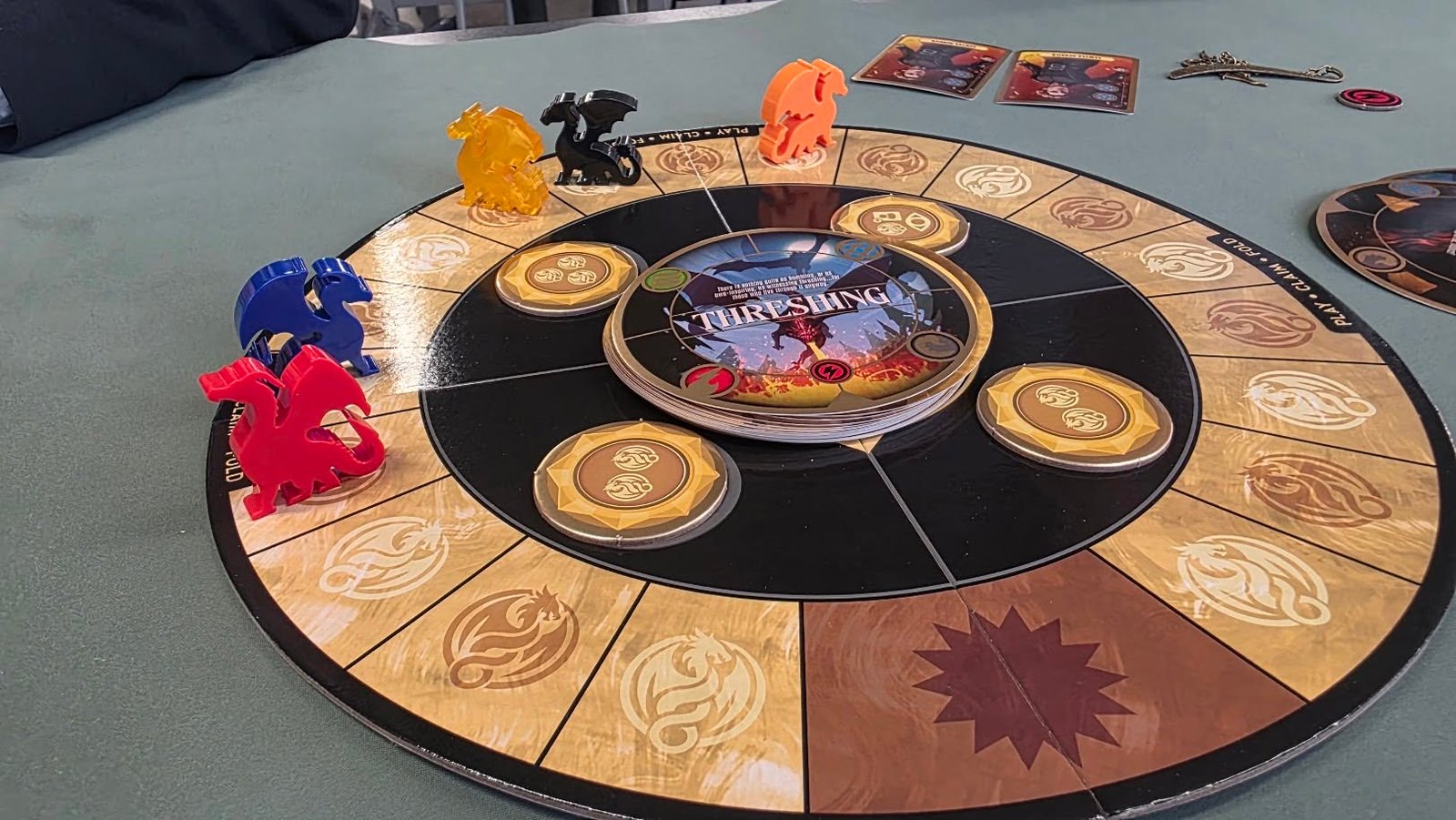
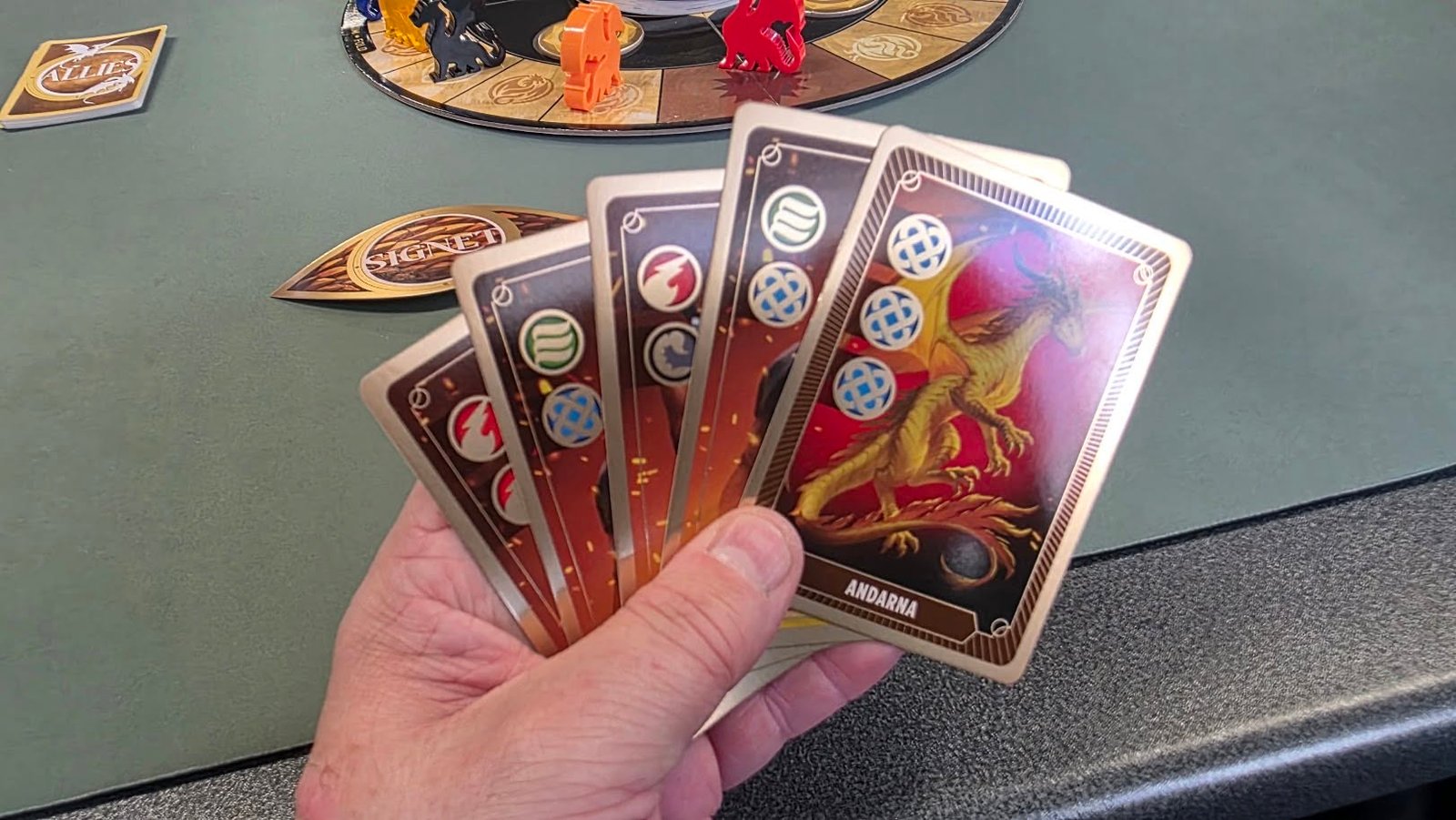
You start with five Ally cards, a dragon marking your position on the Glory track and a face-down Signet card, which you aren’t allowed to look at yet. Each round, you reveal an Event card that assigns four different traits, known as Blazons, to the four reward spaces. These are Power, Agility, Cunning and Connection, but you will quickly ignore this and simply refer to them by their colours… red, green, black and blue. The matching symbols on your Ally cards show which ones they contribute. From the second round onwards, you also draw two new Ally cards each.
On your turn, you have three options: play cards, claim rewards or fold. To play cards, you place an Ally face up in front of you, adding its symbols to those you already have in play. You can play either one card showing three symbols or up to two cards showing two symbols each. Play then passes to the next player, so you gradually build up your collection of symbols over several turns.
To claim a reward, you need to have more of its matching symbol in front of you than any other player at the start of your turn, without playing another card. A tie isn’t enough. When you choose to claim, you must take all the remaining reward tokens you qualify for, collecting their benefits immediately, which usually means moving spaces around the board. It is possible to claim two colours at once, which is extremely strong and happened regularly when I played with three players at UKGE, but is a lot less common at higher player counts.
You then discard all the Ally cards you have played and sit out the rest of the round. This means you are deciding whether to take what you can get now or spend another turn playing cards in the hope of claiming more, knowing someone else might take those rewards first. This works really well, as there is a risk–reward element: you can usually brute-force your way to taking something if you really, really want to and have the cards, but that will inevitably be at the expense of having a decent selection of cards for the next round.
Two of the reward tokens give you two Glory each, allowing you to move two spaces, while another gives you three. The fourth gives you one Glory, an extra Ally card, which can be useful, and, the first time you claim it, unlocks your special Signet ability. You flip over your Signet card to reveal a personal power that stays available for the rest of the game, with the card explaining when you can use it. Whenever you gain Glory, you move your dragon around the track, skipping spaces occupied by other dragons.
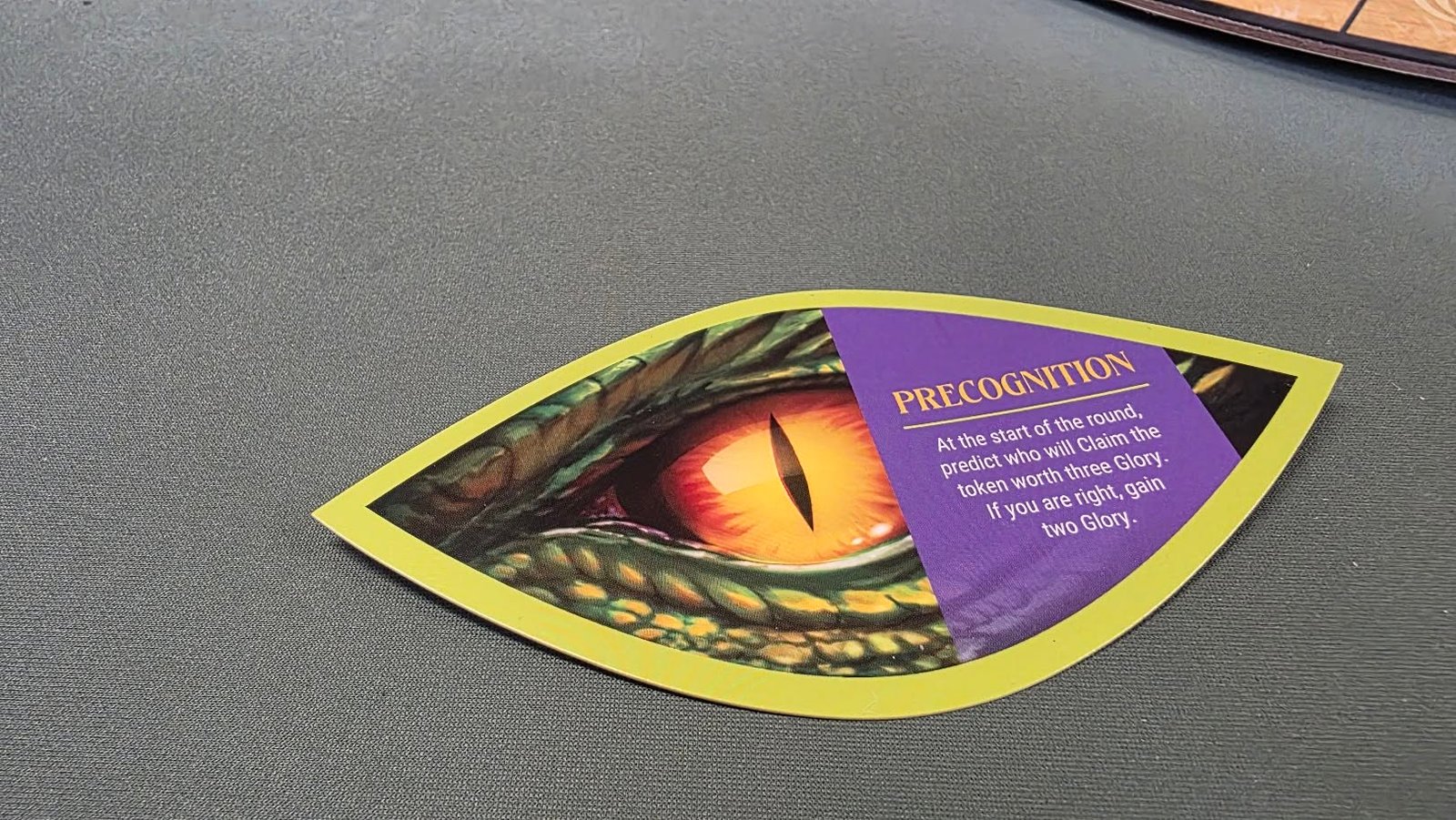
These Signet abilities are pretty much my only concern with the gameplay, as their power and usefulness vary massively, with some being almost game-breakingly overpowered and others being largely useless. There is also one that makes another player discard cards if they cannot name the characters on them. This is obviously designed for fans of the book series, but as a group of players who have never read the books, we found this power soon became absolutely devastating. Essentially, once a turn, a player could make another player lose their entire hand… We removed this card from our games after the first time it came out.
Your final option is to fold. This lets you return all the Ally cards you have played that round to your hand, keeping them for later, but you sit out the remainder of the round without claiming a reward. However, if the current Event shows the deadly symbol, folding also gives you an Injury token. Collect three injuries and you are eliminated from the game, regardless of how much Glory you have earned. This is rarely an issue, though.
Once everyone has either claimed or folded, the reward tokens return to the board, the first-player marker moves round and a new Event begins the next round. If you are the only player still in a round, you can keep taking turns until you claim or fold.
When someone completes a lap of the Glory track by reaching or passing the starting space, you finish the current round. The surviving player with the most Glory then wins the game.
It is a super simple game, but there are a lot of decisions to make on a turn-by-turn basis, and this gets harder at higher player counts. It works really well, though, and everyone I have played it with, both young and old, has really enjoyed it.
At first, folding seems counterintuitive, but sometimes you are better off letting other players spend their cards fighting over the current rewards while you save yours for a later round.
There is something particularly satisfying about seeing that two other players are about to get locked into a bidding war and deciding to leave them to it. Equally, taking a smaller reward before someone can overtake you can be just as useful as committing a handful of cards to chasing the biggest prize. Taking a prize later in a round can also mean that you skip loads of other players’ dragons and get far more movement out of your win.
As I said previously, my only real concern with the gameplay is that some of the Signet powers feel very strong compared with others. I like the idea of unlocking your own ability, and they give you another reason to think carefully about which reward you are chasing, but I’m not convinced they all feel equally useful. Some seem extremely, almost game-breakingly, overpowered, and because your Signet is dealt to you face down, you don’t get to choose which one you are working towards. It hasn’t stopped us enjoying the game, but it is the part of the balance that I would question.
The presentation is a mixed bag. The game comes with a beautiful metal bookmark as a first-player token, and I can see fans of the series buying the game just for that. It does, however, feel as though slightly less has been spent on the board game components themselves. The dragons should have been wooden rather than plastic, the cards don’t have a particularly nice finish, and things like the Signet cards could easily have been made from thicker cardboard rather than the same material as the other cards.
The game comes with an insert, but it’s not obvious how everything fits into it. Still, I’d rather have one than not. The Bookseller’s Edition, which is exclusive to Waterstones, is still readily available, so pick whichever cover you like best.
Overall, Fourth Wing: Rise of the Wingleader has held up well beyond that first play earlier this year. It is approachable enough to introduce to the grandparents and simple enough to play with the kids, while giving you plenty of decisions about when to commit, when to claim and when to save your cards for later.
If as an aduly you enjoy the books, the theme gives you an extra reason to look at it. If you have never read a page, there is still a very enjoyable game here. I have yet to read any myself, as I am now on my second run through the Dungeon Crawler Carl series! Playing with a full table also brings out more of its tactical side than we appreciated during our first play back in June.
Disclaimer: A copy of the game was kindly gifted to us by Goliath. All of our thoughts and opinions are, however, our own. No financial incentive was provided for this review.





 Nicola Asker


