 Matthew Bailey
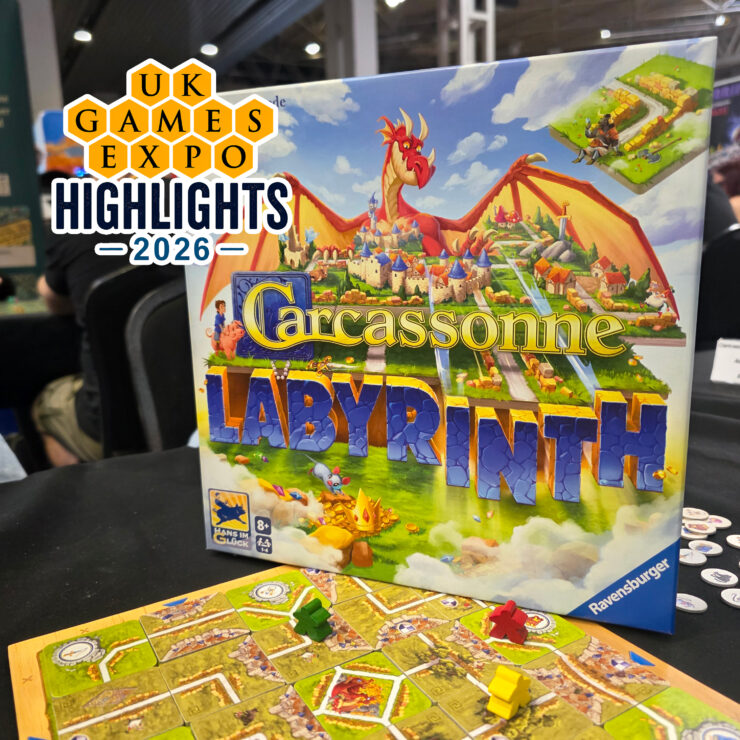
The next game I want to look at as part of our UK Games Expo highlights is one that I absolutely adored and cannot wait to get my hands on a full retail copy of later in the summer, and that is Carcassonne Labyrinth.
When I first heard about Carcassonne Labyrinth, I thought it was going to be very much a Carcassonne-themed version of Labyrinth. But no, actually this is a completely separate game that plays incredibly well, where you’re essentially playing a game of Labyrinth and a game of Carcassonne at the same time. Let me explain.
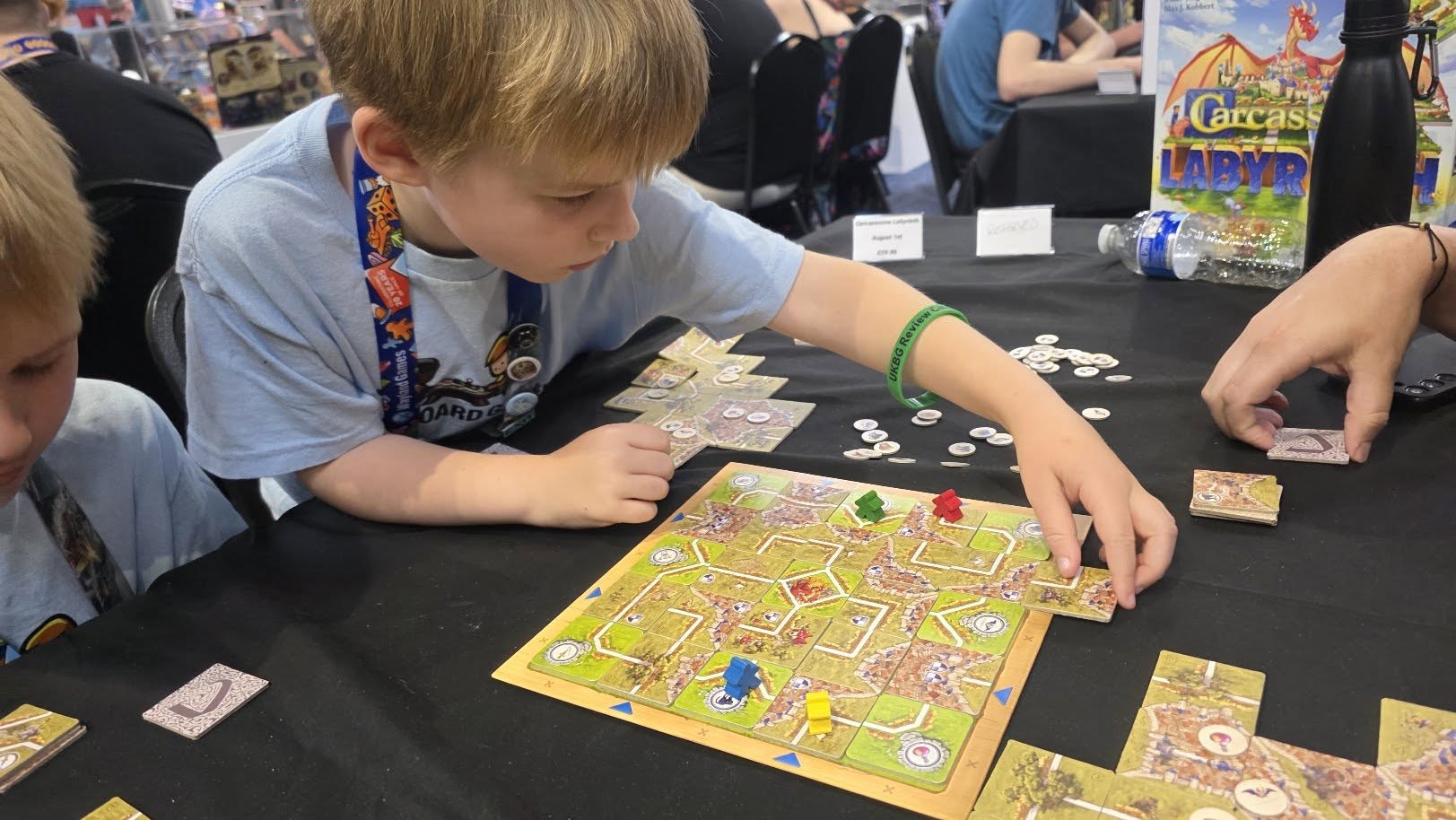
The part most like how you normally play is Labyrinth, where you have your meeples and a pile of treasure tiles. These treasure tiles are normal Carcassonne tiles that have treasures on them, and you are trying to reach the next treasure shown on your top tile, much like in a normal game of Labyrinth.
You then take a tile from your general pile and, as per how you normally play Labyrinth, push that tile from one side to the other, shifting all of the tiles in the labyrinth and hopefully giving your character a direct route straight to the treasure.
Unlike normal Labyrinth, the piece that you slide out of the labyrinth is actually extremely important. This piece is now used to build out your map. Equally, if you manage to gain a treasure, you gain the treasure tile as well, meaning you have two tiles to add to your ever-expanding city.
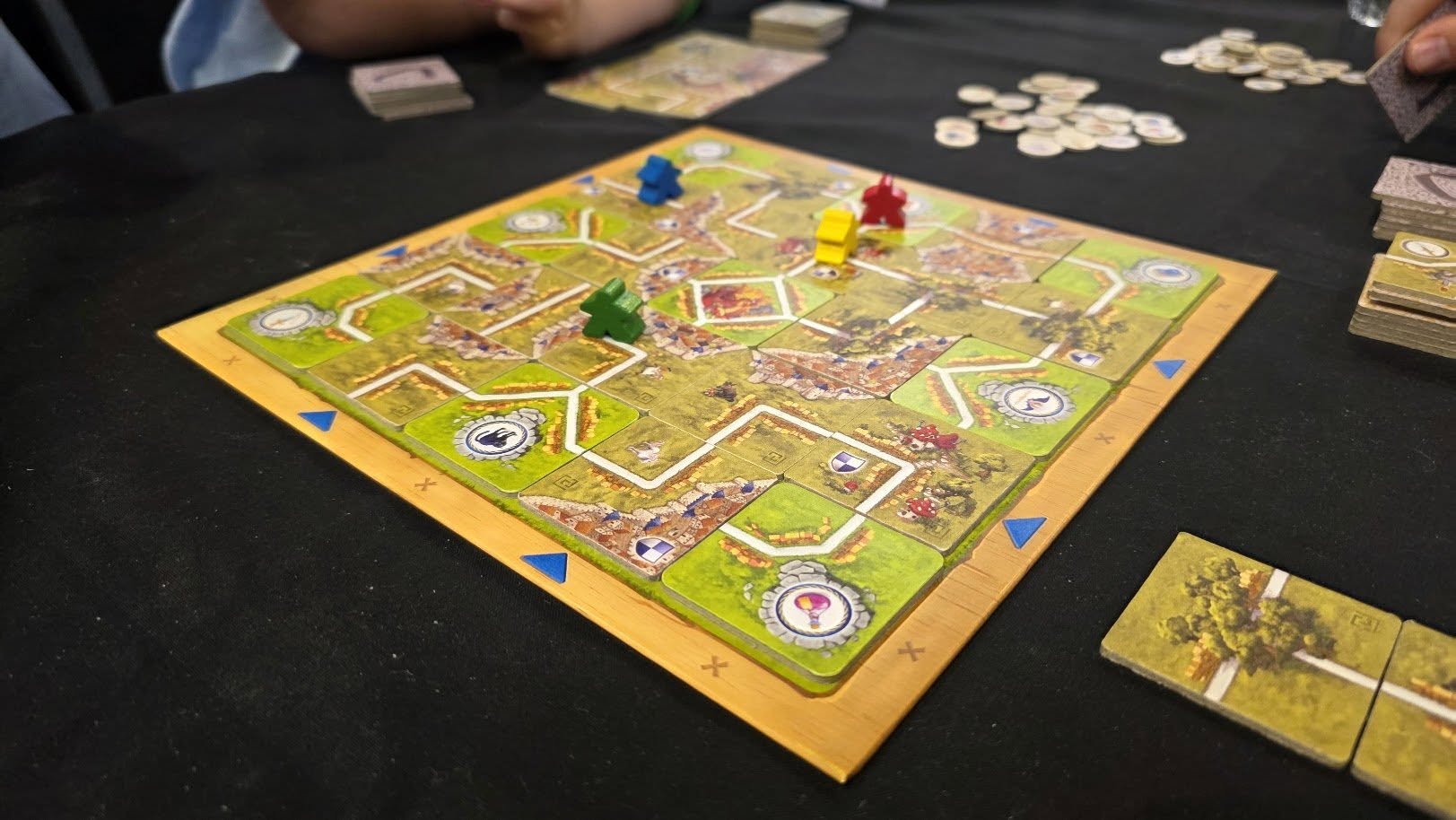
Now, unlike normal Carcassonne, where you’re going for points, what you’re actually trying to do here is collect the most cardboard pieces, whether that be tiles or tokens. Tiles are gained by winning treasure tiles and then adding them to your board as you go. There are also a number of ways to gain tokens. Most cities have tokens attached to them, and when you complete a city you gain tokens for every shield in that city. Equally, most treasure tiles come along roads and, in order to gain an extra treasure token, you need to complete that road.
And this all works amazingly well. Essentially, you’re playing two completely separate games at once. You’re playing a moderately standard version of Labyrinth, and then a kind of unusual, slightly streamlined version of Carcassonne, where you’re trying to play the labyrinth while also predicting which tiles you need and controlling the tiles you gain in order to get the best possible score.
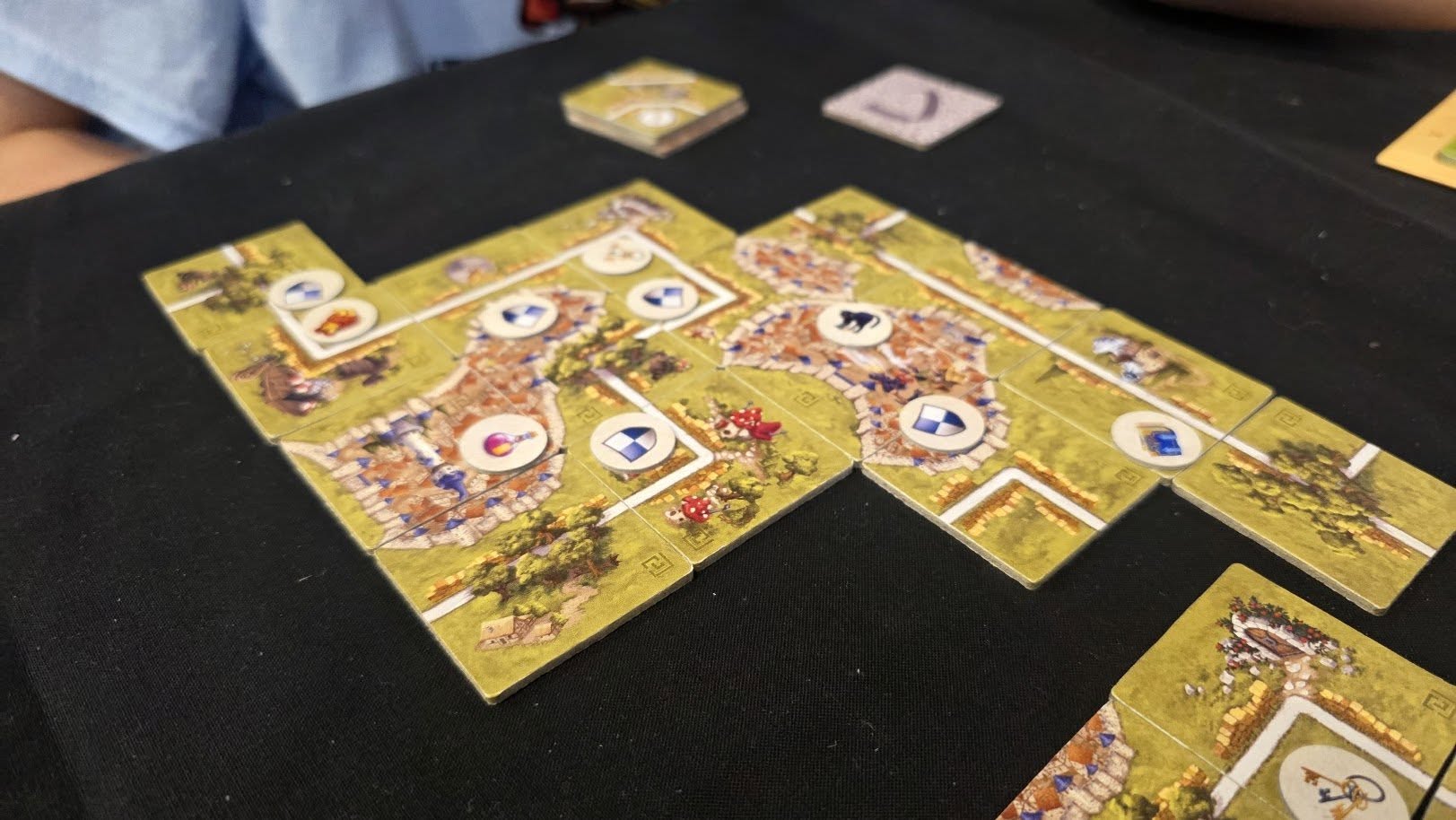
The game ends when everyone has played all of their tiles from the starting tile pile. You then finish the game by stacking all of your tiles and tokens on top of each other and placing your meeple on top. The tallest tile pile wins. The way this works scoring-wise is really easy and it’s usually visually very clear who has won.
While I played a prototype, everything is exactly how you would expect from Labyrinth and Carcassonne. I was assured that the slight colour differences between the moving and non-moving tiles on the board would be fixed for the retail release.
Carcassonne Labyrinth is, in my opinion, an absolute marvel of game design. It takes two extremely well-known and popular IPs and blends them together in a way that I wasn’t expecting at all. It is way better than it could have been, as it genuinely feels like a spiritual mix of both games.
Absolutely fantastic, definitely one to keep an eye on, and I look forward to giving my final thoughts on the retail release when it comes out later this year, hopefully as part of our Summer Games Fest.