
 Matthew Bailey
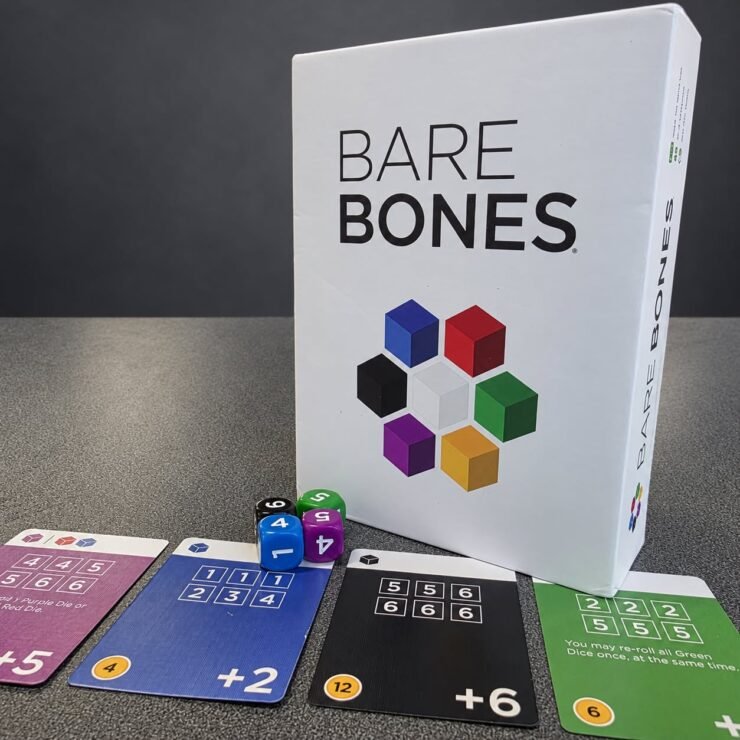
Today we are going to be looking at Bare Bones, a dice-rolling, deck-building game from indie publisher West Coast Bias Games that landed on my desk a few weeks ago.
In Bare Bones, you’re building your own deck of cards to decide which dice you can roll and what you can do with the results. Your aim is to finish with the most points after 12 rounds, scoring both from your rolls along the way and from the cards you’ve collected.
You start with seven basic Dice Cards (some that give you points and some that give you money), then take turns choosing another three cards from the shared supply to personalise your starting deck. There are also seven types of Action Card available each game, selected from the larger collection, so you can change which abilities are on offer between games. These abilities range from relatively strong to almost useless, but the amount of variety available is good. Getting the balance right when using these is key, as they don’t have any end-game scoring value.
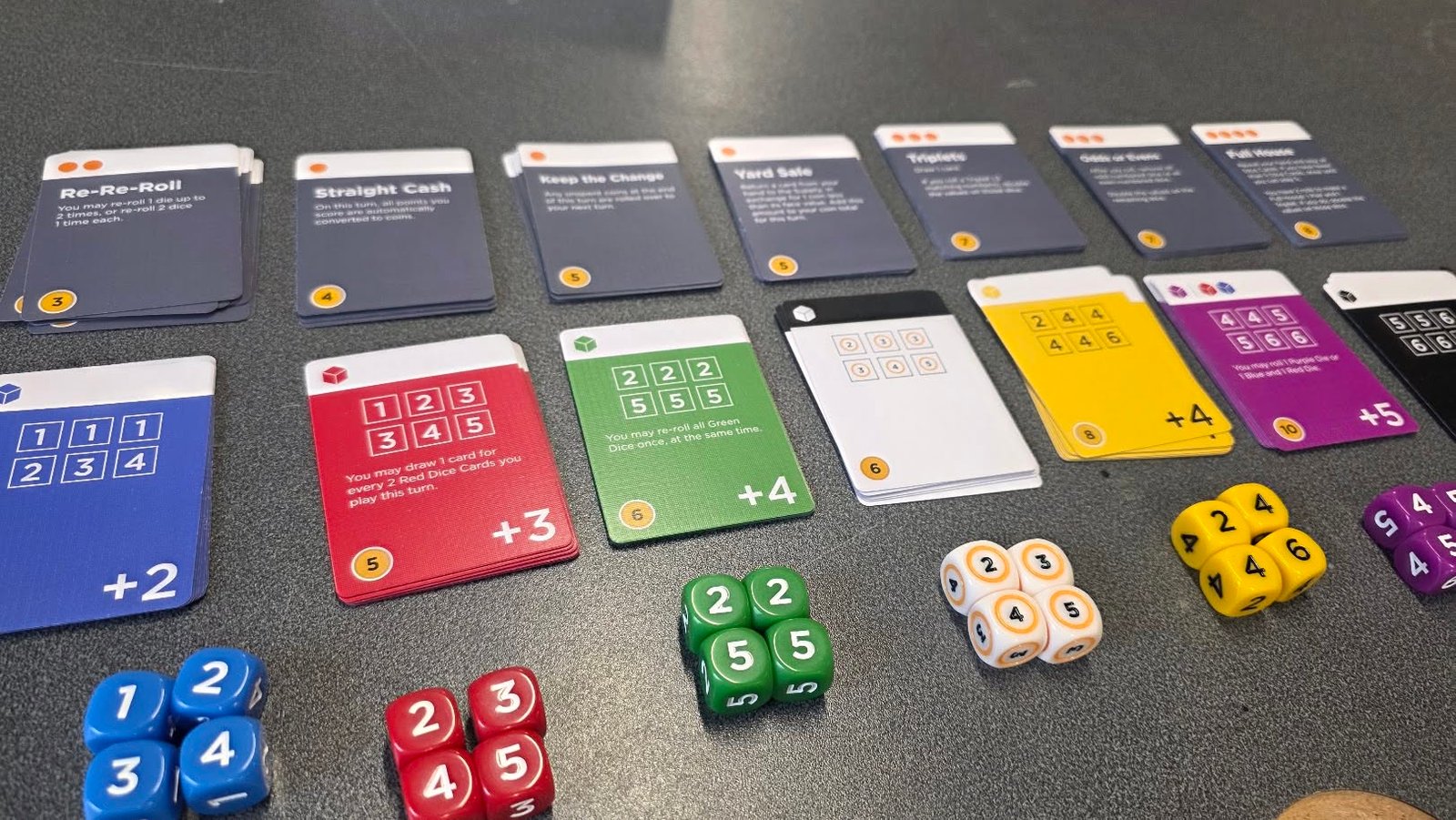
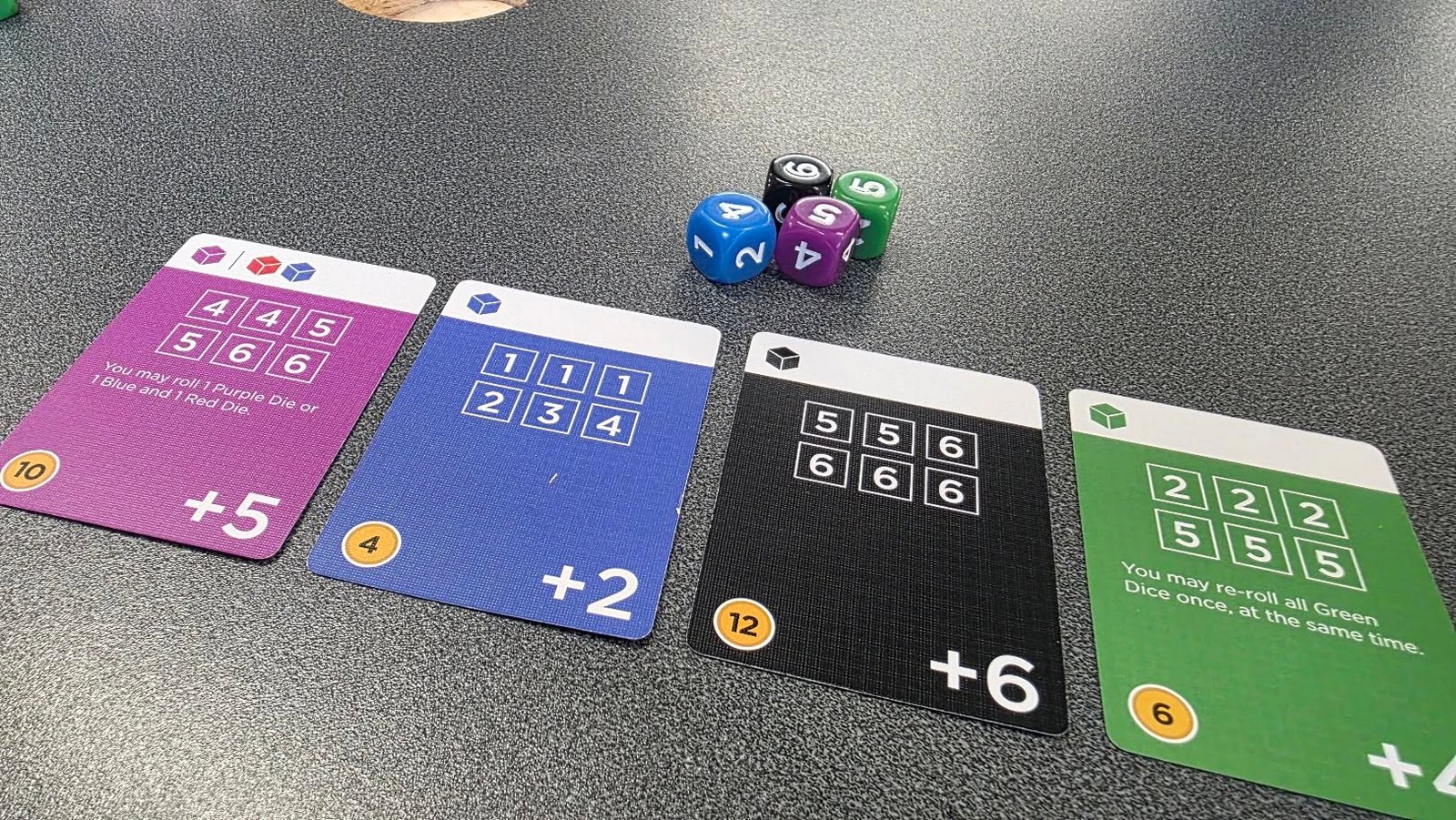
On your turn, you play cards from your five-card hand. Dice Cards let you roll dice of the matching colours, up to a maximum of six dice. Each colour has a different spread of numbers, and some come with extra abilities, such as letting you draw another card or reroll certain dice. Most dice score points, but white dice give you coins to spend on new cards instead, similar to how you would in a game such as Little Board Gamers favourite Star Realms.
Action Cards let you do things such as draw more cards, reroll dice, borrow a Dice Card from another player or double the value of matching numbers. Each uses a set number of action units, with five available per turn, so you need to decide which combination to play.
Once you’ve rolled and worked out your points and coins, you can spend those coins on more Dice Cards or Action Cards. Your purchases go into your discard pile, ready to be shuffled into your deck when your draw pile runs out. You can buy several different cards if you can afford them, but normally only one copy of each per turn. Any unspent coins are lost unless a card lets you keep them.
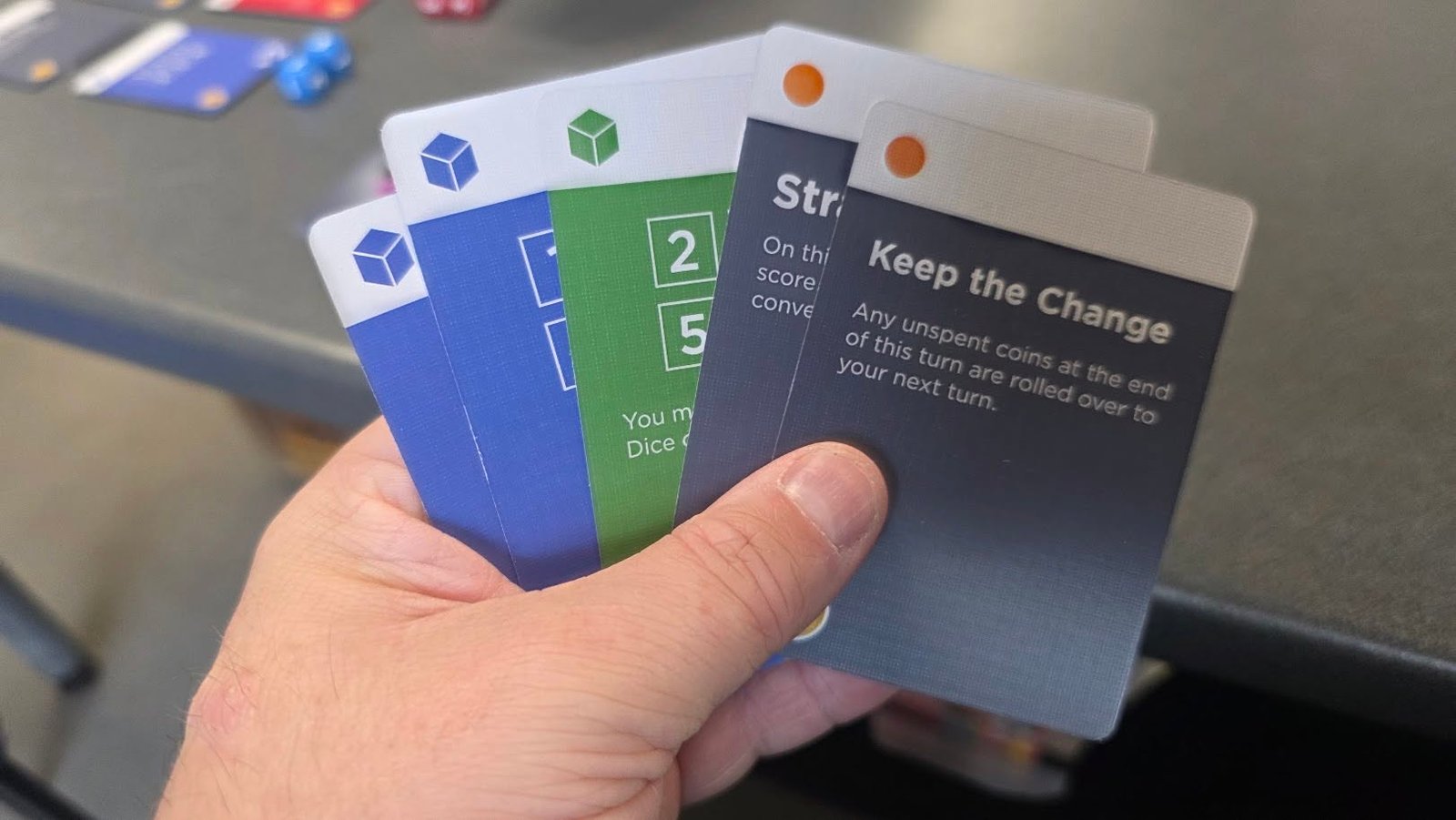
There’s also a little extra rule called bonus matching. If the player before you finishes their turn having played exactly two Dice Cards of the same colour, you can put down a matching card from your hand. That earns you an extra card at the start of your turn, and the card you put down still counts towards your own turn. This makes you think about your own hand and adds some interaction between players on other people’s turns, which is something you don’t always get in games like this.
After 12 rounds, you add the end-game points printed on your cards to the points you’ve already scored. Whoever has the highest total wins.
It is simple once you understand how to play, although the rulebook makes a few odd choices about how to explain things.
The High Roller Expansion (which, for me, was included in the box) adds upgraded white dice that can earn you more coins, with their Dice Cards also allowing you to buy multiple copies of the same card in a turn. It also introduces two new Action Cards: Investment, which lets you set cards aside for a later payout, and After Hours, which grants access to an extra bonus round before final scoring. We included it straight away when we played the base game, but it isn’t needed.
I liked playing Bare Bones, and there are some really nice ideas here. Mixing dice rolling with some push-your-luck elements, depending on the powers you choose, and coupling that with deck building is a really cool idea. If you particularly like these genres, there’s going to be a lot here for you to like. I don’t know why, though, but it just felt like it needed something else, and I can’t quite put my finger on it. Design-wise, they have gone for something very clean, very simple and very bare bones, pun intended. But without a theme to go with it, when we got to the end of the game and the results were announced, it felt a little anticlimactic.
The components are well made and everything looks good. I just felt like I wanted something a bit more to take this from a good game to a great game, but I can’t quite put my finger on what that is. If, however, you absolutely adore deck builders, there is a lot to like here, and it’s a decent small-box recommendation.
Disclaimer – A copy of the game was kindly gifted by the publisher. We have not been paid for this review and our thoughts and opinions are our own.


 Timothy Payne


