 Matthew Bailey
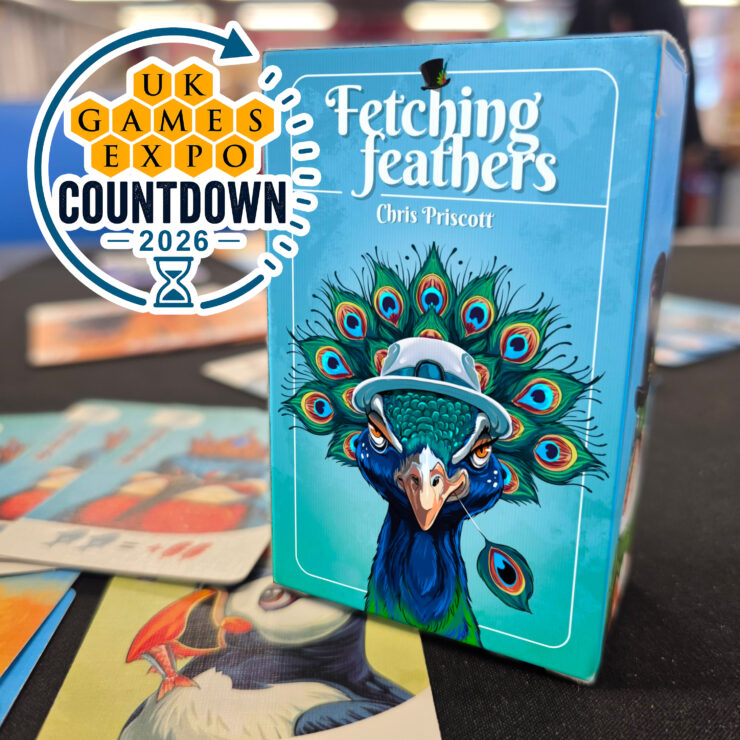
Today we are going to be looking at Fetching Feathers, which is also known as Peacocks internationally, the spiritual successor to Zuuli from Unfringed Games and designer Chris Prescott.
Zuuli is a big favourite of ours and one of our favourite card games, I will make sure the link to Zuuli is in the comments below, so I was super excited when I found out there was a spiritual successor in Fetching Feathers. I say that because both games play very similarly, but Fetching Feathers has clearly been refined based on the foundations that Zuuli started with.
It was definitely one of the main focuses for many people last year when the pre-release copies of the game sold out and I didn’t manage to get one, but luckily over the last year I did manage to obtain a copy and here we go. I suspect Fetching Feathers, along with the other release D.O.T., will be talked about a lot at the show this year.
In the game you are trying to attract migrating birds to your different locations and score the most points over the course of three seasons. The game is played over three rounds, with each round representing a different season and changing the direction your hands of cards are passed around the table.
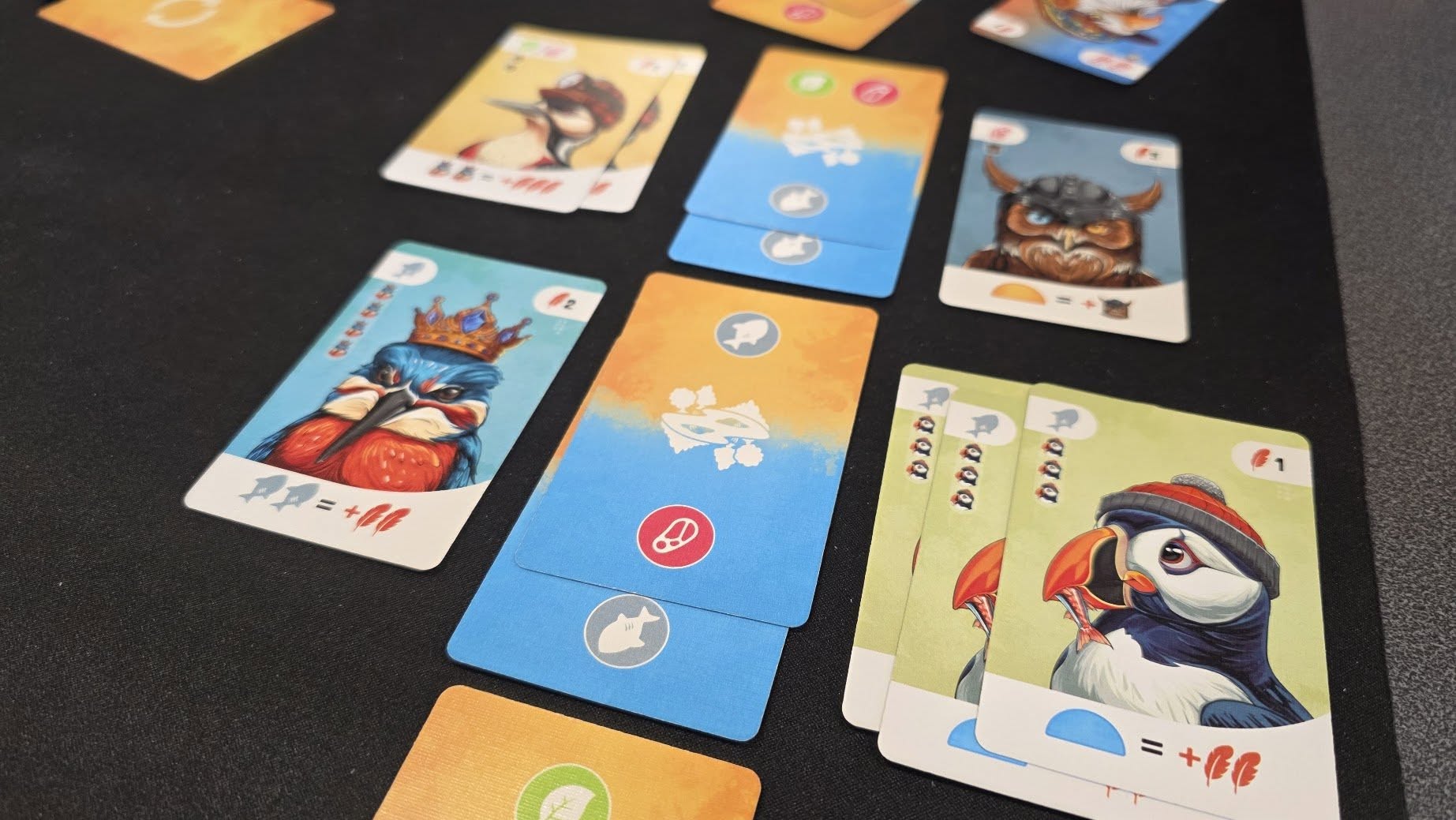
To set the game up, each player starts with three location cards in front of them. This is a key change from Zuuli and I think a really positive one, as it means you have a strong starting point and don’t get stuck with no lands. You also place the season card so everybody can see which season you are currently playing in and which direction cards will be passed during the round.
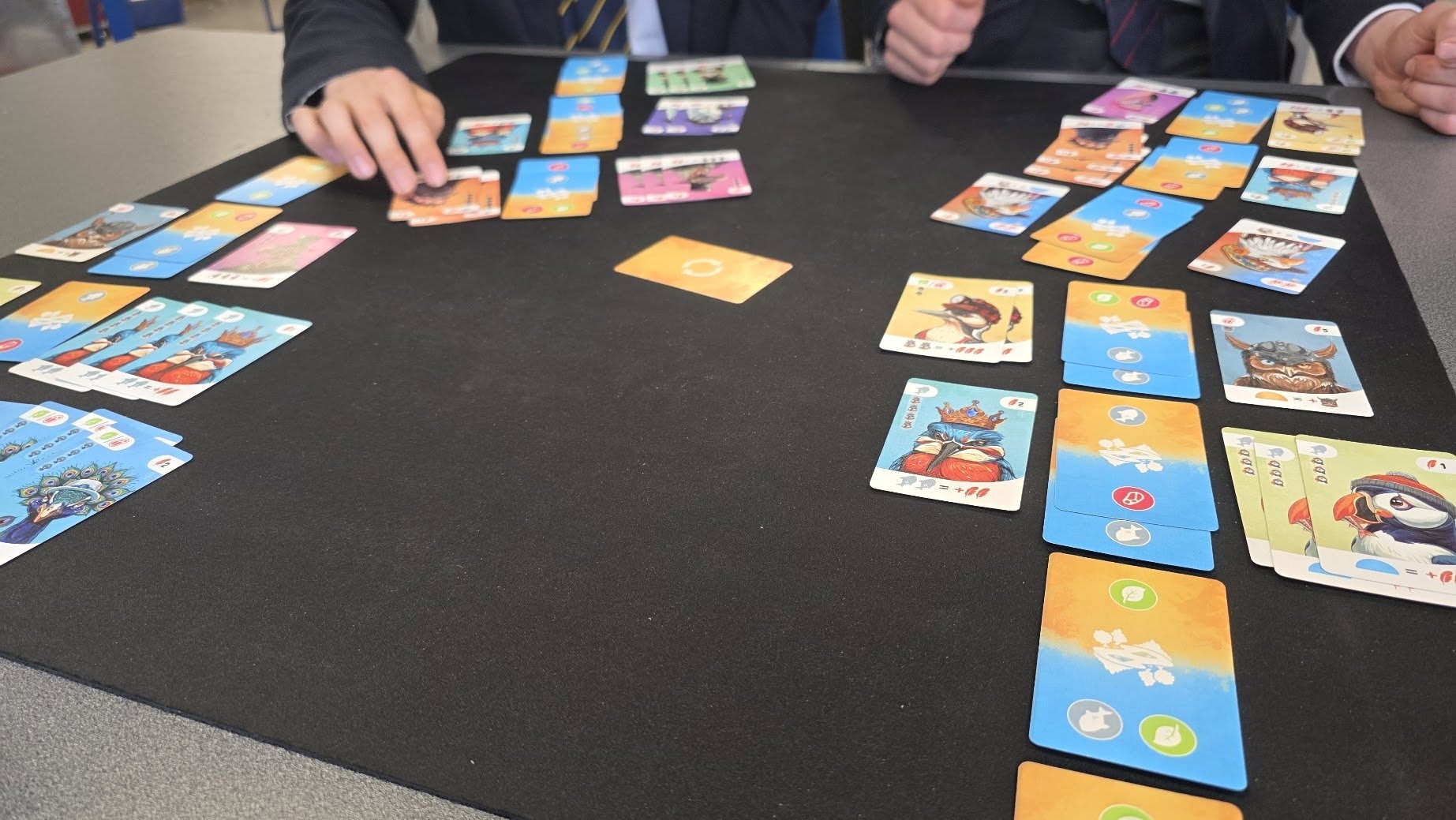
At the start of each season, players are dealt a number of cards from both the bird deck and the location deck. Keeping these two decks separate, much like the starting locations, is a really key change as it means the hands you get and the ratio of locations to birds stays balanced, as opposed to ending up with loads of waste cards which happens regularly in Zuuli. Everybody looks at their hand, chooses one card to keep, then passes the remaining cards in the direction shown on the season card. This continues until all of the cards have been drafted.
Once drafting is finished, you move into the placement phase where you begin building up your habitats and homing birds. New location cards can either be played as entirely new locations, giving you more flock spaces, or attached to an existing location as an upgrade that adds extra food resources during certain seasons. Birds can only be placed into locations that provide the food resources they require, so you are constantly trying to build locations that work well with the birds you have drafted. You can place the cards as you go along if you wish, which most of us ended up doing to stop ourselves getting super confused. It means that you don’t accidentally ruin your own plans too soon and you can always adjust things as you go.
When placing birds, you can either put them into an empty flock slot or add them to an existing flock of the same bird type if there is still room available there. Birds that weren’t quite placed ideally from previous rounds can also be placed during this phase.
After everybody has attempted to place their birds, there is an additional migration phase. Any birds you could not home are passed to the next player in the direction shown on the current season card. If that player already has a valid location available for those birds, without needing to rearrange anything, they may place them into their own habitats. Any birds still left without a home after this are discarded from the game. This is a really cool mechanic as, at this point, the other players can take as many as they want, so leaving yourself some open space to possibly get a big windfall in this phase could genuinely win you the game.
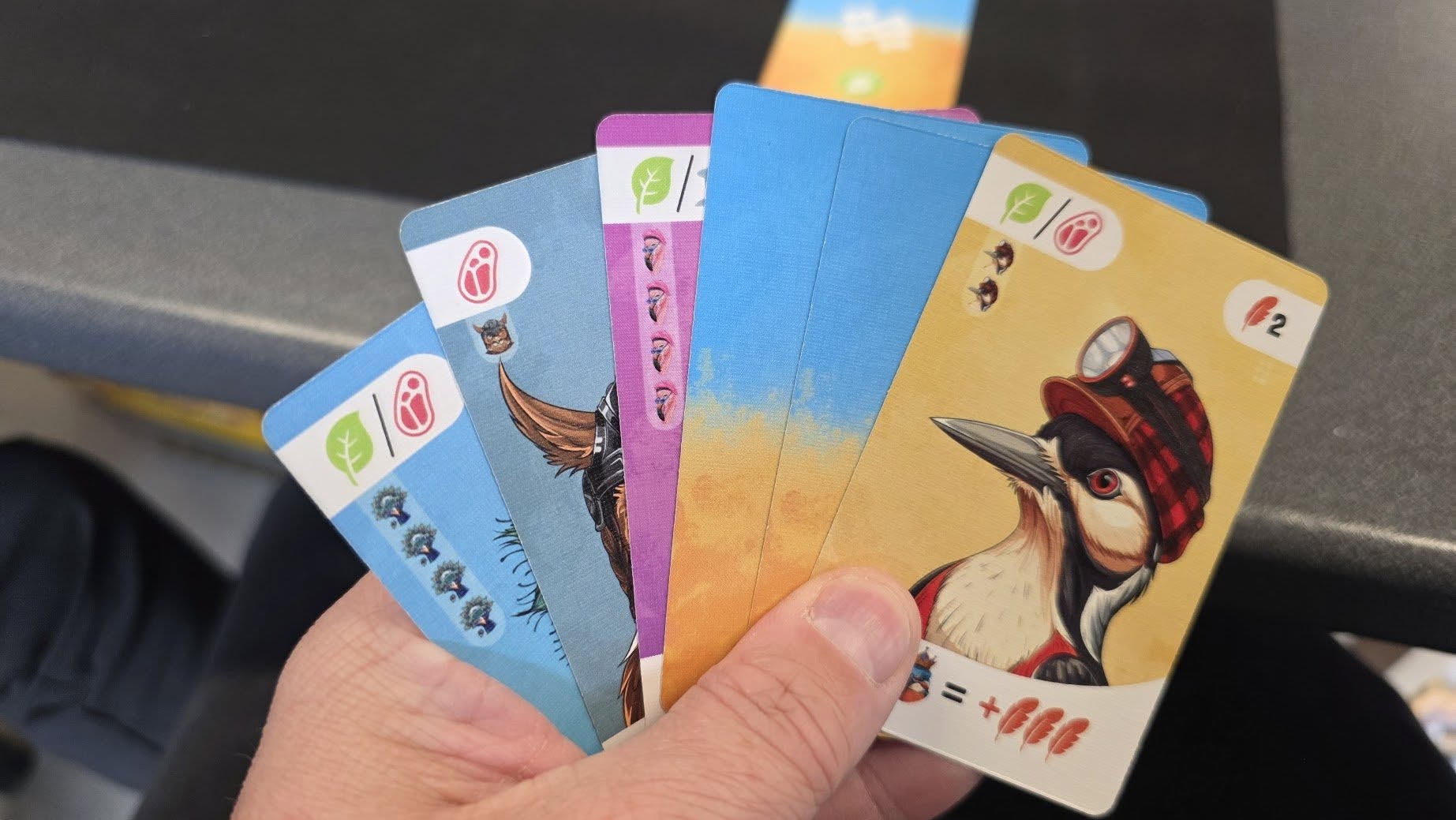
Players then score their locations for the round. Each bird is worth a certain number of feathers shown on the card, and many birds also have bonus scoring conditions that can increase their value depending on how they have been placed or what other birds are nearby. Everybody totals their points for the season before moving on.
At the end of the round the season changes. The season card is flipped over and all location cards are rotated to match the new season. Any upgrades attached to locations stay fixed to the same side of the card, meaning some habitats may work very differently from one round to the next. This is also key, as you need to plan not just for the season you are currently in but the next season as well, because suddenly you may find you no longer have the habitats for all of the birds you had in previous seasons and can lose them during the migration phase.
After the third season has been completed and scored, everybody adds together their scores from all three rounds. The player with the most feathers overall is the winner. If players are tied, the player with the greatest variety of unique birds wins the game.
We love Fetching Feathers. It is a more refined and arguably better version of Zuuli. The fact that the cards are dealt from different decks means that you end up with a much better balance. I really like the way that you start with some locations, which means that you’re never going to end up without anything you can place birds into, and the way that the changing seasons work really adds to the strategic element of the game. I also really like the migration phase because it means that, if you’re really clever, you can take quite a few extra cards on top of what you are otherwise going to get, which can in some cases pretty much win you the game.
While this is, I would say, objectively a better game than Zuuli, I weirdly have a bit more of a soft spot for Zuuli. I think I like the artwork a little bit more, although I can clearly see why people would prefer the Fetching Feathers artwork, and I think the simplicity of Zuuli appeals in a different way, whereas Fetching Feathers can be incredibly strategic if you want it to be.
The long and short of it, however, is that both games are brilliant and I would 100% recommend picking up one of them at the UKGE if you happen to swing by the Unfringed Games stand.