 Matthew Bailey
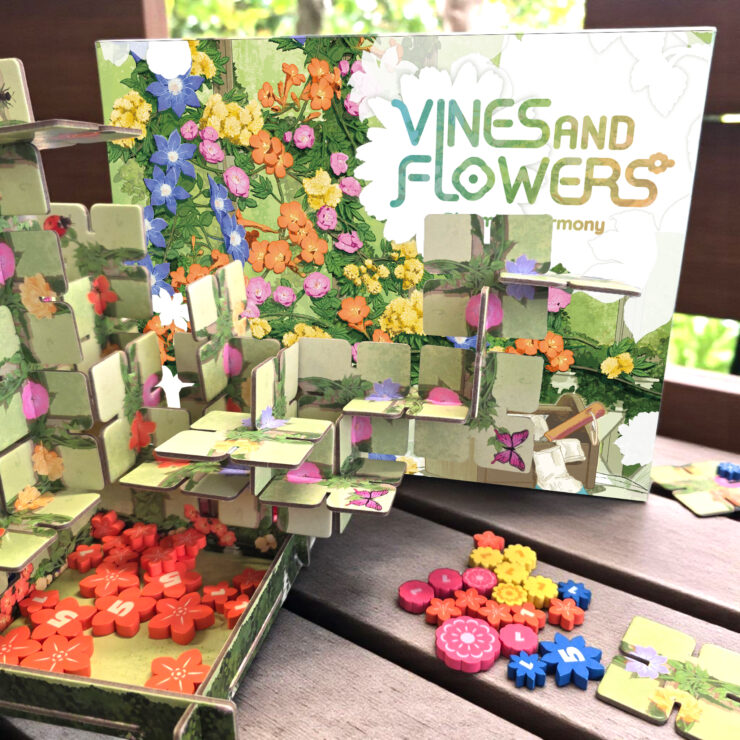
It’s actually quite unusual these days that I come across something that immediately stands out as different. But my preview copy of “Vines and Flowers: Blooming Harmony” did exactly that.
Essentially, “Vines and Flowers: Blooming Harmony” is a tile-laying game – but one that works in 3D space, clicking together much like Tazos did (the ones that used to come in packs of Walkers crisps in the 1990s, for those of us old enough to remember).
(Note to self: see if you can track down an old version of the Pogs board game…)
Anyway, I digress.
You start “Vines and Flowers: Blooming Harmony” by laying out the main structure, creating a market of five tiles, and setting out a board that features hummingbirds and ladybirds, as well as a set of event cards.
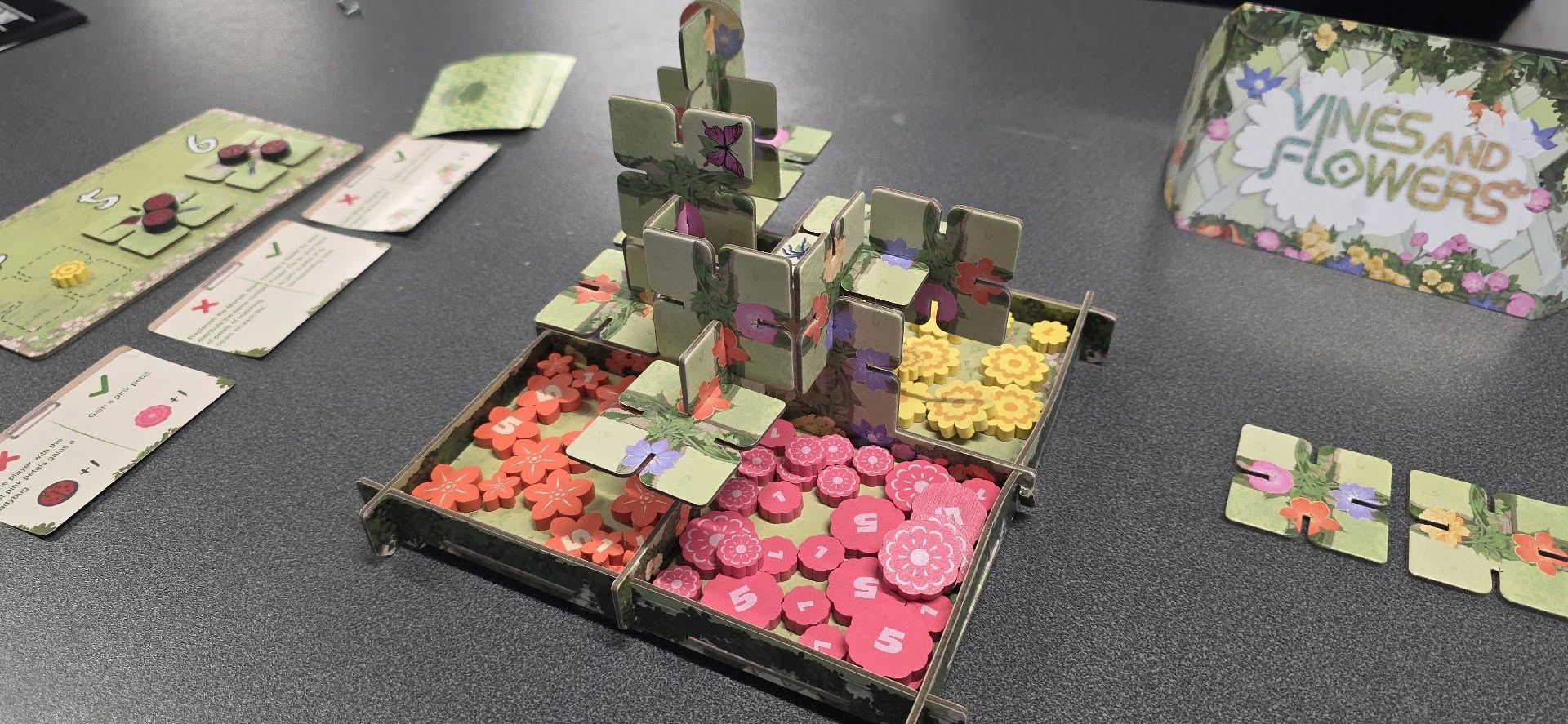
On your turn you can take two main actions. First, you can take a tile from the market – the one at the end of the row is free, but each one closer to the front costs you an extra petal, balancing out the temptation to grab tiles early. Second, you can place a tile into the structure, matching edges with edges (vines to vines, flowers to flowers). Whenever you connect flowers of the same colour, you gain a petal of that colour, plus extra petals for any connected flowers in the chain. This chaining is the main way to score, and it quickly becomes clear that holding back tiles and then playing several at once can be a strong tactic.
There are also insect abilities – things like gaining an extra turn, taking more tiles, or using wildcards to cap off ends. On top of that, hummingbird tiles can appear in the market or be gained by exchanging petals. These hummingbirds let you use event cards, which might give you extra petals or grant you a one-off special power. And if a hummingbird tile reaches the end of the market without being bought, everyone gets to trigger an event.
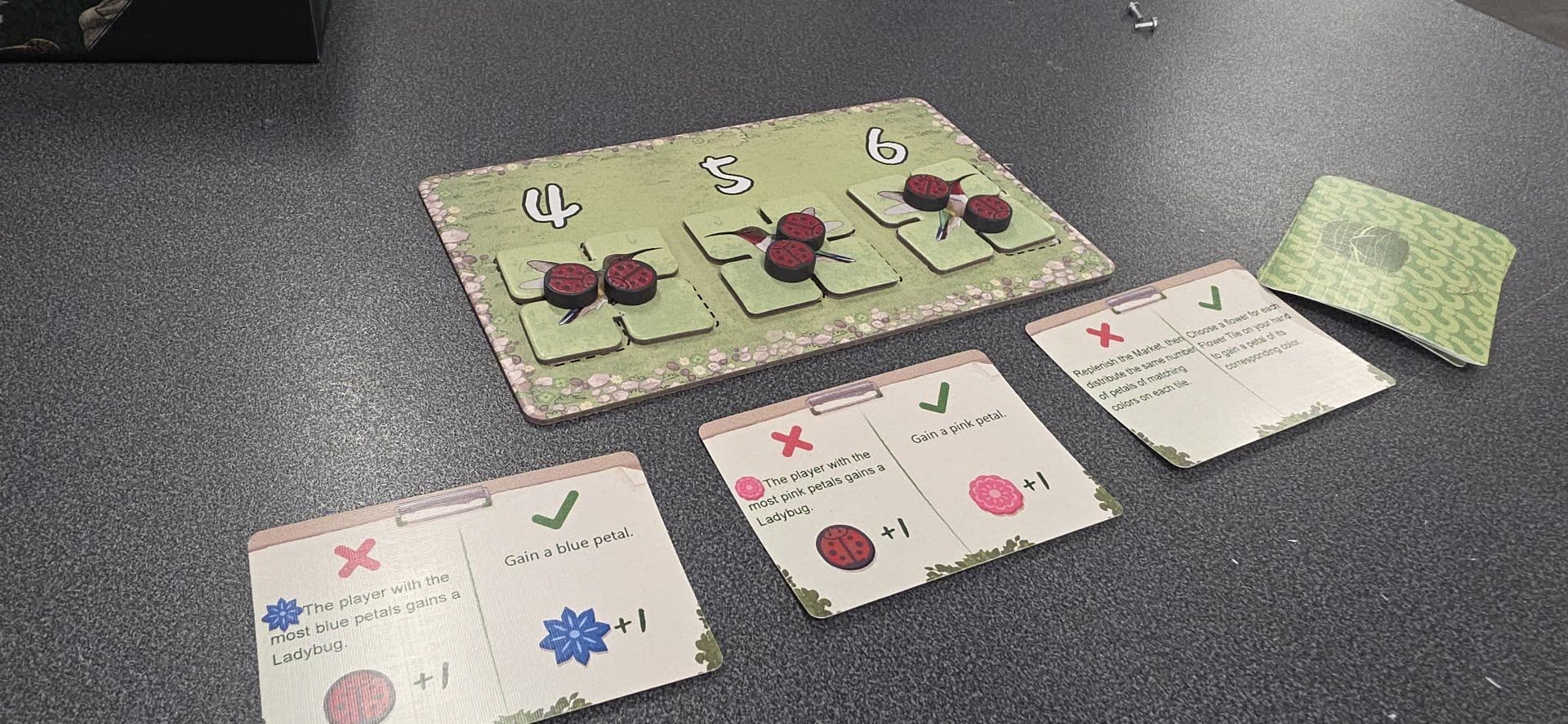
As the game goes on, your vine grows larger and larger, and you collect petals as you go. One clever mechanic is that your petal stack is hidden, so you don’t actually know how anyone else is doing. I really like this. Too often in games, I find myself distracted by trying to block other players, which isn’t always fun. Here, because you can’t see their totals, you’re forced to focus more on your own play.
The endgame is where things get particularly interesting. The game finishes when all tiles have been drawn from the bag, but scoring is based on your lowest petal colour. That means you can’t just focus on one flower type – you’ve got to balance your colours across the board. Ladybirds act as wildcards to help patch up weak areas, but ultimately you have to spread yourself evenly. This rule completely changes the way you approach strategy and makes the game much more interesting than if you could simply chase one colour.
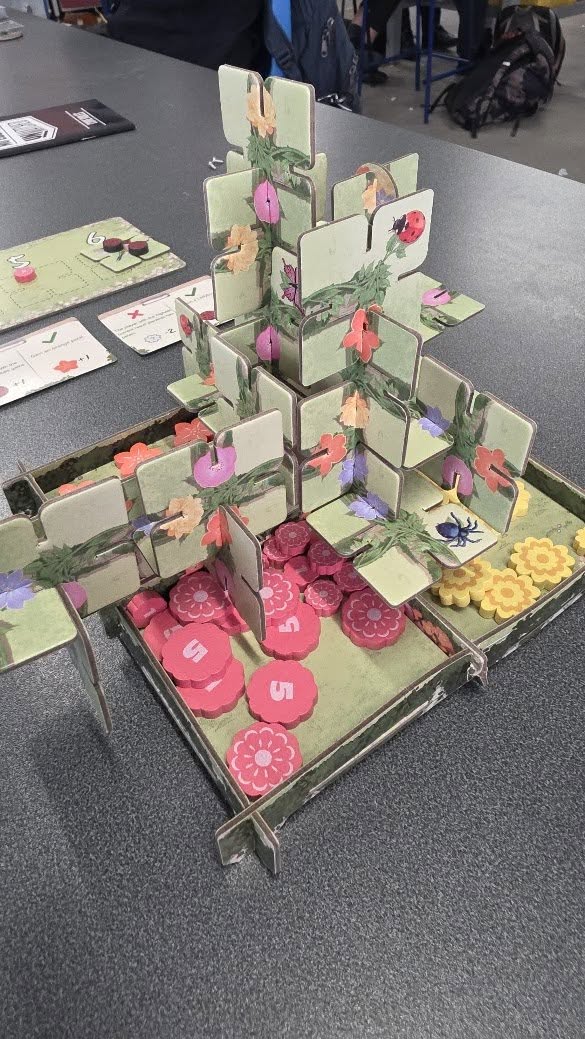
I can’t fully comment on the final components as I played with a prototype, but what I had worked really well. Everything was sturdy enough, and our structure never felt like it was going to collapse.
Overall, I really enjoyed “Vines and Flowers: Blooming Harmony.” It’s a fun tile-laying game that adds a 3D element for great table presence, while also offering hidden scoring and clever balance-based mechanics. It’s Kickstarter has recently finished but it is still very much backable, and I’d definitely recommend checking it out.