 Matthew Bailey
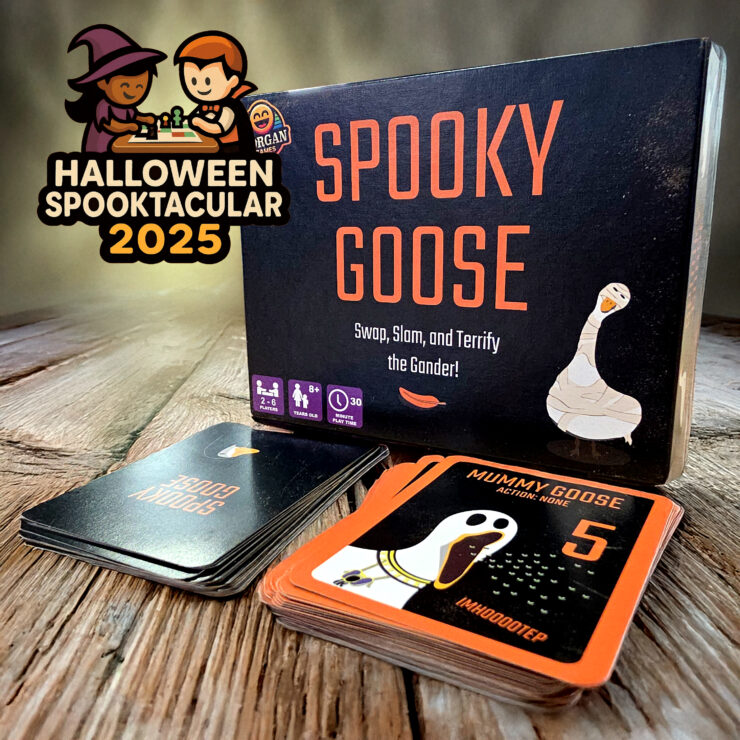
We’re going to kick off our Halloween content this year by looking at Spooky Goose, a seasonal variation of a game otherwise known as Sneaky Goose. If, after this review, you’re interested, you can pick up either one, as they’re essentially the same game with slightly different artwork.
Spooky Goose is a social deduction memory card game that’s been particularly popular with everyone I’ve played it with over the last couple of weeks. And yes, I know it wasn’t in the photo I posted, previewing some of the games I’d be covering but it wouldn’t be me if I actually followed my own plan! Honestly, I can’t think of a better way to start than with a game I wasn’t even intending to review.
The deck in Spooky Goose is made up of cards valued from –1 up to 14. The goal is simple: you’re trying to end up with the lowest total value of cards in your grid.
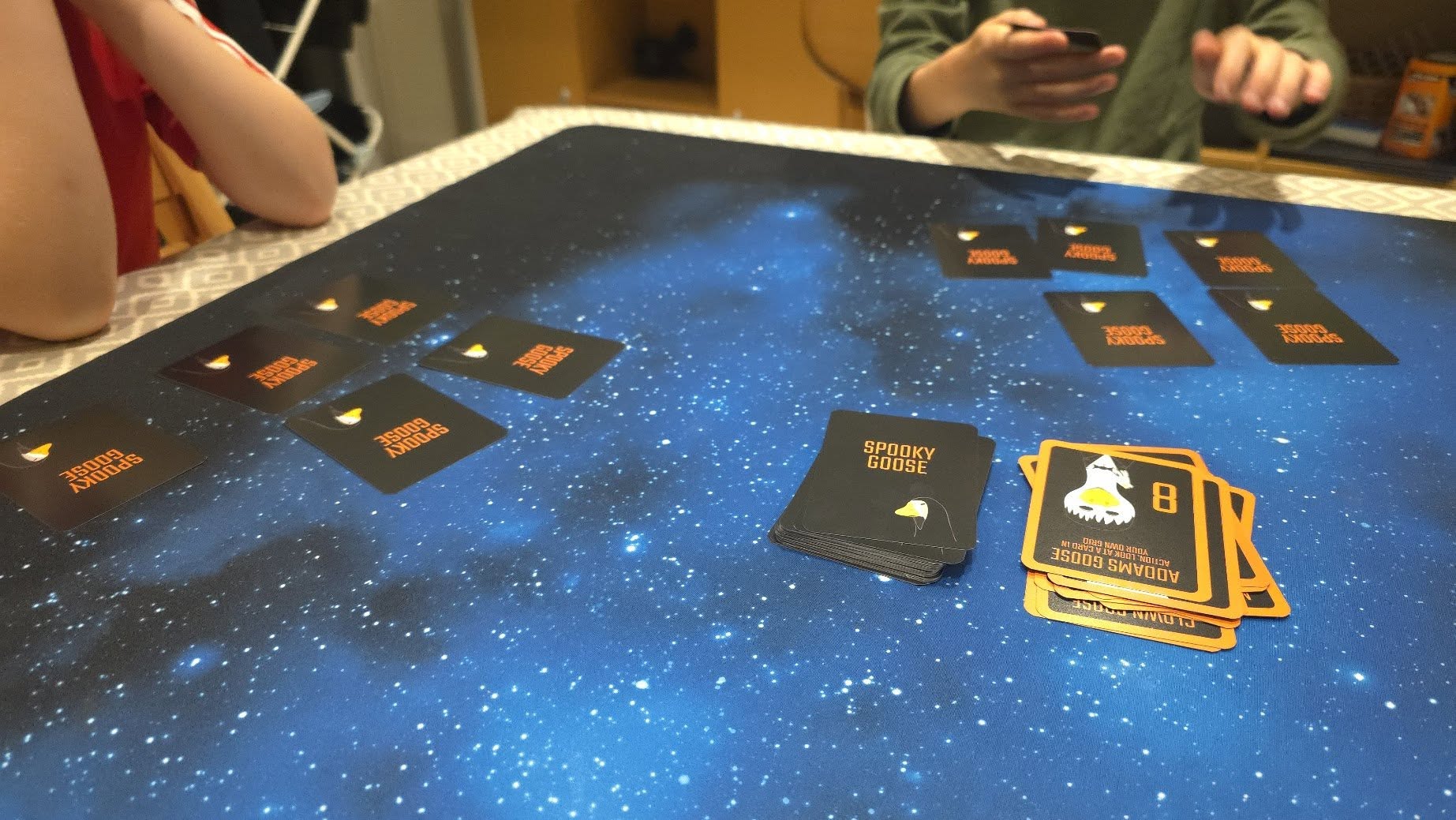
You start the game by taking four cards and placing them in a two-by-two grid. You get to secretly look at the bottom two cards before placing them face down, so only you know what they are.
The remaining cards form a draw pile and a discard pile. One of the first things worth noting is the “slam” mechanic: if the top card of the discard pile matches a card you know anywhere in play (including in someone else’s grid), you can slam your hand down, shout “Slam!” and remove it. If it’s from your own grid, great, you’ve just lowered your score. If it’s in another player’s grid, you get rid of their card but must give them one of yours in return.
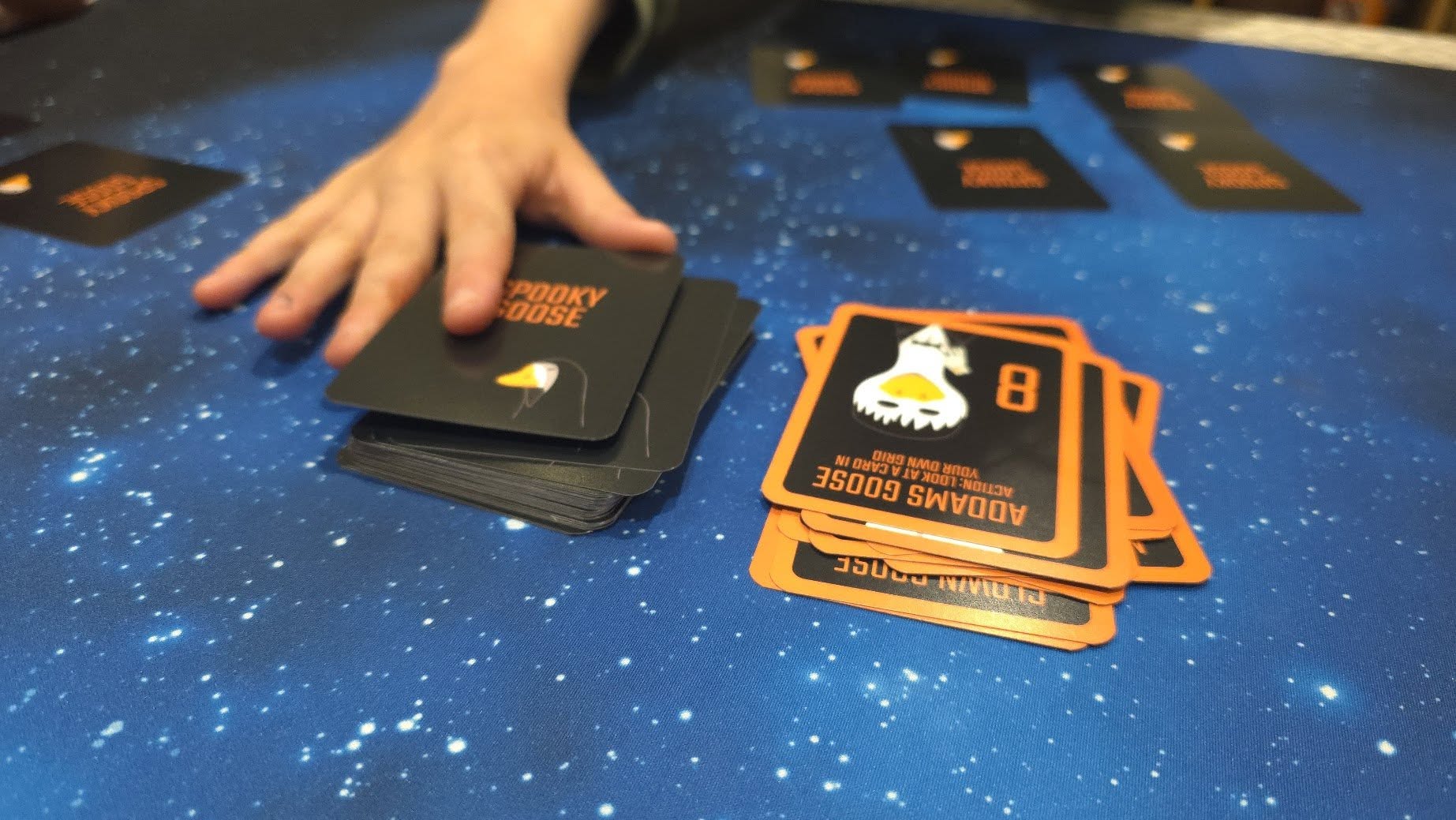
On your turn, alongside slamming opportunities, you can either take the top card of the discard pile and swap it with one in your grid, or blind-draw from the top of the draw pile and choose whether to swap it into your grid. If you don’t swap it in, you discard it, and if it has a special action, you get to play it. Actions include peeking at cards (yours or others’), swapping individual cards, or even swapping entire grids. These powers are important, they let you gain information, mess with other players, or suddenly end up with a much better setup than you started with.
Now, you might think remembering a handful of cards isn’t too hard, but once players start swapping cards and grids, things quickly get confusing. That’s where the tension (and hilarity) of missed slams comes in.
The round continues until someone feels confident they’ve got the lowest score. At the start of their turn, they can “honk” to end the round. Everyone then reveals their grids. If you were right and had the lowest score, you earn –10 points. If you tied with someone else, you both get –5. But if you were wrong, you get +10 points instead.
The game continues for five rounds (though we actually preferred playing eight, which gave it a bit more depth). The player with the lowest overall score wins.
While I’ve never reviewed it before, Spooky Goose really reminds me of Skyjo with a dash of Trio thrown in.
Component quality is perfectly fine—it’s just a deck of cards. The box could probably be a bit smaller, but I’ve seen worse (looking at you, original version of Flip 7).
As for whether you get this version or Sneaky Goose—they’re exactly the same, so it really just depends on whether you want the Halloween aesthetic.
Personally, I think Spooky Goose is an excellent little card game that works brilliantly with non-gamers. It’s easy to learn, and the challenge comes from memory rather than rules complexity. Jack (10) and Toby (7) really enjoyed it, and it’s also been a massive hit with the teenagers I play with at my board game club.
If you’re after a fun new card game this spooky season—or just want a great general version in Sneaky Goose—this one is a fantastic choice and a really positive start to this year’s Halloween Spooktacular.