 Matthew Bailey
We first reviewed “Snail Sprint” a few years ago, back when Henry(4) was barely out of babydom and Toby(7) was still very much in his early gaming years, and it has quietly remained one of my favourite young children’s games ever since.
With Henry now four and noticeably more capable at the table, it felt like the right time to revisit it properly, not just as a nostalgic favourite but as a game that genuinely introduces modern board game concepts in a way that young children can understand, enjoy, and grow with. Reassuringly, Henry absolutely loved it, and I still think it stands head and shoulders above most games aimed at this young age range.
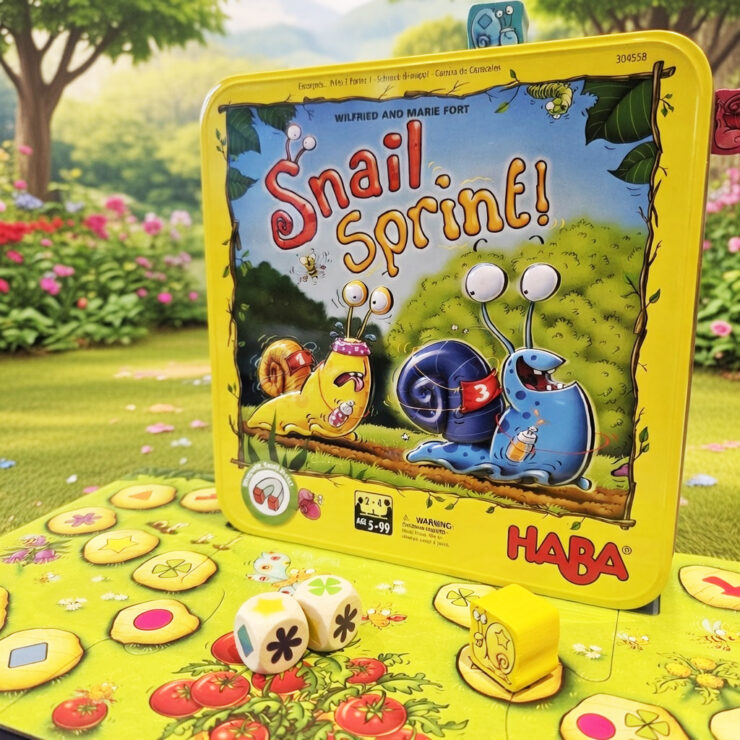
“Snail Sprint” is a sorta betting race game from HABA that looks simple on the surface but hides some surprisingly smart ideas underneath. Rather than each player controlling a single snail, everyone secretly is given three snails they want to do well, scoring points based on where those snails finish at the end of the race. Straight away, this shifts the focus away from “my piece versus your piece” and towards a more interesting shared board, something that feels very modern for a children’s game and works remarkably well with younger players.
On your turn, you roll a colour dice and are given two colours, then decide whether to move one snail to the next space of the other colour. That single choice is the heart of the game and introduces light strategy without ever feeling demanding. Even at four, Henry was clearly thinking about his decisions, sometimes helping his own snails, sometimes accidentally helping mine or Toby’s, and occasionally realising a move had not quite worked out how he hoped. That sense of cause and effect is exactly what you want at this age, and it comes through naturally rather than being forced.
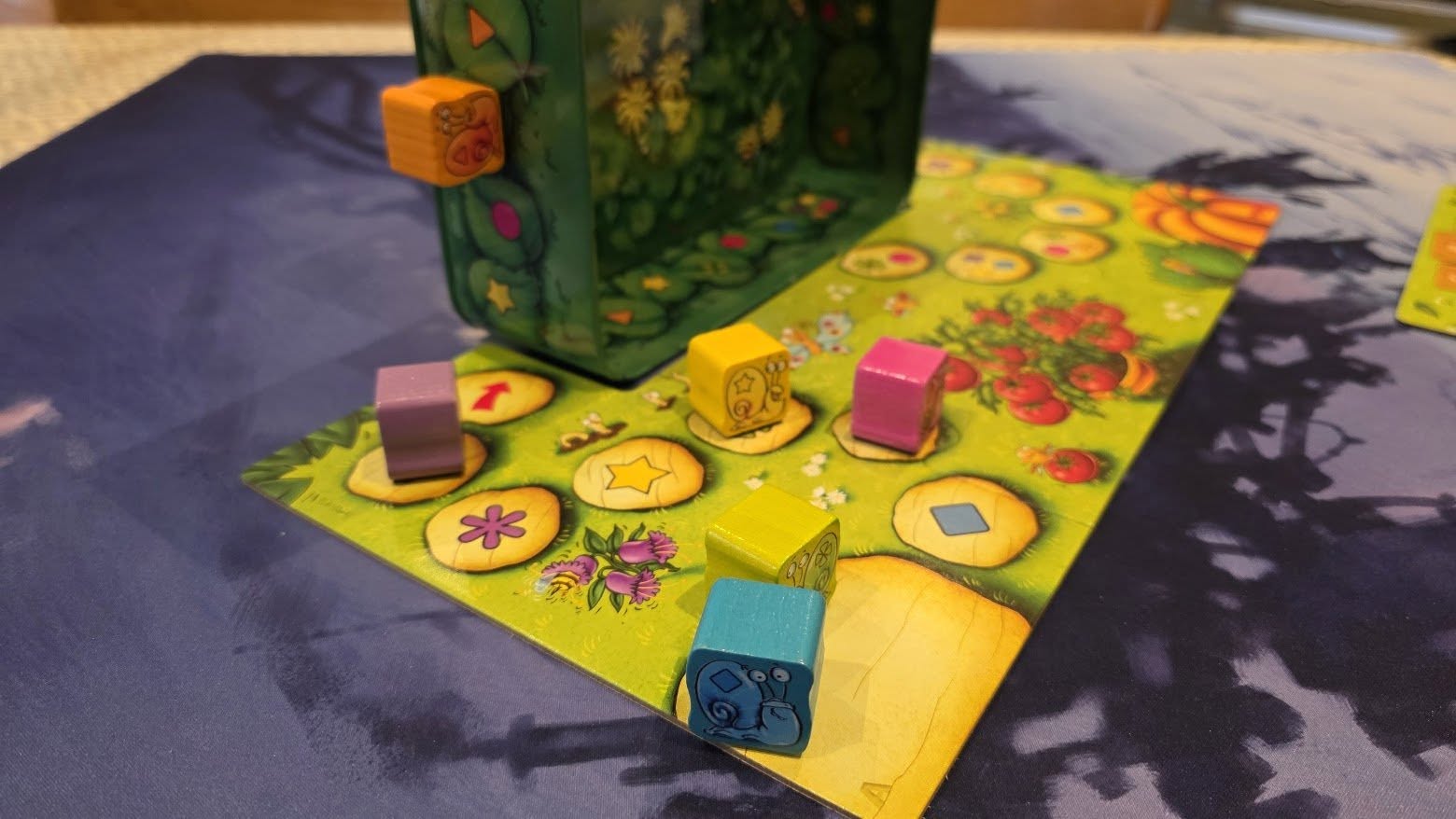
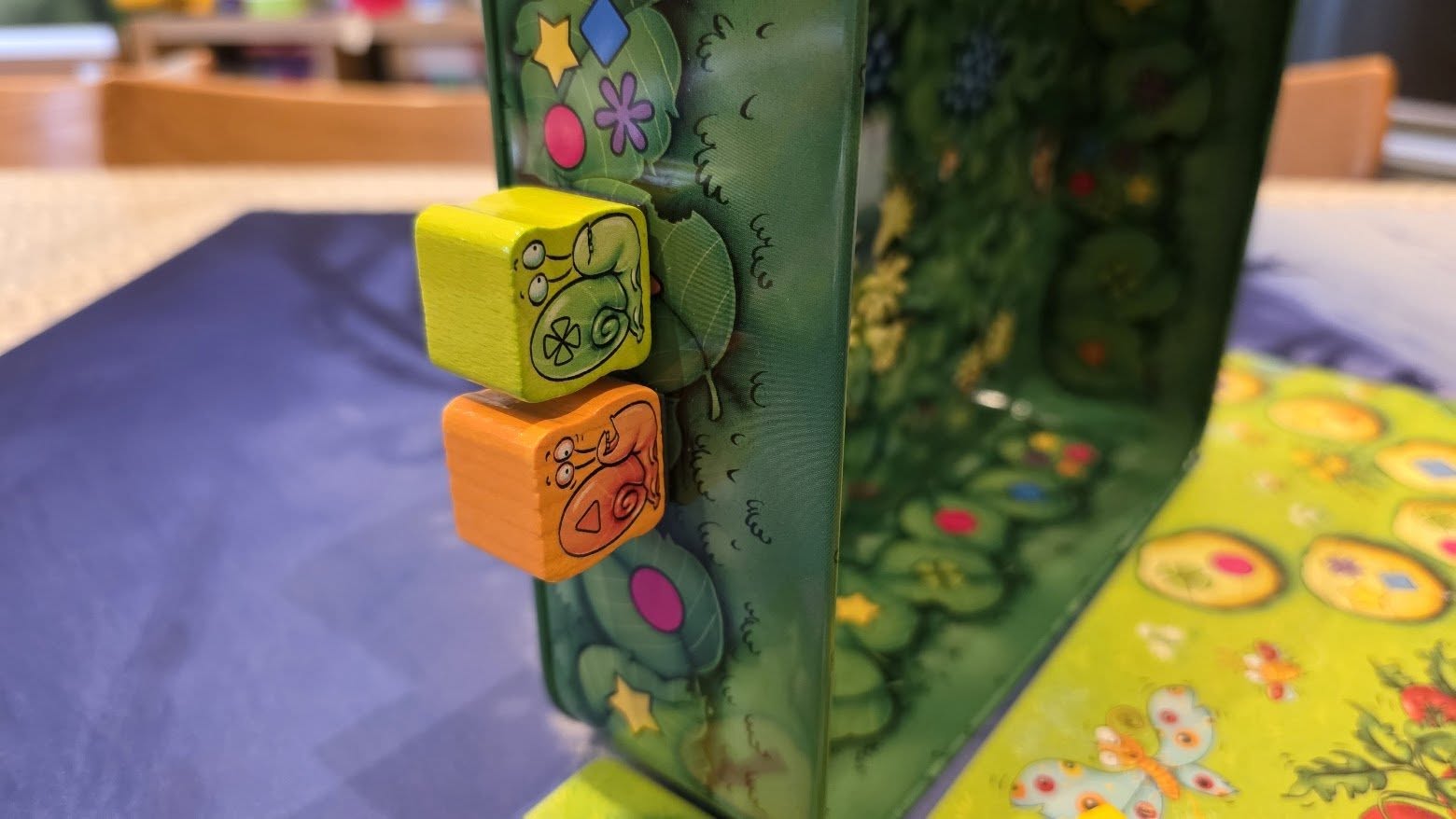
The components still deserve special mention. The magnetic snails that race around the edge of the box are brilliant, both visually and practically. They give the game real table presence, feel premium in the hand, and instantly grab a child’s attention. The fact that the board itself is a simple jigsaw is another small but clever touch, as setup becomes part of the fun rather than a chore, something Henry was very happy to help with. These details matter, especially for younger players, and they elevate the experience well beyond most mainstream children’s games.
What really struck me on this revisit is how well “Snail Sprint” scales as children develop. Henry now follows the flow of the game confidently, understands that his choices matter, and stays engaged from start to finish without any need for simplified rules or constant prompting. At the same time, the game still works perfectly for younger players who are mostly enjoying colours, movement, and the excitement of the race. Few games manage to bridge that gap so smoothly.
In the end, I still consider this one of the best “my first hobby game” options available. It is a clear step up from snakes & ladders, both in terms of decision-making and engagement while remaining accessible and fun for genuinely young children. It is not the cheapest game in this space, but prices have come down over the years, and for a game that grows with your child and introduces modern board game ideas so naturally, it remains an easy recommendation. “Snail Sprint” is simple, clever, and endlessly charming, and it continues to earn its place on our shelf… plus the magnetic snails are super fun.