 Matthew Bailey
Game at a Glance
- Publisher Age
- 12+
- LBG Recommended Age
- 10+
- Players
- 1–4
- Playing Time
- 60–90 min
- Box Size
- Compact
LBG age recommendations are based on children familiar with modern board games, with adult guidance where appropriate. Every child is different.
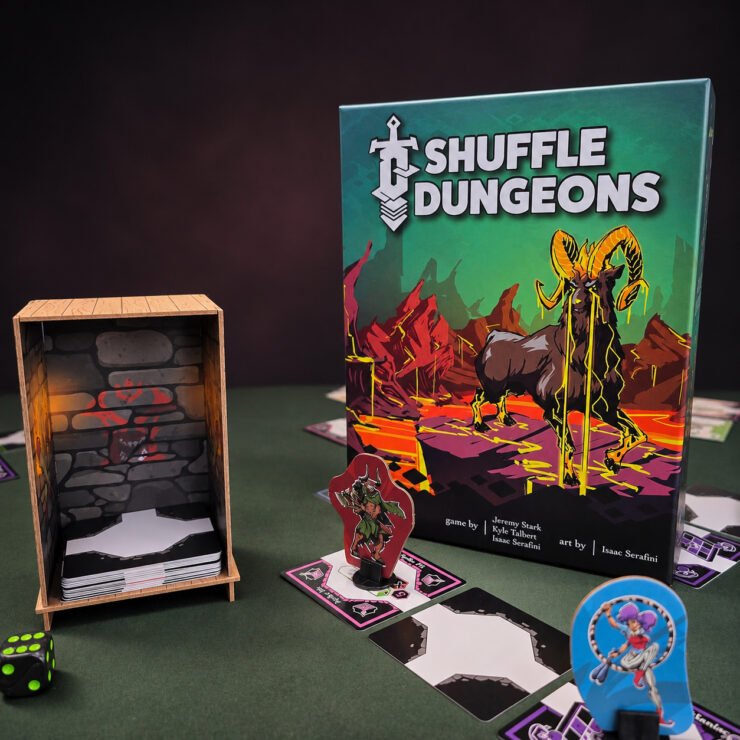
Today we are going to be looking at Shuffle Dungeons, a cooperative dungeon crawler where you build the dungeon using tiles but also use those tiles for weapons and equipment.
I really like the idea of fitting exploration, equipment and a boss battle into something you can play in around 30 – 40 minutes. Shuffle Dungeons has some interesting ideas, although the experience didn’t quite come together for us.
Let me explain.
In Shuffle Dungeons, you work together to build a dungeon, improve your heroes and defeat the boss before the dungeon deck runs out, which acts as a timer for the game.
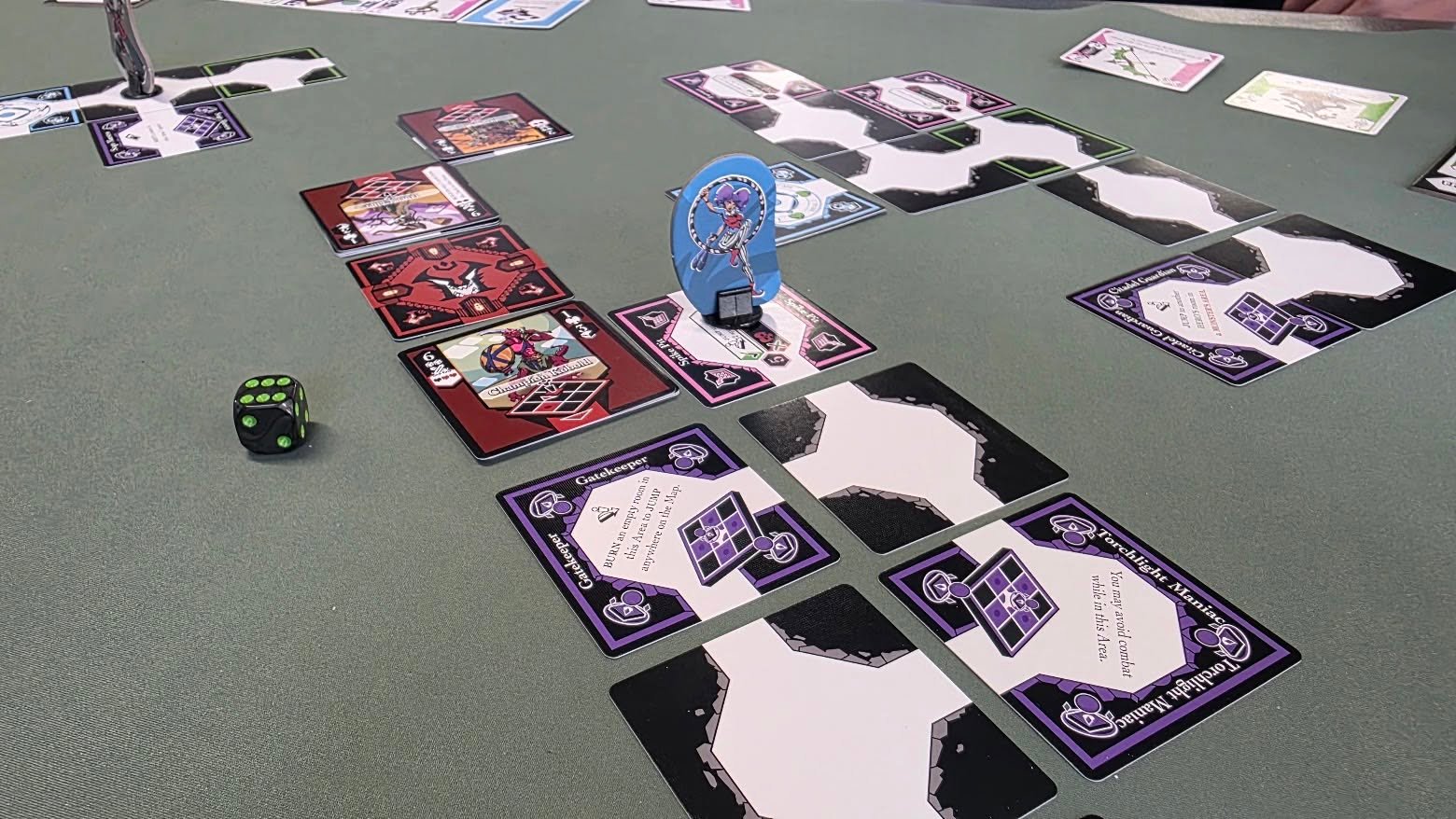
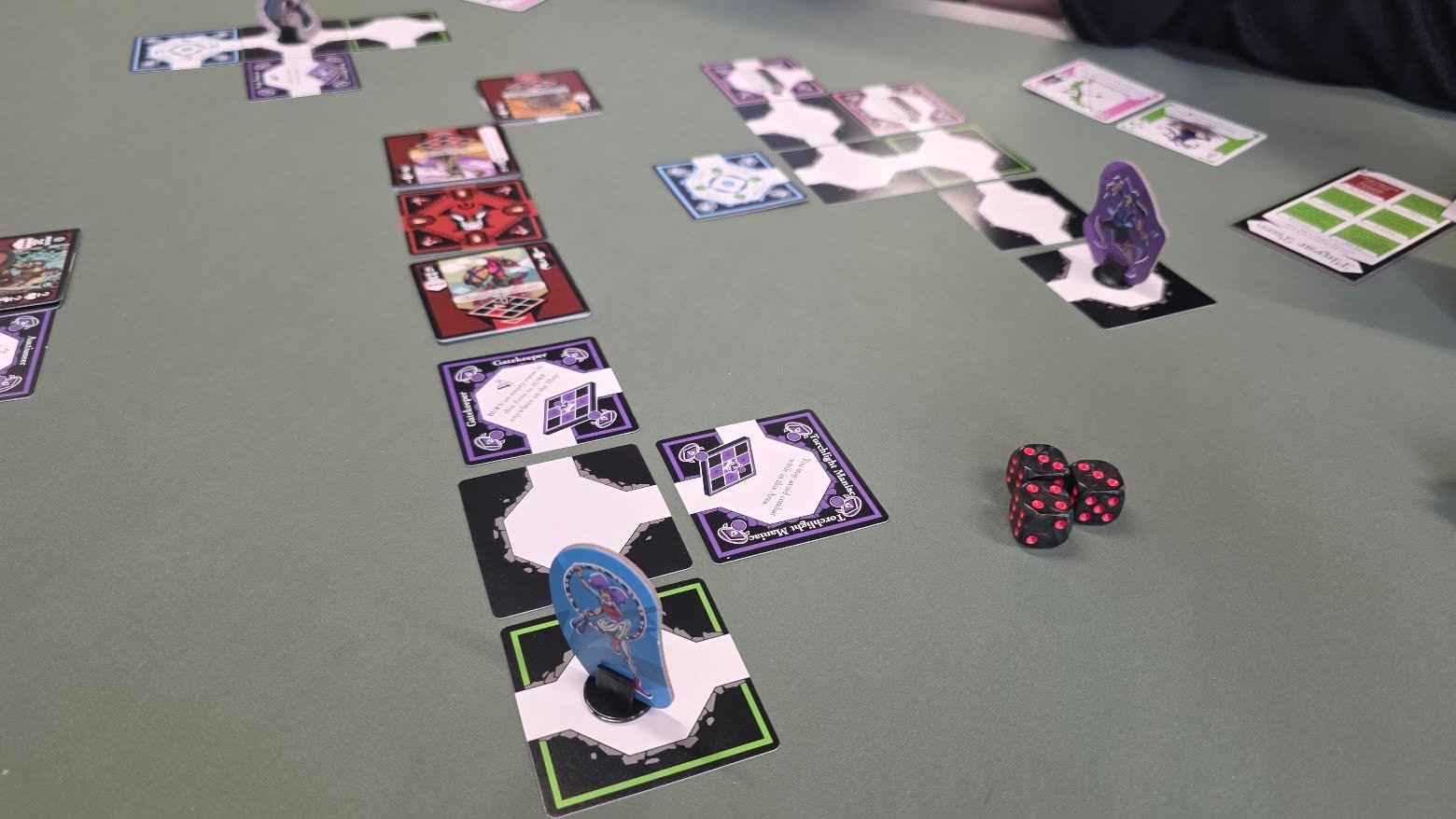
You each choose a hero and place a boss suitable for your player count in the middle of the table. Three dungeon cards are dealt in a line towards each player, with an entrance at the end. Your hero starts on your entrance. Any monsters in your line remain in the dungeon, while the other cards become your starting hand.
I know I am being picky, but this immediately caused problems. We normally play board games on a long, bench-like table, and having to line the dungeon up so the starting paths point towards each player meant placing the whole grid diagonally. We always try to follow the rules as closely as possible to give games a fair review, but this made the layout awkward and irritated pretty much everyone I played with.
On your turn, you can move up to your hero’s speed, play cards, use abilities and trade with another hero in the same room. Once per turn, you can draw one card for each open path leading out of your current room. It felt a bit like playing Night Cage (a much better cooperative tile-laying dungeon game), but we never felt like we could do enough on our turns.
Most cards have a room on one side and equipment or a consumable on the other. You can use them to extend the dungeon from your current room or improve your character. You can equip one weapon, one piece of armour and one spell, while snacks provide single-use effects. I do actually really like the dual use of the cards. It makes for some interesting decisions and helps keep the box fairly small, which is unusual for a dungeon crawler.
Draw a monster and it is placed at the nearest open path, with loot underneath. Each monster has an area marked on its card. If you finish your turn within that area, you must fight it. You and the monster roll dice and add your bonuses, with ties going to you. Other heroes in its area can contribute an extra die, but also risk taking damage. Win and you normally deal one damage. Lose and you resolve the monster’s damage and power. The fighting was one of my least favourite things in the game. It feels extremely passive, and it never felt exciting. Defeating a monster gives you loot and allows one hero to level up. Each hero can level up once. If you are knocked out, you lose your equipped cards, clear your damage and discard five dungeon cards, then continue playing. You discard down to three cards in hand at the end of your turn. The benefit here is that even if someone dies the game is not over and they are not out which is good. You can also use dying as a quick travel if you need to. Connect to a boss gate to reveal it. Defeat the boss and you all win. Run out of dungeon cards first and you all lose.
Don’t get me wrong, there are some things here to like. Choosing between keeping equipment and using it as a room gives you something to think about, especially when certain items benefit from particular room arrangements. You also need to leave open paths to draw more cards, so filling every gap can work against you.
The limited equipment slots keep character management straightforward, and working together gives you opportunities to help younger players. The game itself is not that complex (despire the less-than-stellar rulebook). However, the combat can be frustrating. Equipment and teamwork improve your chances, but a bad roll can still undo your progress. Losing your equipment feels particularly harsh when you can only level up once.
I would have liked more opportunity to develop the heroes, and some spells feel quite situational. There are useful combinations to find, but getting the right cards at the right time has a considerable influence on your options.
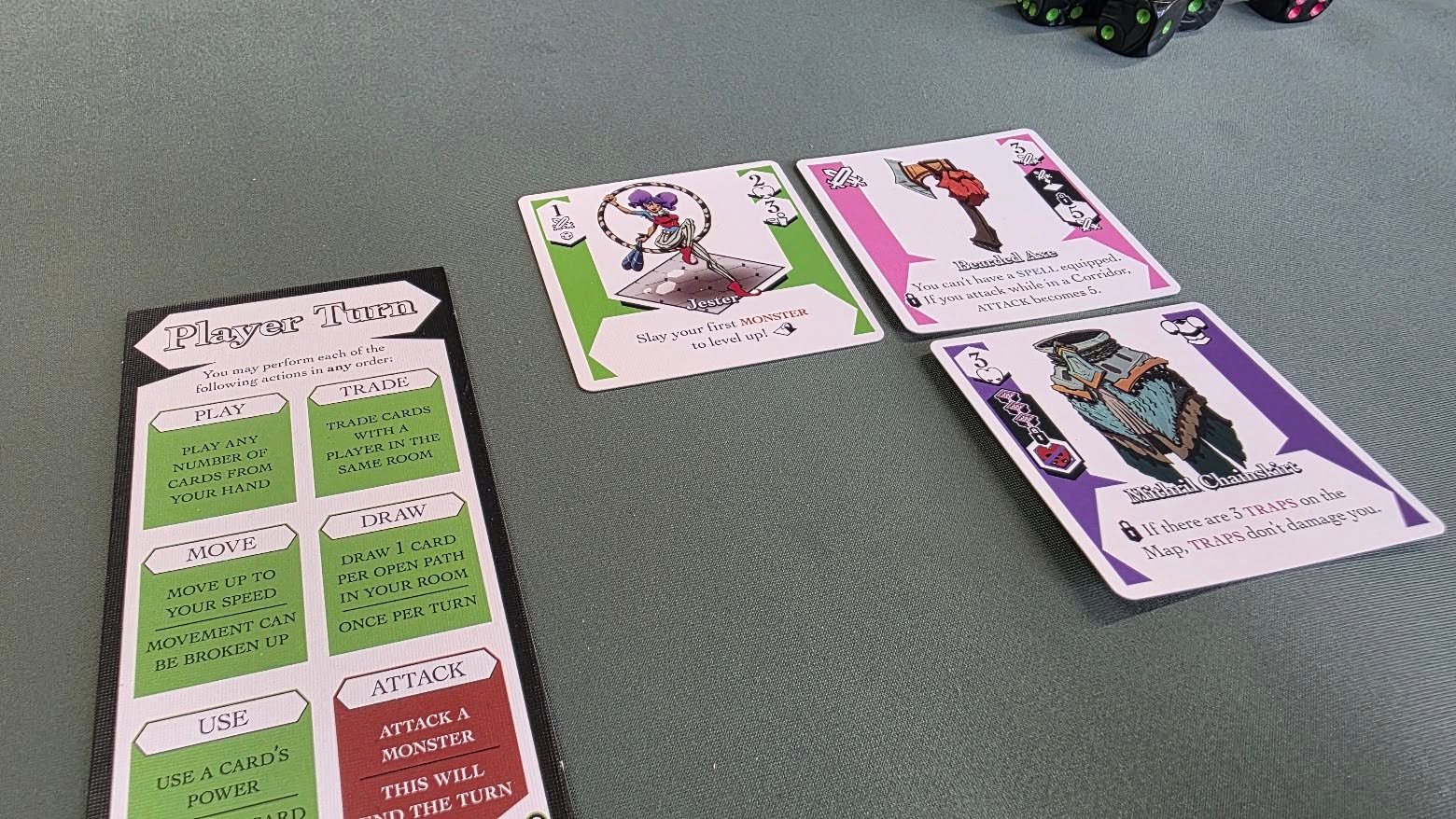
The artwork is fun with distinctive heroes, monsters and equipment. The cards have a nice finish, although the text and area diagrams are small. The cardboard tokens are a little thin and can get damaged when putting them into the plastic standees, and the optional card tower needs dismantling to fit back into the insert. They need to take a look at what Spooky Tower managed with similar components and a similar-sized box.
Ultimately, Shuffle Dungeons is a game I wanted to like more than I did. It never really feels like it gets going, and the moment-to-moment gameplay isn’t particularly exciting. You have ideas about what you want to achieve, but it rarely feels like you can do enough on your turn to make satisfying progress.
There will likely be players who do enjoy this, but unfortunately, the boys didn’t enjoy it either, and it didn’t go down well with the teenagers at my board game group. There are some nice ideas here, but it fell a bit flat for us, and I can’t see us choosing to come back to it.