 Matthew Bailey
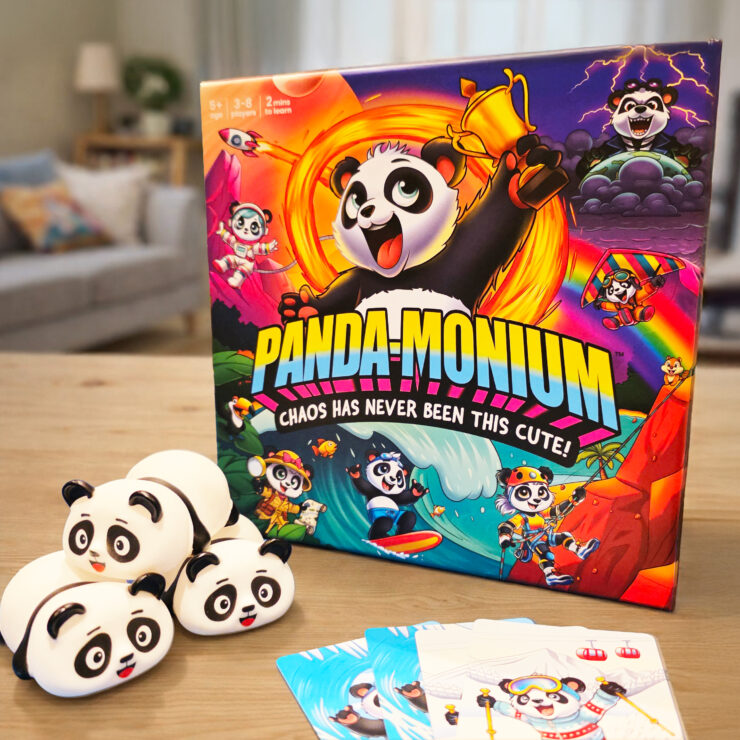
Today we are going to be looking at “Panda-monium”, a rather unusual and very simple drafting and set collection game that reminded me a little bit of something like Happy Families, crossed with what is essentially a kids’ Easter egg hunt.
Right from the start, the game asks for someone to take on the role of the panda hider, which invariably fell to me. This involved hiding the pandas around our playroom, which immediately felt very much like I was setting up our annual Easter egg hunt, just with squeaky pandas instead of chocolate.
The aim of the game is to collect four matching cards and then grab a panda as quickly as possible. The key twist is that there is always one fewer panda than the number of players, so someone is guaranteed to miss out. There are two ways to play. The first is Panda Scramble, where all the pandas sit in the middle of the table and players race to grab one. The second is Panda Stampede, which is, in my opinion, the much better version of the game, and the one I am mostly going to talk about here.
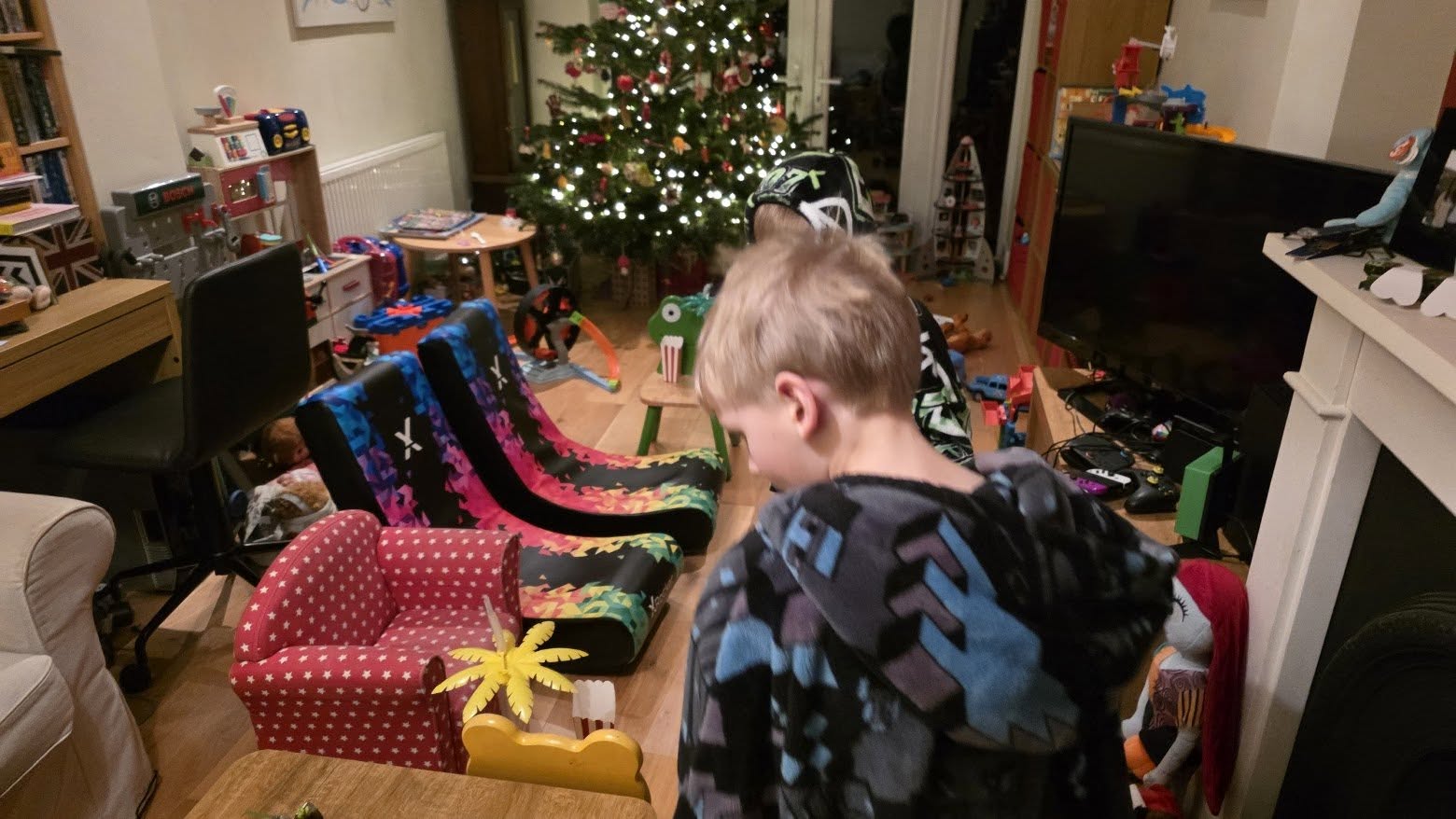
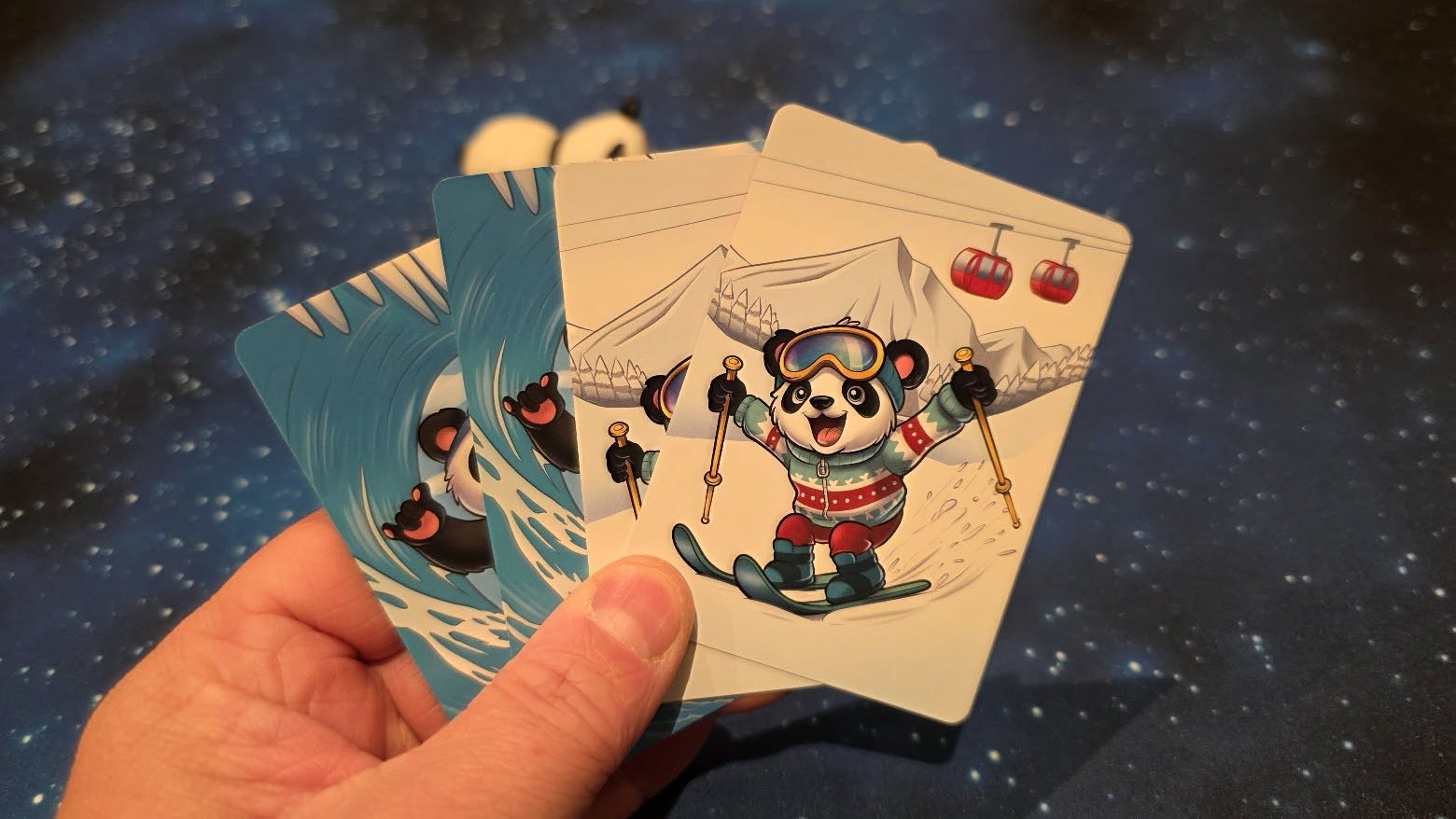
At the start, each player gets three panda tokens, which are essentially your lives. You also set aside one fewer panda than the number of players. In the basic version of the game, all the pandas are placed in the centre. Cards are revealed and players are passing one card at a time clockwise around the table, trying to build a set of four matching cards in their hand. As soon as someone completes a set, they grab a panda. Everyone else then scrambles to grab one too, and the last person to do so loses a life. This works fine, and is probably the better option if you are somewhere like a tent or a small space.
Panda Stampede, however, plays slightly differently and is far more fun. You are still doing that light drafting and trying to make a set of four, but now there is only one panda in the middle. All the others are hidden in another room by a separate person, essentially the panda master, which in our house was Dad. There is technically a rule where players can swap who hides the pandas, meaning someone always knows where they are, but honestly it works much better having a separate person do it. Once someone was eliminated, they became the panda hider anyway.
When someone completes a set and grabs the panda from the table, everyone else has to run into the other room and hunt for the remaining pandas as fast as possible. It is exactly like an Easter egg hunt, but much more frantic. This worked really well, the boys absolutely loved it, and there is not really much else quite like it. Yes, you could just hide objects around the house, but gamifying it, adding speed, and tying it to a simple card game makes it feel genuinely different and surprisingly fun.
Component quality is good. The cards are nice and the plastic pandas are well-made for what they are.
We did end up house-ruling it slightly, adding more pandas so that everyone had to find two, with still one fewer overall. This gave some of the younger players a better chance and worked really nicely for us.
Overall, “Panda-monium” is a really unusual little game. It is the lightest of light set collection games, very reminiscent of something like Happy Families, but with this Easter egg hunt chaos layered on top. We actually really enjoyed it, the kids loved it, and we easily got a couple of hours of play out of it. Is it an award-winning masterpiece? Definitely not. Is it a fun, silly game that works brilliantly when kids have friends over and you want something active and different? Absolutely. Just maybe do not play it with Grandma’s best crockery balanced on the sideboard.




 Nicola Asker