 Matthew Bailey
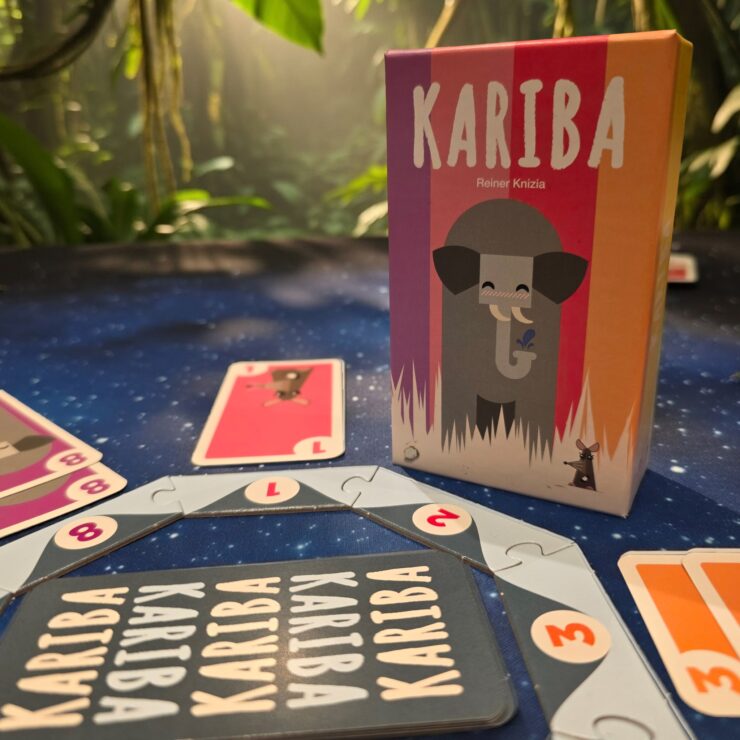
“Kariba” has become one of the boys’ key favourites over the last couple of weeks. It has reached the point where they are regularly getting it out when grandparents come to visit, which is always a good sign.
,
While I am very aware of the Helvetiq range of games that generally come in small boxes, often drawing comparisons with Oink Games but with far less irritating packaging, I actually had not played many of them until “Kariba”. Having done so, I think a Helvetiq special later in the year could definitely be in order, particularly around the Easter holidays when people start looking for games to take away with them and we do our usual travel games special. On that note, “Kariba” is an excellent travel game.
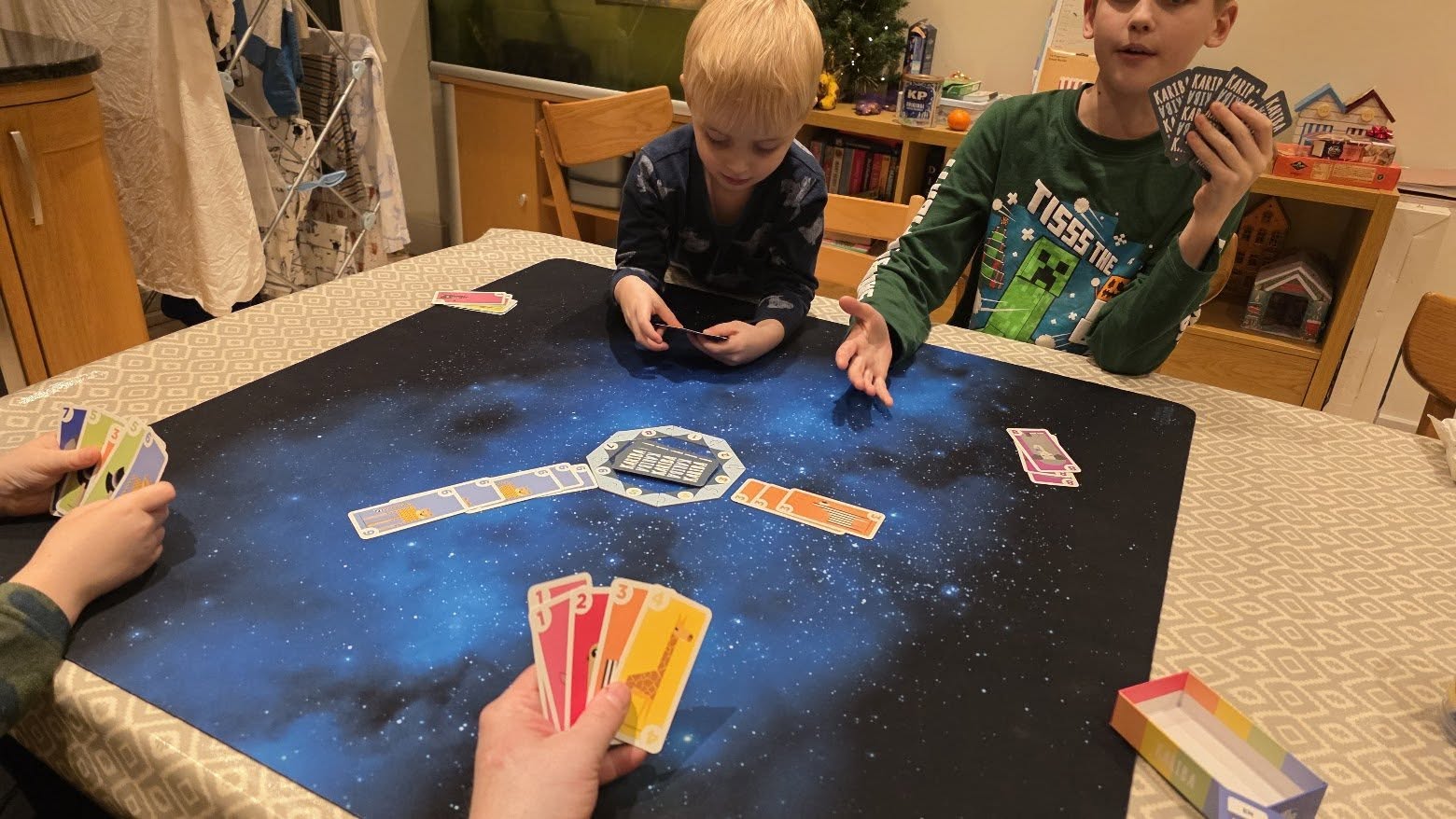
In “Kariba”, players are competing animals all trying to drink at a shared waterhole. The waterhole is laid out as a numbered circle showing the animal hierarchy, from 1 to 8, running from mouse up to elephant. Each player starts with five cards, and on your turn you play one or more cards of the same animal to the matching position around the waterhole. Cards stack up over time, with everyone able to see how many of each animal are currently gathered.
The key moment comes when there are three or more cards of an animal at the waterhole. When this happens, that animal scares away the closest weaker animal on the circle, regardless of how many spaces away it is. The chased animal’s cards are taken by the active player and kept face down as points. If there is no weaker animal present, nothing happens. You can also deliberately add to an existing group of three or more to trigger a capture, which gives the game its sharp tactical edge.
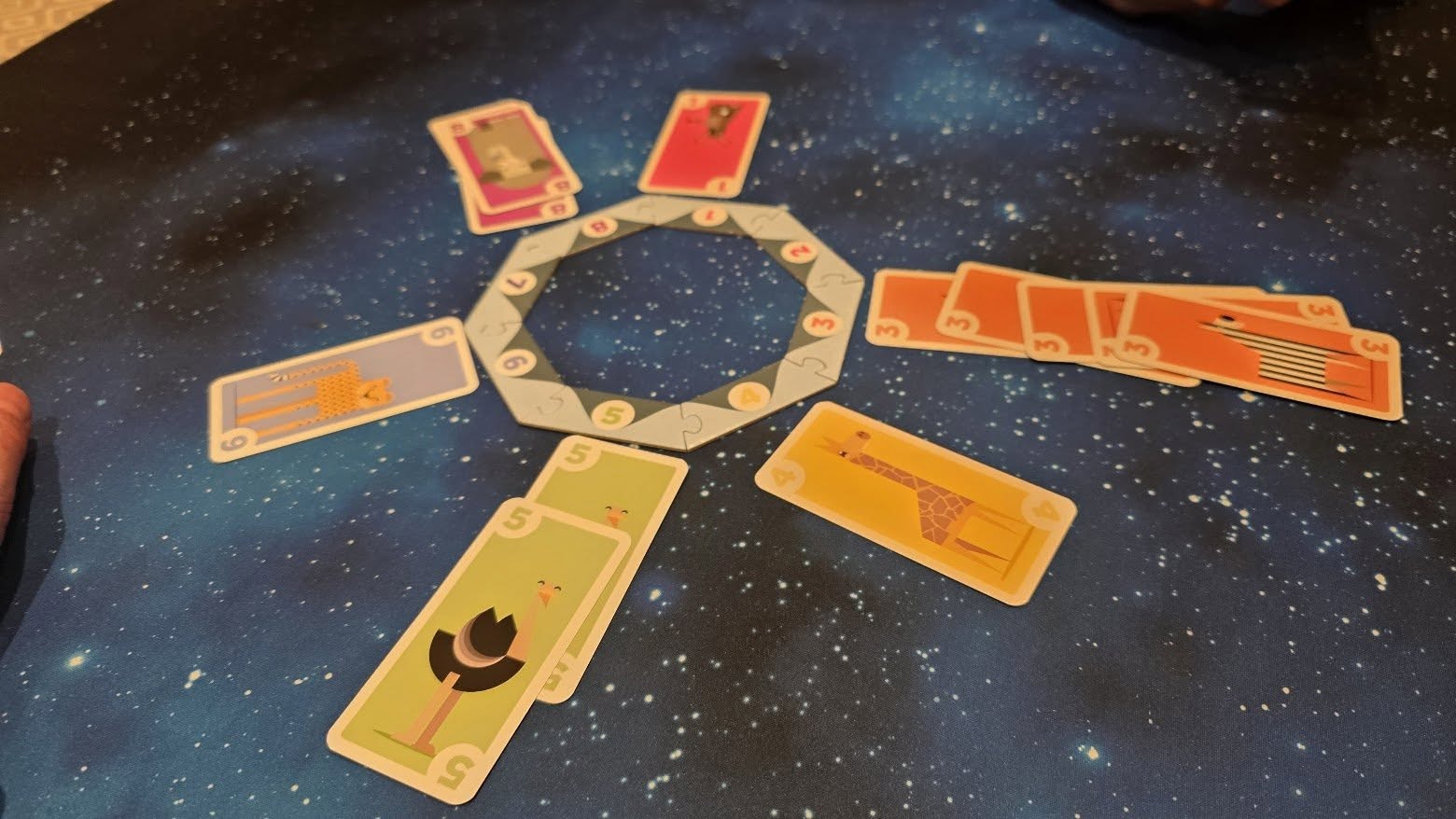
There is one important twist to the hierarchy. The mouse is the weakest animal, but it is the only one capable of chasing away the elephant. It cannot chase any other animal, but it completely overturns the normal order, creating constant tension around when and where elephants appear. This single rule is what gives “Kariba” much of its personality, as players are constantly trying to work out the best place to play, and whether it is worth capturing a smaller animal now or building towards a bigger payoff later.
At the end of your turn, you draw back up to five cards. Once the draw pile is empty, play continues without refilling hands, and the game ends when one player runs out of cards. The way this endgame unfolds is a key tactical moment, as you often have a good sense of what other players are holding, making it fascinating to see how people try to force plays, starve opponents of options, or bait out a card so it can be immediately captured.

Players then count the cards they have captured, and the player with the most wins. It is quick, interactive, and surprisingly thoughtful for such a relatively simple game, working equally well for younger children and experienced adult gamers.
The artwork is lovely, the cards are good quality, and everything feels well-produced. I particularly like the compact boxes. Part of me wishes they shut more securely, but that is a minor gripe, and having the game name clearly printed on the side is genuinely helpful.
“Kariba” is a brilliant little card game that almost anyone old enough to hold cards can understand. It is simple to learn and can be played very casually, but there is a surprising amount of strategy, tactical depth, and even a hint of psychological play for those who want to engage with it on that level. An excellent card game, and one I cannot recommend highly enough.