
 Matthew Bailey
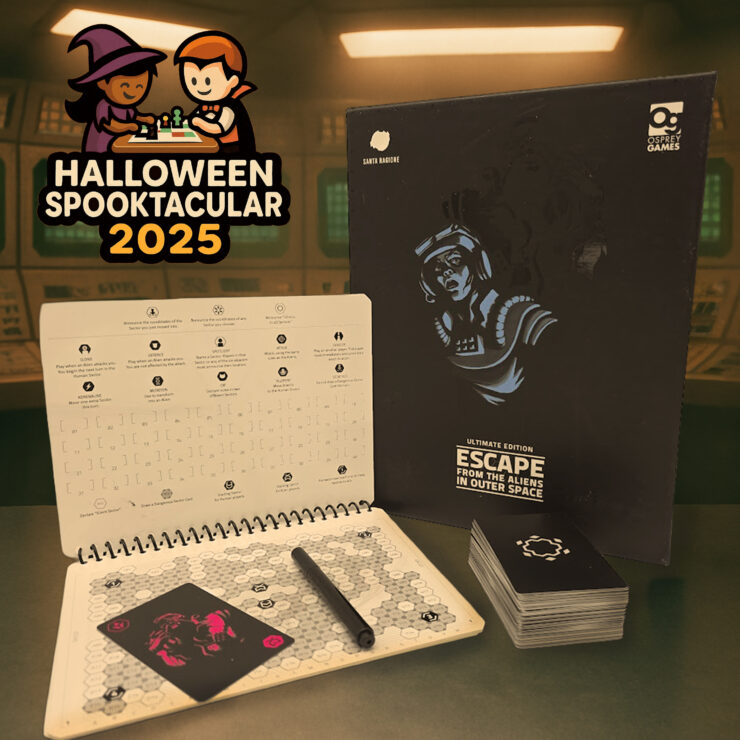
On the face of it, “Escape from the Aliens in Outer Space” comes across as a game designed for adults, but once you start playing, it’s very apparent that “Escape from the Aliens in Outer Space” is actually a really well-designed and surprisingly simple family hidden-movement social deduction game — and a perfect entry point to both of those genres (Halloween or not).
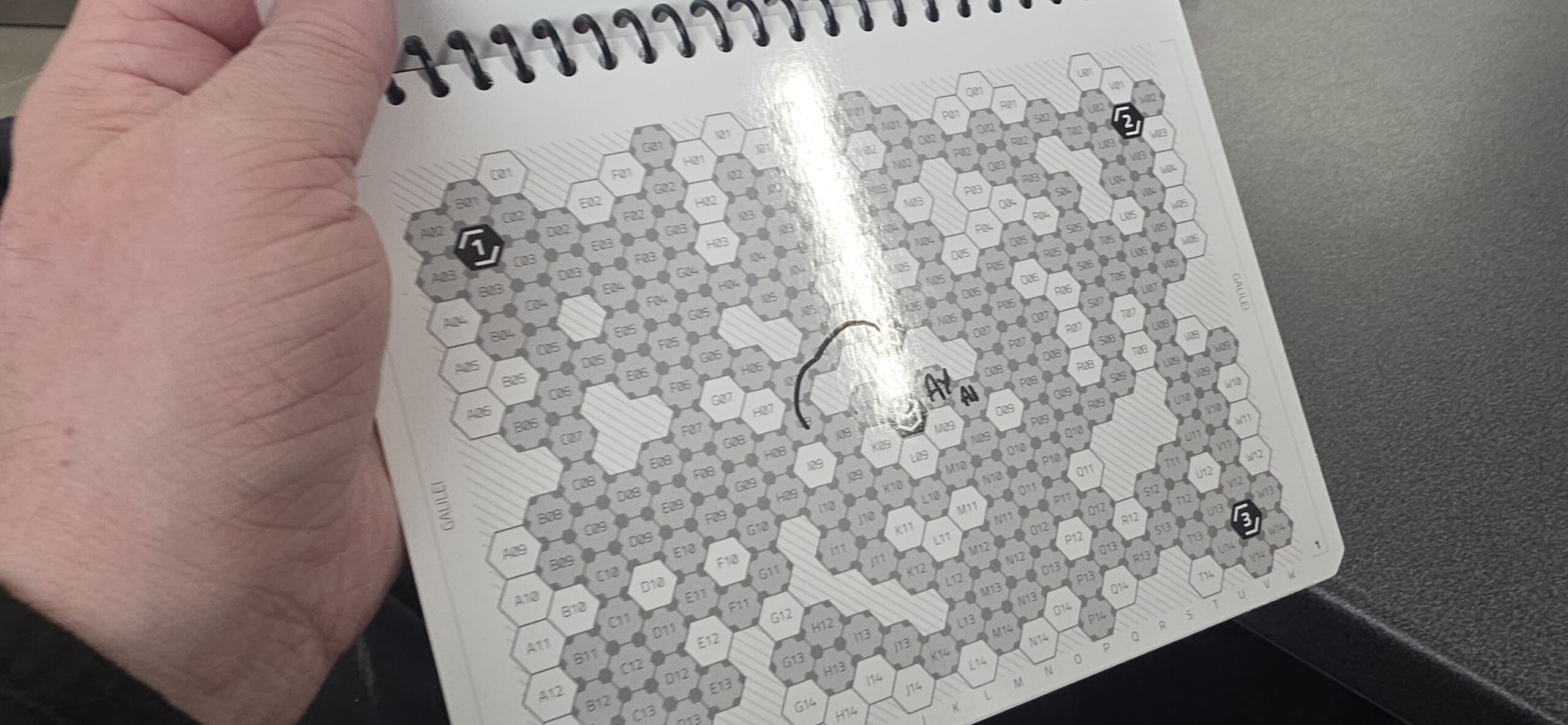
The concept of the game is simple: all players have a dry-wipe pad with a hex grid showing a map of a broken-down spaceship divided into zones. At the start of the game, everyone secretly gets a card telling them whether they’re a human or an alien. The humans are trying to sneak their way to one of the escape pods and get off the ship alive, while the aliens are trying to hunt them down and, well… eat them.
The key thing here is that no one knows who’s who — and working that out is everything. One of the best games I’ve ever played had a player pretending to mess up, clearly signalling to the group that they were an alien… I would have bet cold hard cash he was an alien. Humph.
Each turn, players secretly write down which adjacent space they’re moving to on their little map (aliens move two spaces, humans move one). Then, depending on what type of space they land on, they might have to draw a card. These cards tell you if you have to announce something out loud — maybe where you are, maybe a fake location, or maybe you can stay completely silent. That’s where the bluffing comes in. Humans are desperately trying to avoid giving away their position, while aliens are pretending to be human… right up until they’re close enough to strike.
If an alien ends their move in the same space as a human, they eat them — that player is out of the game and now joins the aliens. This is a great mechanic because even when someone’s eliminated, they still get to play. It reminds me of British Bulldog at school, with the catchers in the middle gradually growing in number. The humans, meanwhile, are racing to reach one of the escape pods before they’re all eaten. The tension ramps up beautifully as the map fills with scribbles and guesses about who’s where, and every bit of silence suddenly feels suspicious.
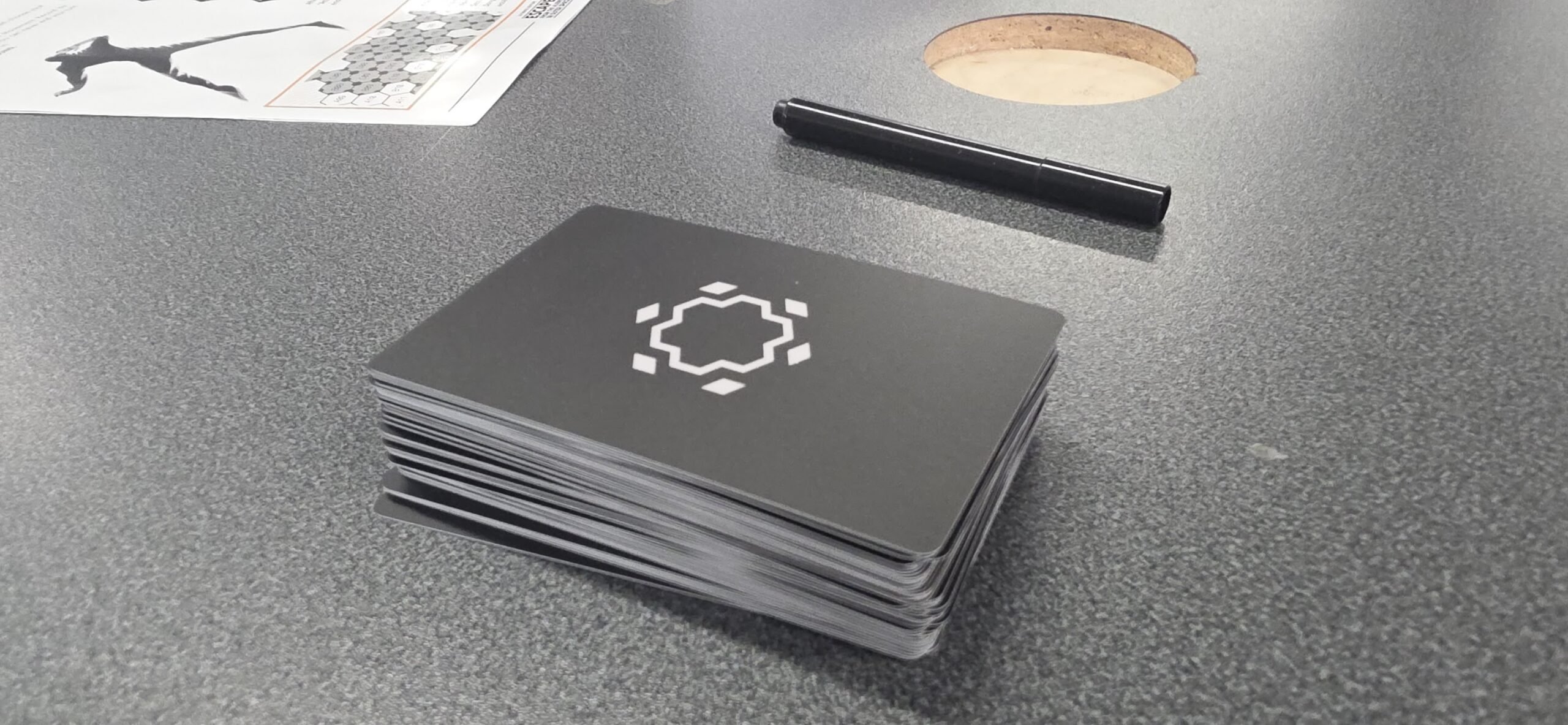
Games usually wrap up in around 30–45 minutes, and while it’s fine in a smaller group, it definitely works better with a larger one. In one game I played as a human, I managed to slip past everyone while the aliens were focused elsewhere. It’s one of those games that’s endlessly replayable because every round feels different depending on who’s bluffing, who’s panicking, and who’s quietly plotting their way to safety — and which of the varied maps you’ve chosen.
To top it all off, there are items that give humans special powers, and every character also has unique abilities that enhance the experience and make the guessing game that little bit harder.
It’s rare that social deduction games work so well with my kids, but everyone I’ve played this with really enjoyed it. It’s simple enough to be super easy to understand, but has enough bite that it’s a joy to come back to.
This was an unexpected hit and one that I completely recommend as an entry to both hidden-movement and social deduction games.






Add comment