
 Matthew Bailey
Before I even talk about the game, I have to start with this. If you did not grow up in the UK, you might not actually know what a conker is. It is the big shiny seed from a horse chestnut tree and for generations, kids have drilled holes through them, threaded laces through and then taken turns smashing their conkers together until one breaks. It sounds ridiculous, dangerous and entirely brilliant. It’ super dangerous, banned in some playgrounds, and even my kids play it.
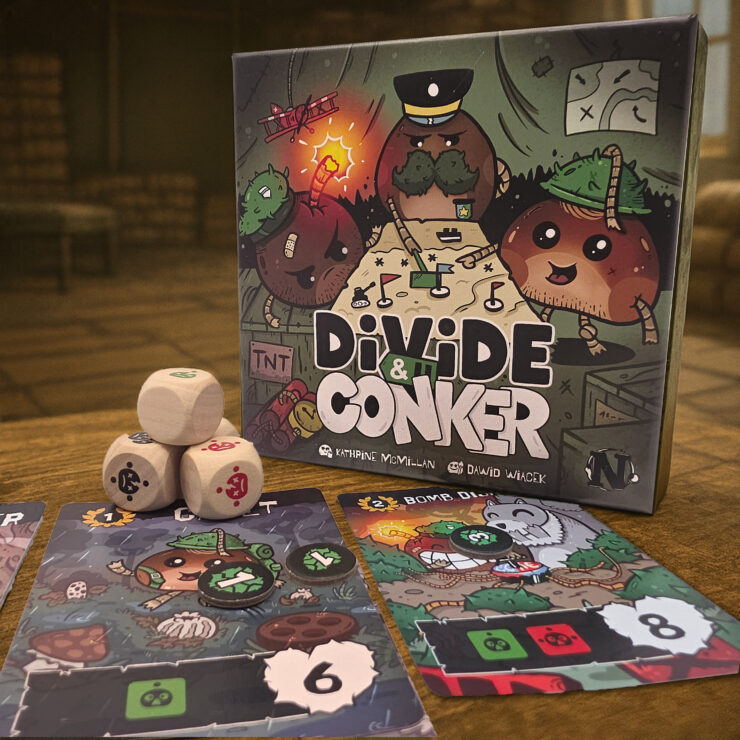
So when a card game comes along that captures the exact chaos, nostalgia and smug satisfaction of winning a playground conker duel, without the potential ruptured knuckles, you can bet I was excited to try it out.
“Divide and Conker” does something incredibly clever and it ends up being a suprisingly good analogue of the playground game
Your conkers take damage, they can shatter on a lucky follow through, you can try out a bit of harmless cheating with hardeners and when you break someone else’s conker you steal their string and their points. It all slots together so neatly that the theme drives everything.
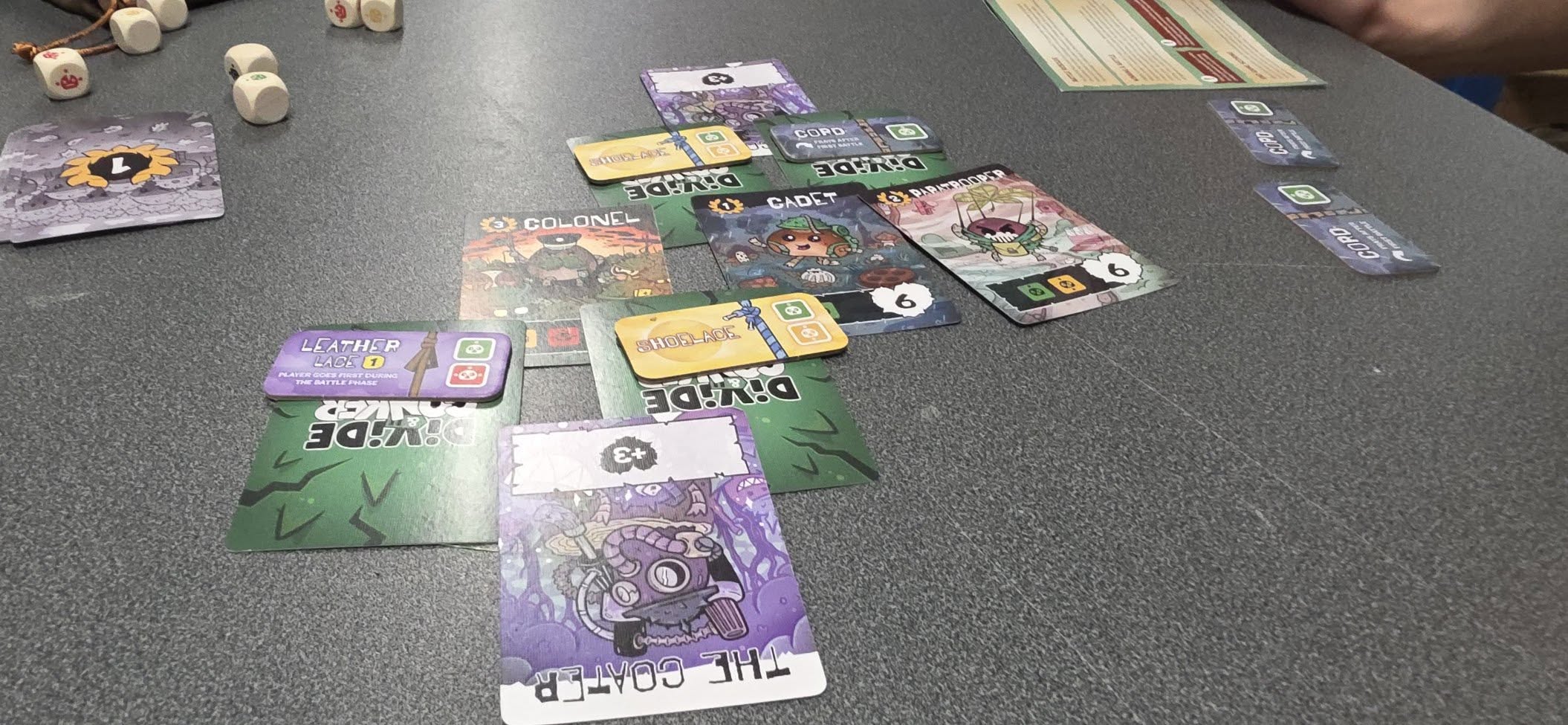
The game is played over two rounds and each round is split into three phases. First you draft cards from a pyramid or snake layout depending on player count. Here we arrive at the first big issue which is things such as a “snake layout” is not explained in the rule book.
Some cards are face up, some are face down and the face down ones often have strings placed on top of them. When you take a face down card you also gain the string sitting on it, which is important because your conkers cannot fight without a string attached. You will be picking up a mix of conkers, hardeners and trick cards, all of which come together to form your little army.
Once drafting is done you move into the prepare phase. Here you lay out your conkers and decide which hardeners and which strings to give them. Each conker can only have one hardener and one string, so you need to pick carefully. Some strings are stable like the shoelace, some fray after their first battle and some give special benefits such as first player in combat or the ability to tweak a dice result. This part is quick but surprisingly tactical because it shapes how strong your conkers will be once the fighting starts.
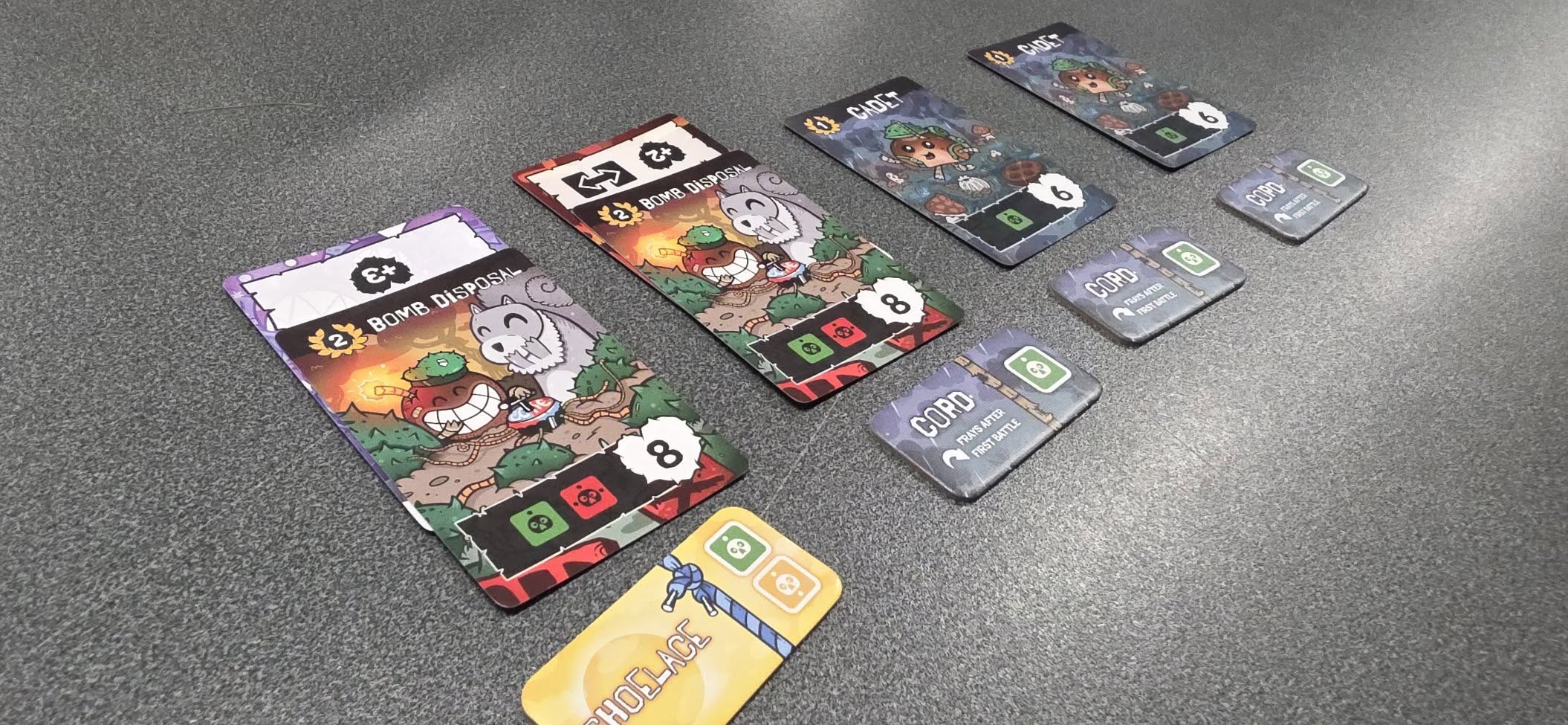
Finally you move to the battle phase. The first player chooses which conker they are sending forward and their opponent chooses one to defend with. You roll the dice shown on your conker and string, deal cracks equal to your hits and hope you do not deal so much damage that the excess bounces back onto your own conker. Trick cards can be played during the roll to reroll dice, reduce incoming damage or even swap out conkers mid fight. A battle ends when one conker breaks and the winner steals both the defeated conker and its string, tucking it under their own for end game points. After seven total battles the player with the most points wins.
Now, one thing I have to mention is the rulebook. The layout looks lovely and the component pages are great, however for such a simple game the actual wording of the rules is surprisingly confusing.
We found ourselves re-reading sections that should have been very straightforward. Once you start playing everything makes sense instantly, it is just a shame the learning curve is steeper than it needs to be because the gameplay itself is incredibly easy to grasp.
The battles are easily the highlight of the game.
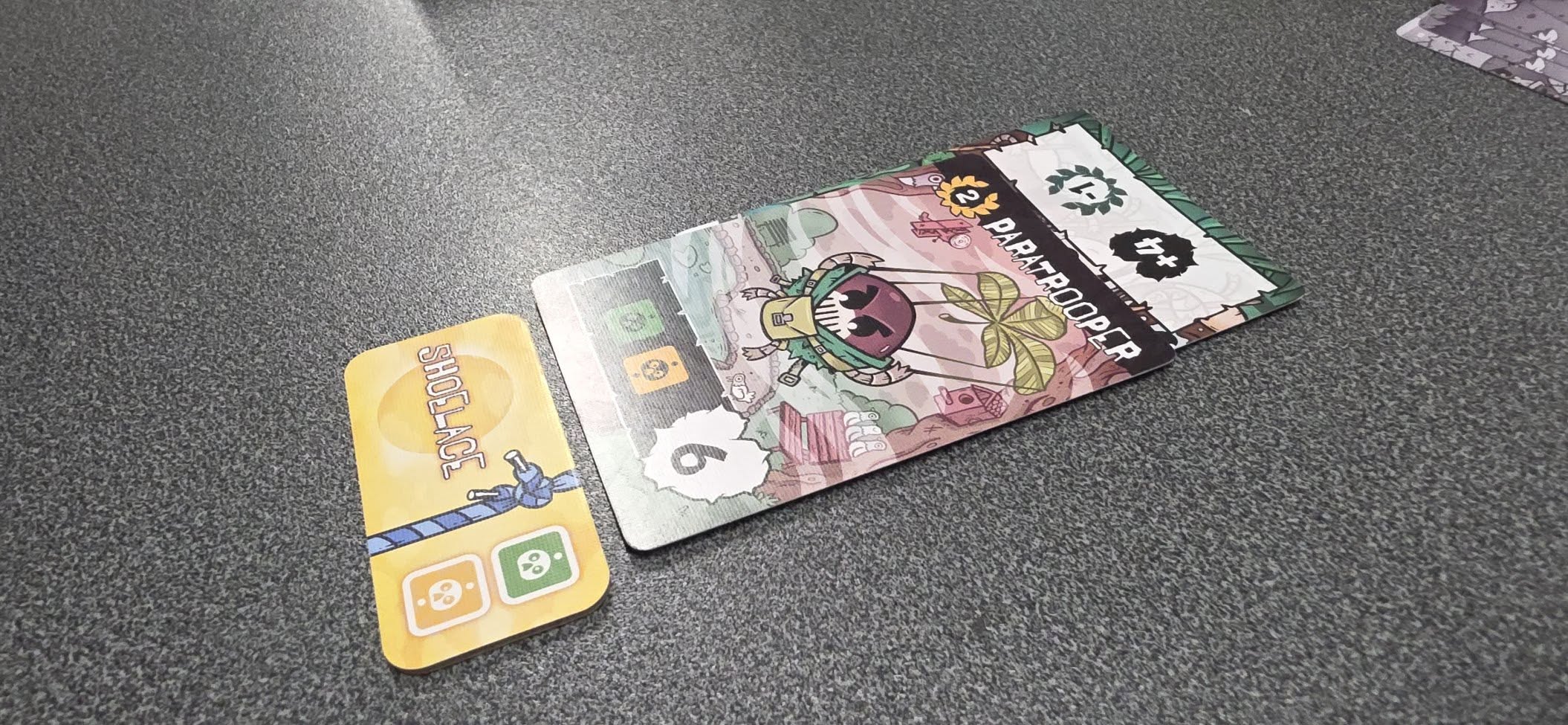
Component quality is also really solid. The cards feel good, the tokens are satisfying to handle and the dice are clear and chunky. For a game where you are constantly rolling and picking things up, the production quality makes a noticeable difference.
The artwork deserves a mention too. The conkers look like tiny cartoon soldiers, each with bags of personality. It is playful without being childish and the whole thing has this cosy, nostalgic charm to it.
Overall, I had a great time with “Divide and Conker.” It is quick, full of personality and feels fresh thanks to its theme. It is nostalgic without relying on nostalgia and it makes a very simple ruleset feel exciting through clever drafting, funny moments of chaos and the ever-present risk of snapping your prized conker in half.
If you want a light, charming head-to-head battler that plays in under an hour and captures a very specific slice of childhood, this is one I would definitely keep an eye on, but be prepared to struggle through the rulebook.






Add comment