 Matthew Bailey
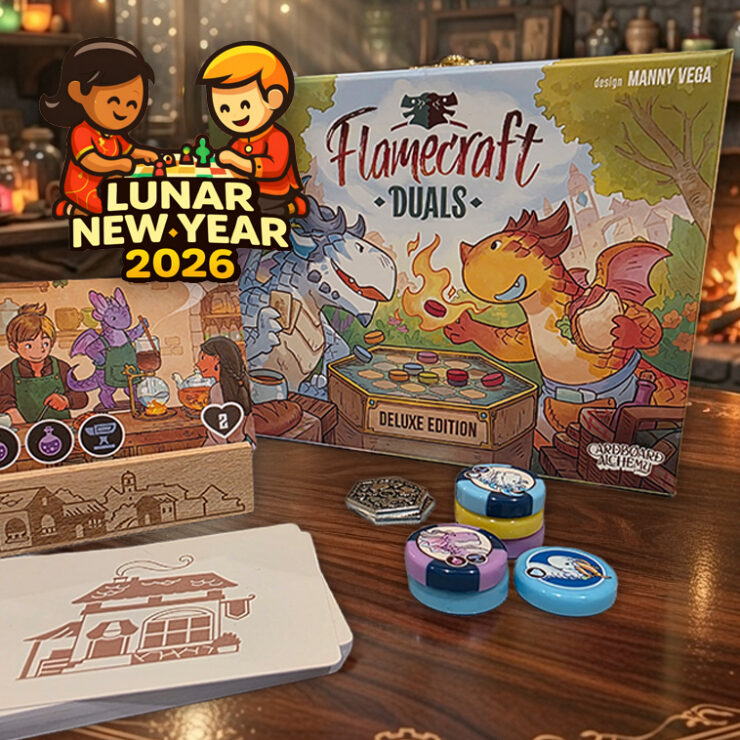
Today we’re going to be looking at Flamecraft: Duals. While not inherently linked to Lunar New Year, the dragon motif definitely felt dragon-y enough for the occasion. Flamecraft: Duals is a one-on-one game set within the Flamecraft universe. Now, Flamecraft itself is a big box game that I’ve been meaning to review for many, many years and have somehow never actually got around to, but at some point in the future I absolutely want to change that. Either way, Flamecraft: Duals is a completely different game and not really related to the larger original. What Flamecraft: Duals is, however, is a really fun tile-laying puzzle game that gives me a strange but satisfying mix of noughts and crosses and Splendor, with some fun powers thrown in for good measure.
This game is absolutely great to play with the kids, but it also works brilliantly as a cosy evening couples game. Katie, often-not-mentioned wife of Little Board Gamers, and I have played this quite a lot over the half-term break.
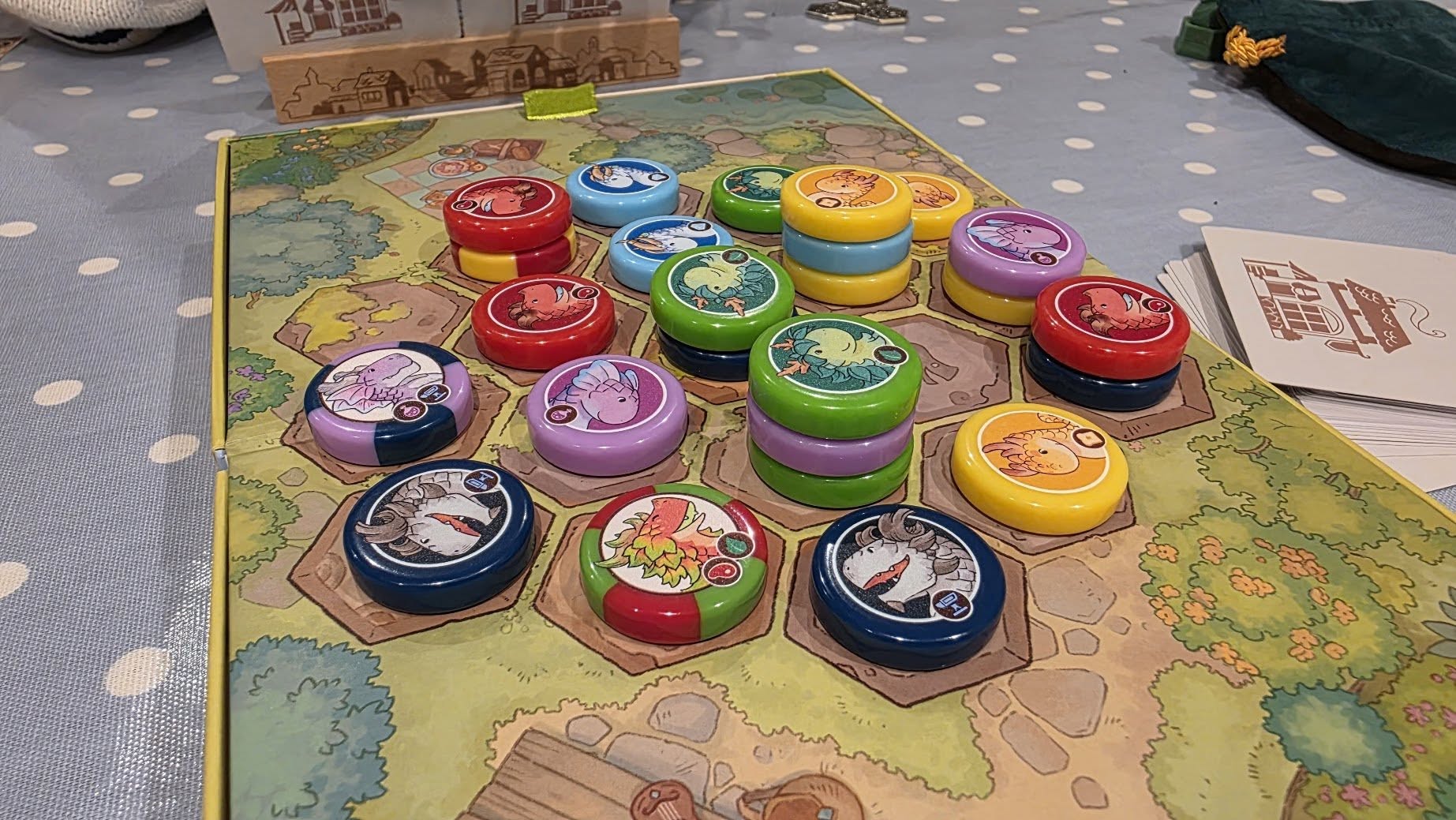
In Flamecraft: Duals, players take turns drawing colourful dragon tokens from a shared bag, placing them onto the board, and using their special abilities to manipulate the layout. Each turn follows a simple flow of Play, Score, then Refresh. During the Play phase, you draw a token blindly and place it either onto an empty space or on top of an existing stack, remembering that stacks can never exceed three tokens. After placing, you may choose to activate its special ability, although this is always optional, and especially towards the end of the game you might decide it’s better not to.
Each dragon type has a different ability. Some dragons allow you to draw more tokens, others let you move or swap dragons already on the board, and some trigger chain reactions by activating neighbouring abilities. Double dragons add flexibility by counting as either of their two types, but when activated, you must choose just one of their abilities. Because tokens constantly shift position, the board state is always evolving, and even a single placement can completely mess up a carefully laid plan… (cue GCSE English “Of Mice and Men” flashbacks).
Scoring revolves around Boutique cards held in your hand. During the Score phase, you compare the patterns on your cards to the arrangement of dragons on the board. Cards may be rotated freely, and double dragons can be used to satisfy multiple pattern requirements. When a match is found, the card is scored and placed face up into your score pile. This is the only time points are earned, which makes this phase especially important. Realistically, you want to be scoring at least one pattern every turn, ideally hitting both as often as possible. This becomes a super simple-to-understand but genuinely brain-melting puzzle as you try to work out whether you can manipulate the board to get your desired colours in any way possible.
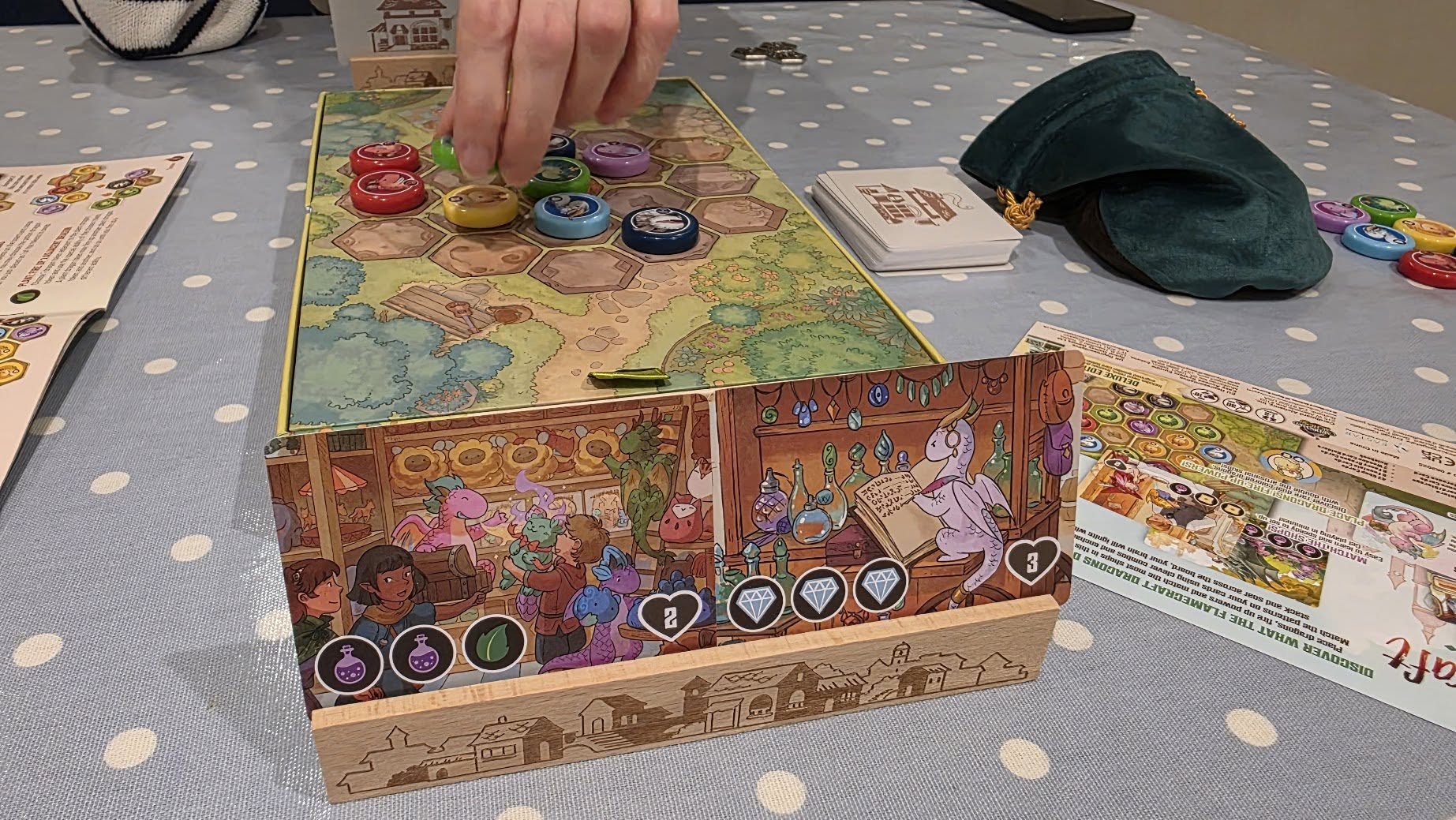
Coins provide a small but meaningful layer of control. Once per turn, before refreshing your hand, you may spend a coin to draw additional Boutique cards and refine your options. At the end of the game, triggered when either the bag or Boutique deck runs out, players total the reputation points from their scored cards and add bonus points for any unspent coins. The player with the highest total wins, with ties broken by the number of scored cards.
The game is the perfect length and has that dangerous “just one more go” feel. Katie and I played this over Valentine’s Day and somehow ended up playing about four games in one evening. It has a great balance, and the length is extremely predictable, as in most cases you’ll be running out of tiles in the bag long before you run out of cards.
I absolutely love playing Flamecraft: Duals. It’s such a lovely little game, and as I mentioned earlier, the kids also really enjoyed it when we played with them. This is something I’m very happy to recommend as a couple’s date night game. It’s low stakes, lightly competitive, fun, cute, and just generally very enjoyable.
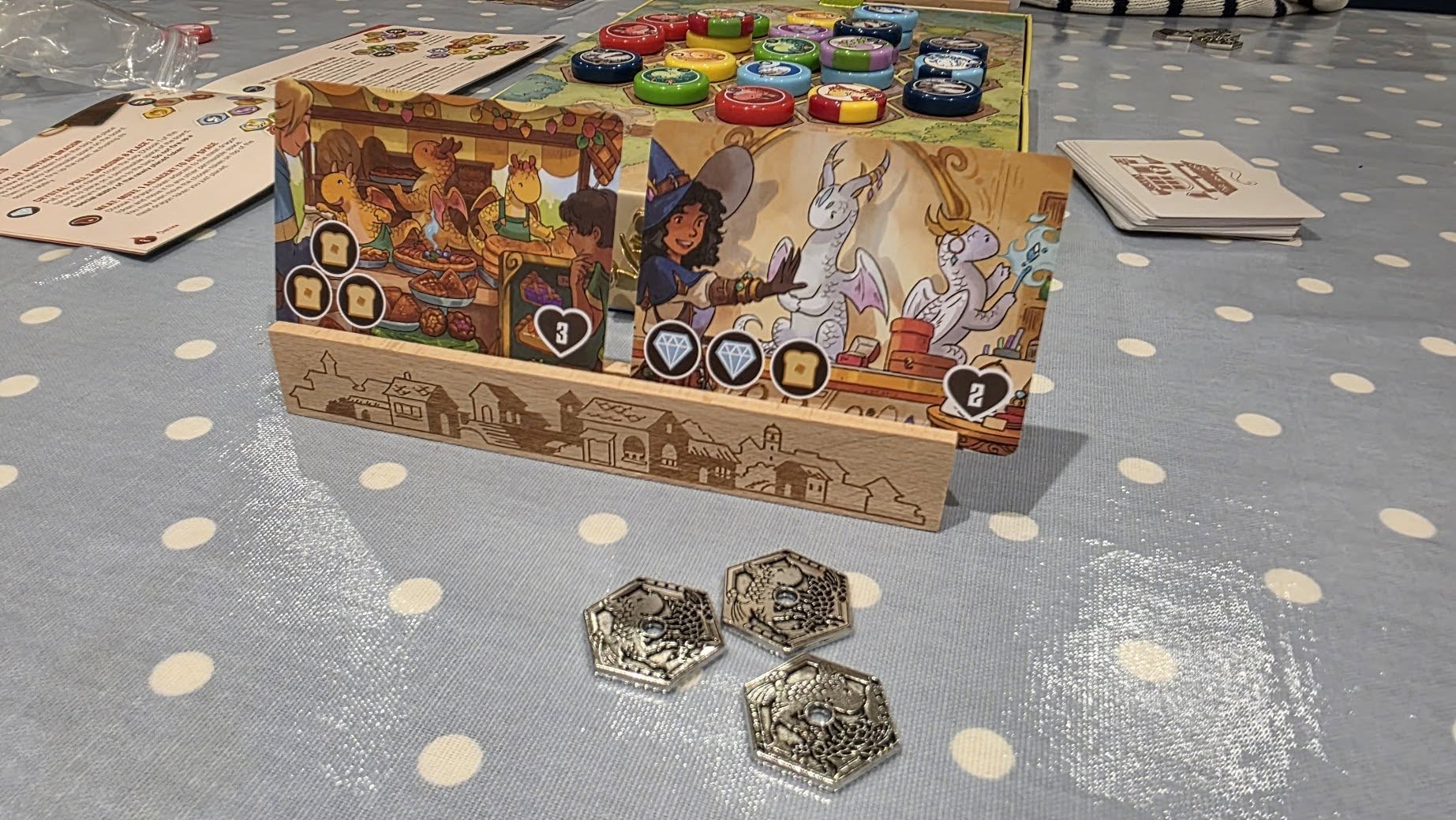
It’s worth mentioning that the version shown here is the deluxe edition, which comes with a really nice lockable box that folds out to form the board. The coins are metal, and everything feels extremely high quality. The standard version, however, still comes with lovely chunky tokens, so even without the deluxe upgrade, you’re getting a very nice play experience. That said, if you can grab the deluxe version on sale, or you simply fancy treating yourself, it’s genuinely one of the nicer deluxe productions I’ve played in quite a while.
It’s all been very positive this week, largely because we’ve been playing some excellent games, and Flamecraft: Duals is absolutely one of them. A quick, simple, but beautiful abstract strategy game that’s incredibly easy to understand and wonderful to play on a cosy evening in.