 Matthew Bailey
While I was intending to get a review of Wyrmspan out this evening, here we go with our slightly unexpected third, now fourth, entry in our Wingspan no longer trilogy.
Full disclosure, I haven’t really played many of the expansions to Wingspan, largely because most of them simply give you extra cards. Usually, when we play Wingspan, you don’t get through that many of the cards in the deck anyway, so having more and more cards doesn’t really add much, personally. What I didn’t realise, however, until Nicola pointed it out, is that Wingspan Asia is not only an expansion, but also a standalone two-player version of Wingspan.
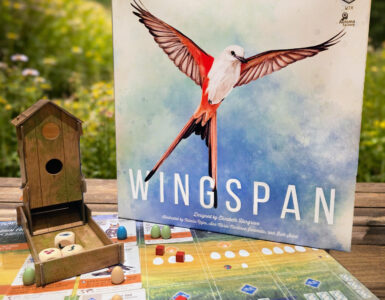
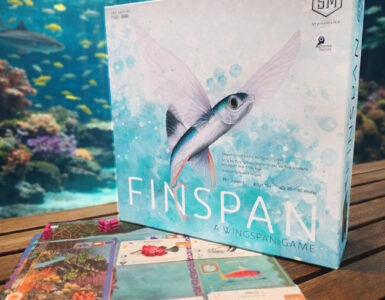
I’m not going to go through massively how Wingspan in general plays, as there are a lot of similarities here. If you haven’t read my previous two reviews on Wingspan and Finspan, I’d recommend you go and do that, as I’m only really going to talk about the main differences here, and where this sits in the overall lineup of the games. I’ll also include this in my wrap-up after I cover Wyrmspan, which has now obviously been pushed back a few days.
Wingspan link – https://littleboardgamers.com/wingspan/
Finspan Link – https://littleboardgamers.com/finspan/
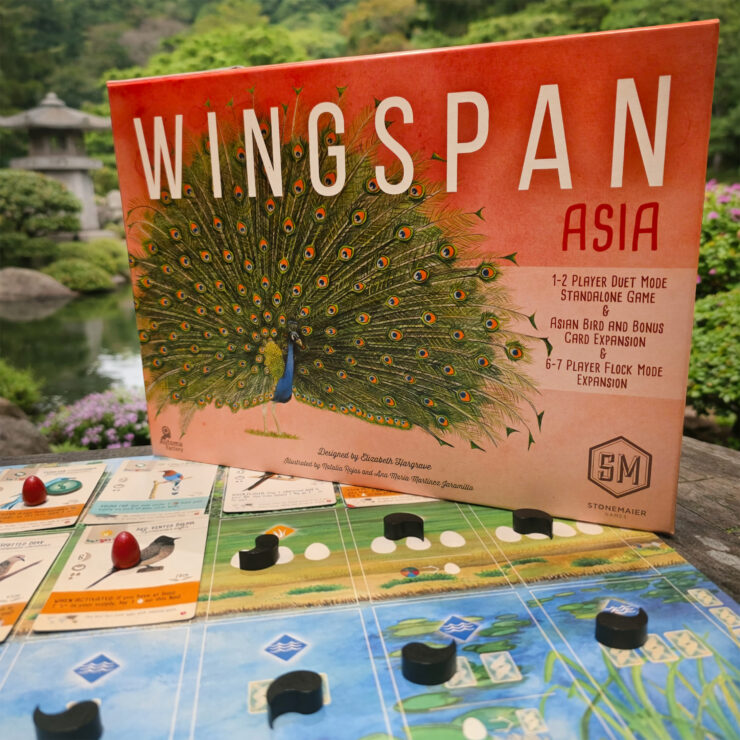
Wingspan Asia is an unusual box. Essentially, you get three things in here. Firstly, you’re getting a card expansion for normal Wingspan that gives you the Asian birds and bonus cards. This is what most Wingspan expansions generally are, and that’s fine. You’re also getting some extra coloured eggs and some more tokens, all good.
It also includes a six to seven player “flock mode”, which is a slightly unusual version of Wingspan that you can specifically play with 6–7 players. Now, full disclosure, I haven’t played this mode. Getting six or seven players together to play a two-hour-ish minimum game of Wingspan is, if I’m being brutally honest, something I can’t see myself managing anytime soon, and I suspect most people reading this are probably in the same boat. So I’m not really going to talk about flock mode here.
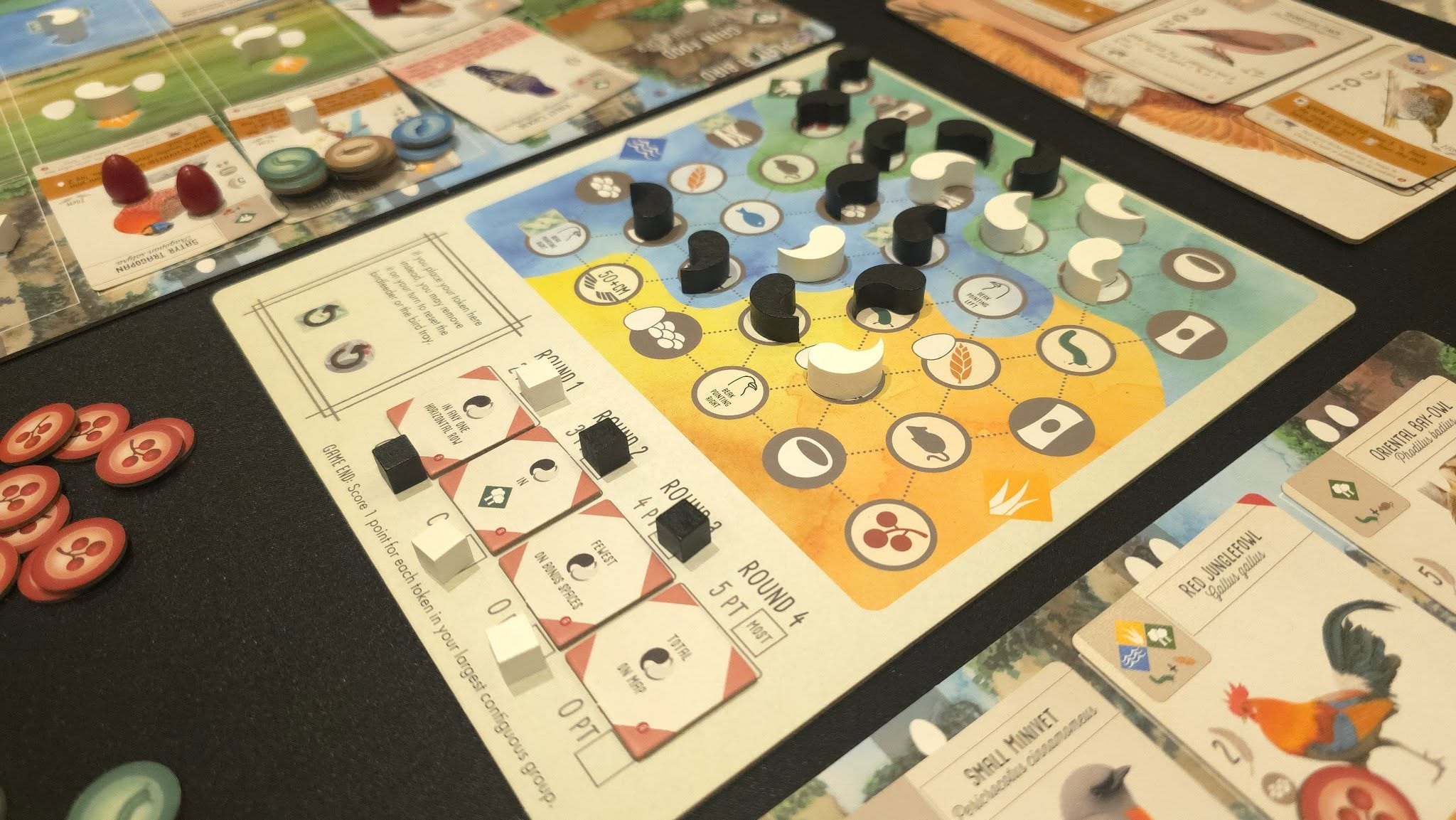
The main thing that did interest me, however, is the fact that it is also a two-player duet mode, a dual game that stands alone. This plays very much like normal Wingspan, only of course you’re getting boards and components for two players. There is an extra element to it which I really like, and I think works really well, and that is the duet board.
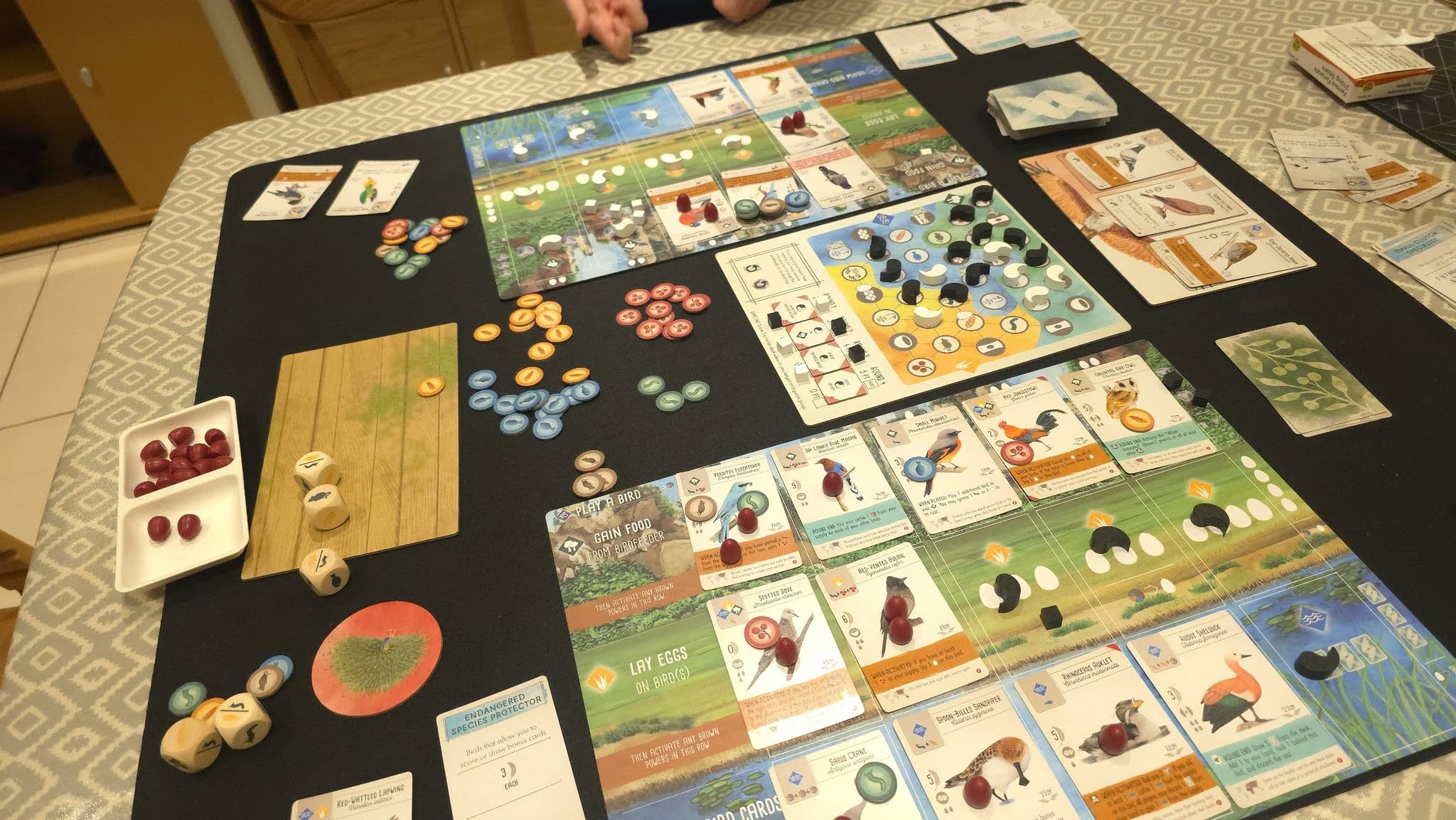
The duet board is essentially a shared board that sits in the middle between both players and has all three habitat areas on it. Every time you lay a bird, you take the yin or yang token from your board, the one that would sit in the slot now filled by the bird, and place it somewhere on that grid. Where you place it depends on both the type of bird you played and where you played it, giving you quite a few restrictions.
The main point of this is that all of the end-of-round bonuses, instead of being based on your birds like in the main game, are based on where your tokens are on this board. On top of that, at the end of the game you get points for the longest single contiguous group of your tokens, a little bit like the longest train bonus in Ticket to Ride. I really like this. It adds a fun extra layer that I actually kind of wish was in the main game.
The rest of the game plays largely identically. It’s basically a two-player version of Wingspan, which already plays well at two players. Component quality is, as usual, really high from Stonemaier Games, with nice cards, nice boards, chunky dice, and everything you’d expect.
There are a few small differences. Instead of the bird feeder dice tower from normal Wingspan, you just get a basic board to roll your dice on. This isn’t a massive problem, but it is a bit harder to roll the dice as they’re not nicely contained. It also doesn’t include the plastic holder for the active cards. To be honest, I don’t think that’s an issue. I actually think the plastic holder in normal Wingspan is a little bit tacky, and having a board to place the three active cards on is perfectly fine. You also don’t get as many token trays, but again, Wingspan never really came with enough anyway, so it’s not a major problem. I do, however, miss the bird feeder.
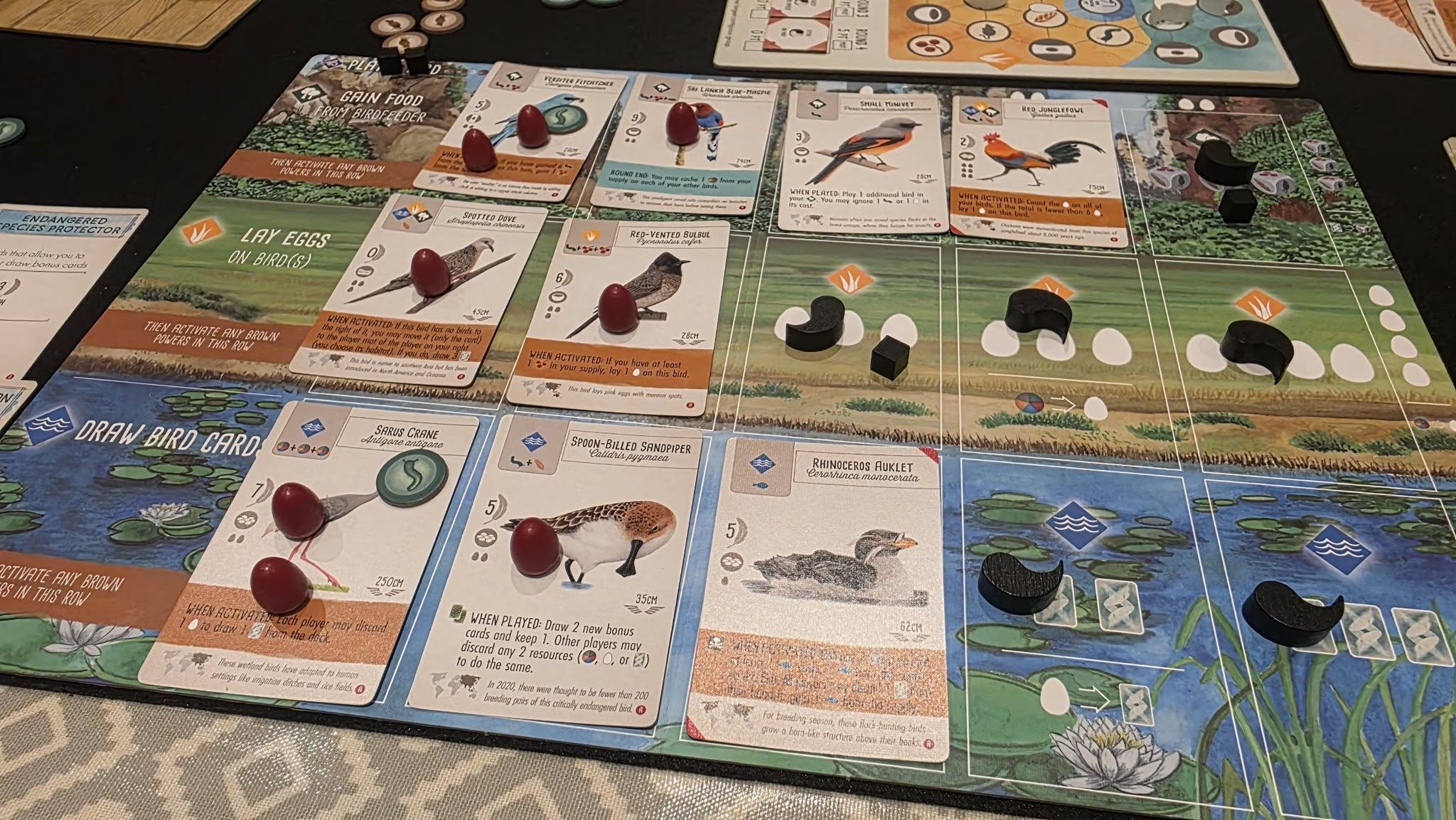
This is a really weird one, but the yin-yang tokens each player has fit together perfectly, and I spent the whole game wanting to connect them. Because you can’t share spaces, you never actually get a chance to do that, which is irrationally annoying. Completely ridiculous, nothing to do with the gameplay, but there we go, it bothered me.
So, which one should you get? If you are definitely only going to play with two players, and there’s no real chance of playing with more, then I’d probably recommend Wingspan Asia instead. It’s a smaller box, which is always a bonus, and I really like the duet board. It adds a genuinely interesting mechanic that works really well.
The slight issue, though, is the cost. You’re not really paying any less for Wingspan Asia than you would for the full base game, so you’re not gaining any value from losing the higher player counts. So really, the question comes down to this, do you want the extra mechanic of the duet board and the smaller box, or do you want the ability to play up to five players, along with the nicer bird feeder?
Both are good options, and it will come down to personal preference.
*Wingspan Asia is an excellent two-player version of Wingspan that can also be used as an expansion to the main game. I do wish it was a little bit cheaper, as it sits at roughly the same price as the base game. Unless you are definitely only going to play with two players and really want that extra mechanic, getting the full Wingspan is probably the slightly better choice. That said, at two players, I do think Wingspan Asia is the better game.