 Matthew Bailey
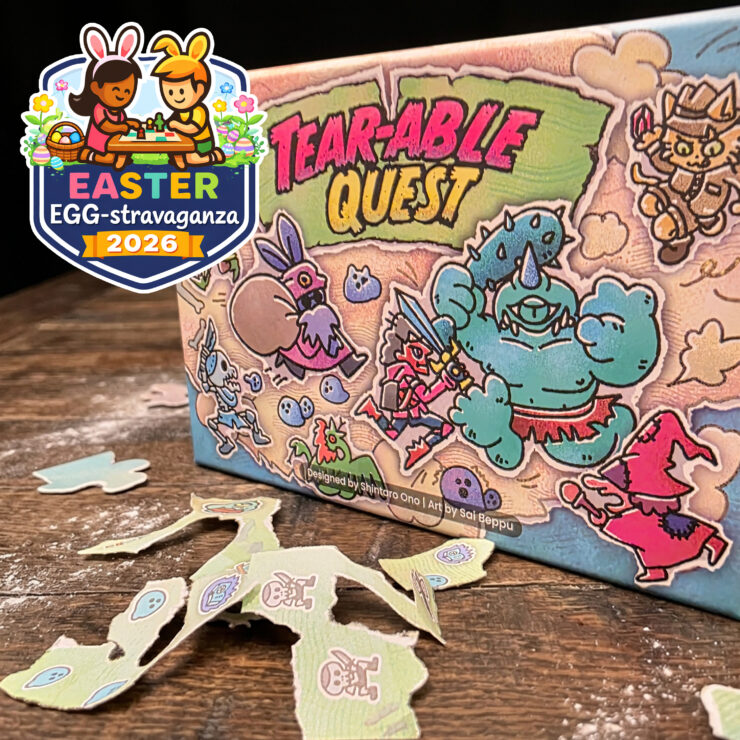
Today we’re going to be looking at the very cool and very unusual Tear-able Quest, a small box game from Allplay that I picked up about a week ago. It’s had a decent amount of play in our house, and even made an appearance while we were waiting for breakfast to arrive at Wetherspoons the other day. Yes, we are a classy household, but they do unlimited coffee and tea.
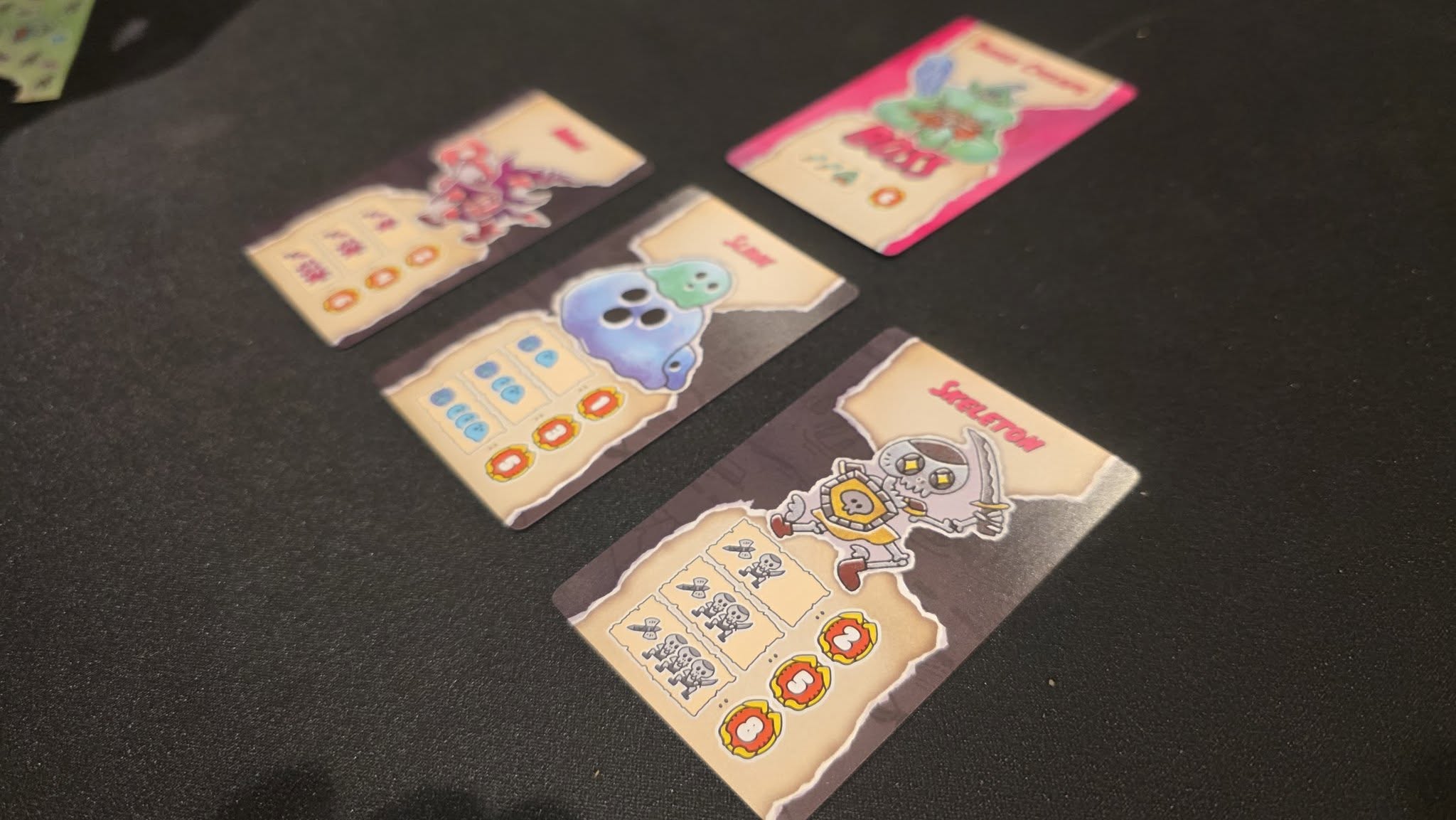
Tear-able Quest is really simple. Essentially, each player gets a sheet, either Manic Meadows or Dragon’s Den, which features lots of different pictures of monsters and weapons. On the reverse side, there are also treasures and curses. Each player sheet forms the basis of how the game works. You lay out three out of four possible monster cards on the table, along with the boss card, meaning there’s one monster left out each game.
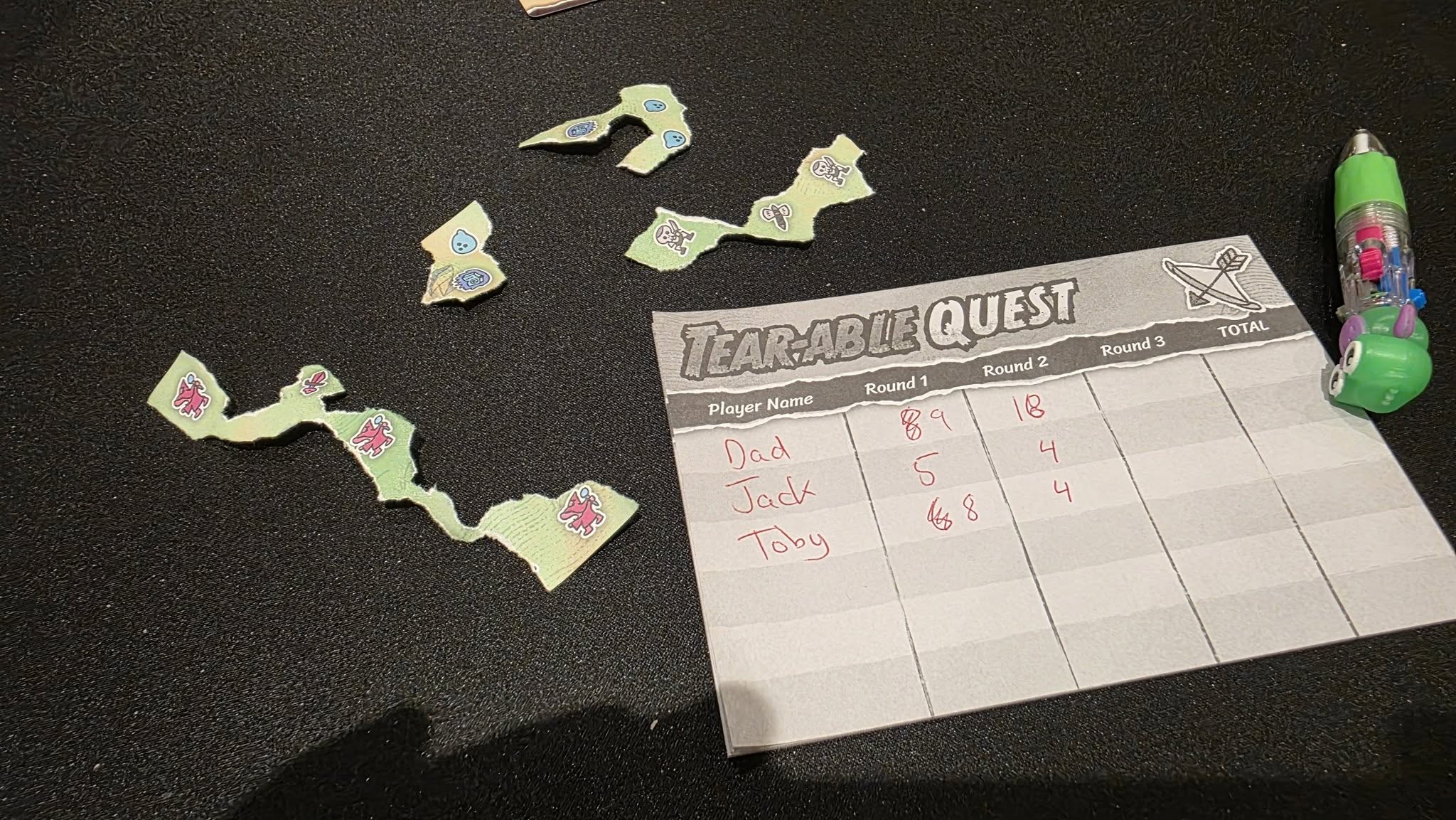
You then set a timer for two minutes. The game suggests extending that for a slightly less stressful experience, and we generally went with three minutes, which felt like the right balance for us. Of course, that’s going to depend on who you’re playing with.
What you now need to do, and this is the tricky part, is carefully tear out the paper so that you’ve got the necessary bits you need without tearing through them, and without including anything unnecessary. This often means really intricate tearing, sometimes partially around shapes and usually passing the sheet around the table. Yes, cutting would be easier, but this isn’t cutting, this is tearing, and that’s where the challenge comes in.
An example in terms of scoring would be the skeletons. If you get a skeleton and an axe, that gets you two points. Two skeletons and an axe gets you five points, and three skeletons and an axe gets you eight points. So you end up working out what the most efficient use of your time is. Do you go for those higher-scoring but harder and more time-consuming tears?
After the timer is up, you score your sheet. If there’s an incomplete tear through something you needed, it’s null and void, and even a small extra bit of something you didn’t want will also invalidate it. On the back of the pages, there are treasures, and if you’ve included a complete treasure on your torn piece, you get those points as well. There are also curses that can ruin what you’ve done. There was one point where I defeated the boss and scored loads of points, only to realise there was a curse on the back. I then had to spend the last few seconds of the round desperately trying to tear the curse off so it didn’t cost me everything.
After the round finishes, you add up your scores and make a note of them. You then keep the largest piece of paper you have left, and that’s what you use for the next round. This is a really key mechanic, as it means you can’t just tear your sheet to bits in the first round. You have to be more careful and a bit more conservative, otherwise you’ll shoot yourself in the foot for later rounds. Sometimes it pays to not be quite as greedy early on, knowing you can go all in later.
We love Tear-able Quest. It’s really good fun, really unique, and games take about 15 minutes, so it gets to the table easily. It’s also very accessible, as aside from people with limited hand mobility, pretty much anyone can play this.
Because you’re physically destroying the components as you play, there is a limited number of plays. That can be a problem for some games, but I’m not really going to mark Tear-able Quest down for it. There are 100 sheets in the box, so you’re getting a lot of plays, and the game is under £10. If you love it and eventually run out, it feels reasonably priced enough to pick up again. The only game I’ve ever bought twice is Harvest Dice, because we ran out of sheets, and based on how much we played it, I had no issue buying it again.
Tear-able Quest is a really unique dexterity game that has the added bonus of being one of the few dexterity games you can play at a restaurant table or on a plane. It has a very predictable playtime, it’s great fun, and there’s a surprising level of strategy in planning your tears.